
Best striper plugs for the May northeast surf run
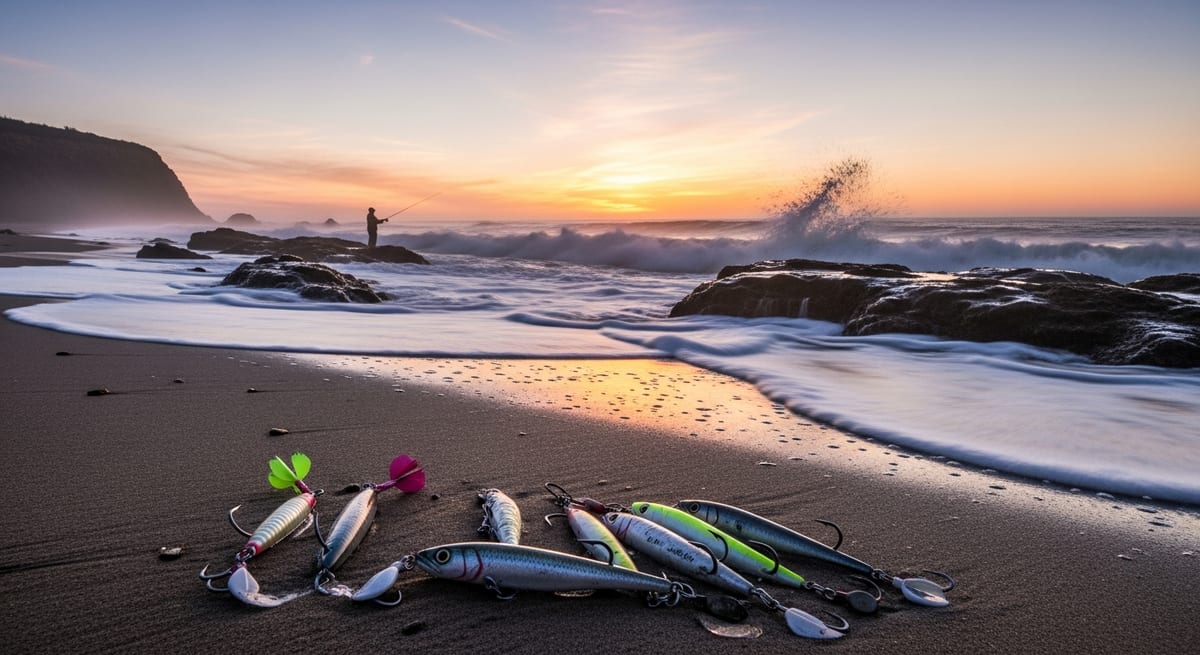
May is when the northeast [surf fishing](/blog/surf-fishing-connecticut-stripers) calendar snaps into focus. Striped bass pushing north from Chesapeake Bay and Outer Banks staging grounds begin showing in numbers along the Connecticut, Rhode Island, and Massachusetts shorelines by the first week of the month, and the surf-casting community along that stretch, from the Race to Nauset Beach, mobilizes accordingly. Reports flooding regional fishing forums and tackle shop logs in recent springs consistently point to the same short list of lures outperforming during this window, and the pattern behind those reports isn't random. Plug selection during the May run is shaped by bait-fish transitions, water temperatures still sitting in the low-to-mid 50s, and tidal windows that concentrate fish along predictable structure. Getting the plug choice right, or wrong, accounts for the difference between consistent hookups and blank sessions at spots that hold fish.
Why plug selection shifts during the May striper migration
The stripers arriving in May are not in the same feeding posture as the fish that show in July or September. Water temps along the southern New England coast are typically climbing through the 50-58°F range during the peak of the run, which keeps bass somewhat sluggish compared to summer fish but highly aggressive in concentrated feed windows, particularly on dropping tides when bait gets swept out of estuaries and embayments.
Bait schools in May are also in transition. Sand eels (American sand lance) dominate many inshore zones early in the month, often running 3-5 inches. By mid-to-late May, bunker (Atlantic menhaden) schools begin appearing in nearshore waters and mackerel pods push in from offshore. Each bait type triggers different strikes from stripers and calls for different lure profiles, retrieve speeds, and action.
Community reports from surf casters in Rhode Island and along the Cape note that May fish are frequently feeding on or just below the surface during dusk and dawn tides, making topwater and shallow-swimming plugs far more productive than mid-column jigs or deep-running swimmers. As one widely-cited regional tackle shop puts it in its seasonal notes: May is topwater month if you're reading the tides right.
The upshot for plug selection is consistent across these reports: favor profiles that match sand eels and small bunker, prioritize surface or near-surface action during the feed windows, and resist the urge to oversize. Owners and experienced casters alike note that overshooting the forage by more than an inch or two consistently draws short strikes or full refusals.
Top hard plugs: what surf casters along the northeast coast report
Hard plugs, wood or hard plastic swimmers, pencil poppers, and darters, continue to dominate May surf bags across the northeast. The lures below represent the most frequently cited performers in recent-season community reports across regional forums, tackle shop logs, and fishing networks.
Pencil poppers (2-3 oz, 6-7 inches) The pencil popper is the consensus top-surface producer for May stripers among veteran surf casters from Montauk to the Cape. Its walk-the-dog action mimics a wounded baitfish in the top few inches of the water column. Owners report that a steady medium-cadence twitch-and-pause retrieve in the first hour after dark on an outgoing tide is the most referenced productive pattern. Gibbs and Hogy both produce widely used versions; the community along the New England coast tends to favor white and bone colorways in clear-to-stained conditions and shifts to chartreuse or yellow in murky post-rain water.
Darters (1.5-2.5 oz) Many northeast surf anglers describe the darter as the most underrated May plug. Its subsurface wobble and side-to-side dart action mimics a sand eel or spearing struggling in the current, and reports from casters working rocky Rhode Island points and Connecticut river mouths emphasize that it shines when retrieved cross-current on a weighted swing, letting the tide do much of the work. The Gibbs Darter is the most cited specific model in regional reports. Mackerel, black-and-white, and natural sand eel patterns receive the most mentions for May conditions.
Needle fish (2-3 oz) The needle fish. A slender, subsurface swimming plug, draws consistent praise from surf casters targeting sand-eel-focused fish in May. Its thin profile matches the 3-5 inch sand lance that dominates early-month bait schools, and its minimal built-in action rewards a slow, straight retrieve that lets the current impart most of the movement. Tactical Anglers and Creek Chub-style variants both appear regularly in community tackle discussions. Reports suggest chartreuse/pearl and silver/blue perform best in the pre-dawn window on calm surf.
Weighted metal-lip swimmers Heavier metal-lip swimmers in the 2-3 oz range give surf casters the ability to punch through wind and work the mid-column zone when fish aren't willing to commit to the surface. The classic bottle-plug profile. A slightly curved, weighted swimming shape, maintains strong brand loyalty among experienced Cape Cod and Montauk regulars. Feedback from these casters consistently notes that the retrieve must be slow and deliberate in May's cold water, mimicking a lethargic baitfish rather than a fleeing one.
Larger surface swimmers for the bunker push When menhaden pods show up in the second half of May, many surf casters shift to broader surface swimmers in the 4-5 oz range that approximate the silhouette of a juvenile bunker. These slower, wider-walking plugs are credited in community reports with drawing both big bluefish and trophy stripers during the bunker push, when fish are keyed in on larger, slower-moving prey.
Soft plastics and paddle tails: community-favored rigs for spring stripers
Soft plastic paddle tails and jerkbaits have carved out a significant share of the May surf bag over the past decade. Survey data from regional tackle retailers and community tackle-bag reports suggest that soft plastics now account for a substantial portion of documented surf-caught stripers during the spring run. A share that has grown as materials, hook designs, and jig head profiles have improved.
The community's most-cited soft plastics for May surf fishing:
- Hogy 7" or 9" paddle tail on a 1-2 oz jig head: Widely regarded as the most versatile soft plastic option for northeast surf. The 7-inch size matches mid-May sand eel to small bunker bait transitions; the 9-inch becomes relevant once bunker schools arrive. White, olive, and sand eel colorways are the most mentioned. The weighted jig head allows casting distances that match or exceed most hard plugs.
- Savage Gear Soft 4Play (5-6 inch): Multiple community reports credit this paddle tail with exceptional durability and a realistic swimming action at slow retrieve speeds, critical in May's cold water. Its profile draws consistent comparisons to a stunned sand eel or small baitfish.
- Zoom Fluke (5-inch) rigged on a jig head or weighted wide-gap hook: The soft jerkbait profile mimics a dying or disoriented baitfish and is frequently mentioned in reports from Connecticut and Rhode Island casters working shallow estuaries and river mouths on high tides. White and smelt are the dominant color calls.
- DOA Lures Shrimp (3-inch): Less common in open surf reports but consistently cited by estuarine anglers targeting stripers in backwater channels during May. The shrimp profile matches a real forage source in productive tidal creeks.
Rigging preference is consistent across most community feedback: owner-rigged jig heads in the 1-1.5 oz range for sand eel conditions, stepping up to 2-3 oz when casting distance or deeper presentations are needed in stiff onshore wind. Braided main line (20-30 lb) to a fluorocarbon leader (25-40 lb, 3-4 feet) is the near-universal surf setup reported across these sources.
Matching plug size and retrieve to tide stage and bait schools
The most consistent theme in northeast surf casters' May reports is not brand loyalty. It's situational matching. Experienced casters describe a plug-selection process that weighs four variables: tide stage, water clarity, surf height, and observed bait.
Tide stage
- First two hours of the outgoing tide: Topwater and surface plugs consistently outperform here. Bait gets flushed from estuaries and the backs of beaches, and stripers stack in the rips and current seams to intercept it. Pencil poppers and surface swimmers see the most reported action during this window.
- Mid-outgoing to low slack: Current slows and fish often drop below the surface. Darters and needle fish retrieved on a slow cross-current swing are reported as the better choice for this stage.
- First push of the incoming tide: Structure-oriented fishing. Soft plastics on jig heads worked along the edges of boulder fields and sandbars are reported as most productive when fish go tight to structure.
Water clarity
- Clear to slightly stained: Natural, muted colors, bone, white, sand eel, mackerel, consistently receive more mentions than attractor colors in these conditions.
- Stained or murky after rain or a nor'easter: Chartreuse, yellow, and bright white dominate community color recommendations; contrast over subtlety is the operating principle.
- Night conditions: Reports are nearly unanimous that all-black or black-and-purple hard plugs are the choice after full dark, when stripers are silhouetting prey from below.
Surf height
- Calm to moderate surf (1-3 ft): Lighter plugs cast cleanly and maintain their intended action. Needle fish and standard pencil poppers are workable throughout.
- Heavy surf (4+ ft): Heavier bottle plugs and 2+ oz jig heads are necessary to stay in contact with the lure. Community feedback consistently notes that lighter plugs blow around and lose their action in heavy surf, producing fewer strikes even over well-populated rips.
Observed bait
- Thin, elongated sand eels near the surface: needle fish or slim-profile paddle tail, slow and steady
- Bunker schools visible or birds working: larger surface swimmer or 9-inch paddle tail, slow and deliberate
- Mackerel pods showing: darter or weighted metal-lip swimmer in mackerel or blue/silver pattern
What veteran surf casters consistently report from May seasons
Community knowledge accumulated over decades of northeast surf fishing points to a few hard-won observations that are worth folding into any May game plan.
Fish location shifts with moon phase. Full and new moon tides in May produce the most aggressive rip conditions, and reports from veteran surf casters at Montauk and the Rhode Island coast consistently note that these big-tide nights deliver the best topwater action of the month. Planning sessions around the two days before and after each major moon phase is a common refrain.
Bait clouds are decision points. When birds are working over bait within casting range, the near-universal community recommendation is to immediately switch to a plug that matches the bait size and position in the water column rather than persisting with the current setup. Stripers in May are selective enough, particularly on pressured public beaches. That a profile mismatch on an actively feeding school is one of the most commonly cited causes of blank sessions at otherwise productive spots.
Don't overlook the first bar. Daytime scouting reports frequently point to the first bar and trough closest to shore as productive structure that gets neglected by casters focused on maximum distance. Stripers pushing bait into the shallowest structure before dawn is a recurring May pattern, and short-casting a pencil popper or darter along the first trough is an underutilized tactic noted in multiple regional surf reports.
May's northeast striper run is compressed and weather-dependent. Reports from multiple seasons note that peak fishing can be a 10-14 day window concentrated around the third and fourth weeks of the month, and a single sharp temperature drop or prolonged nor'easter can scatter fish or delay the push by days. Anglers who track real-time bait-school reports, nearshore buoy temperatures, and moon-tide alignment consistently report more productive sessions than those fishing on calendar schedule alone.
EVERY SATURDAY MORNING
Weekly fishing intelligence
Nationwide conditions, what's biting, and honest gear deals. One email, no noise.
No spam. Unsubscribe anytime.