
Striped bass fishing in Rhode Island: the April arrival guide
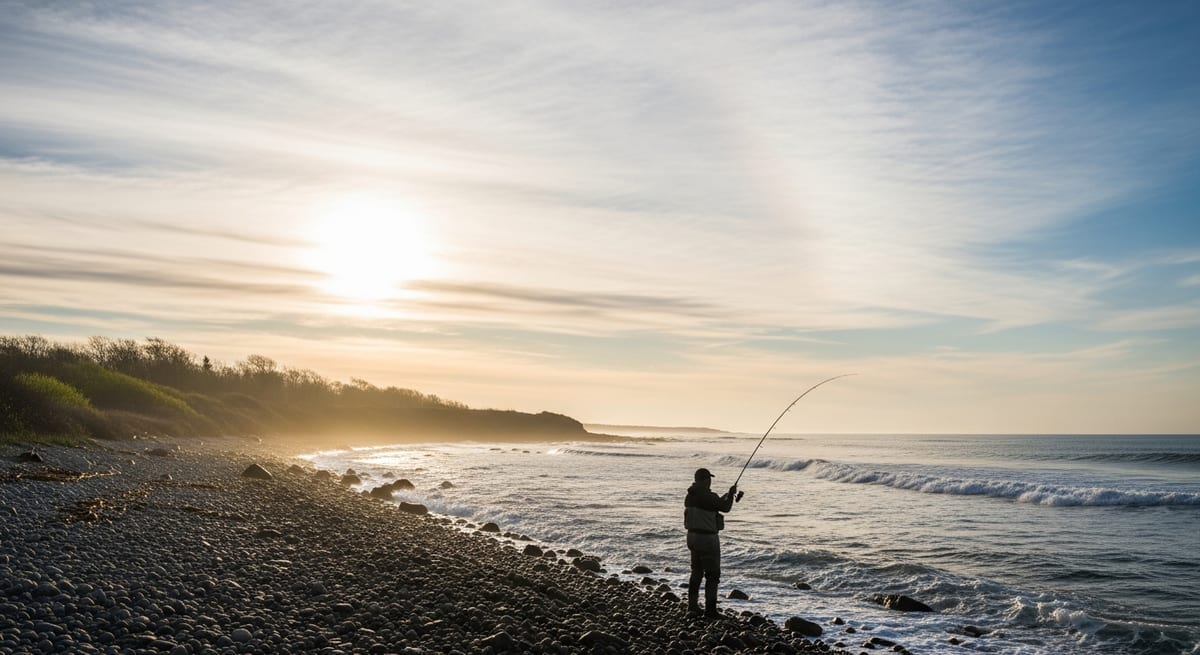
Every April along Narragansett Bay, the same ritual plays out: dock thermometers get checked before coffee gets poured. Charter captains who've spent decades running these waters will tell you straight. The calendar is a rough approximation at best. The fish don't care what month it is. What drives the arrival of the first keeper-class stripers is water temperature, and Rhode Island's most consistent early-season anglers have built their whole spring strategy around chasing that 52-56°F window rather than waiting for an arbitrary date to declare the season open.
Water temperature is the trigger, not the calendar
The stripers working their way into Narragansett Bay each April have been moving up the coast since late winter, staging in warmer mid-Atlantic shallows before pushing north as surface temps climb. Feedback from Rhode Island charter captains and surf casters consistently points to the same threshold: once bay water temperatures reach the low 50s, specifically that 52-56°F band. Striper activity shifts from scattered and sluggish to focused and catchable.
Shore anglers monitoring NOAA buoy data and real-time readings from the University of Rhode Island Graduate School of Oceanography report that the bay typically hits this window somewhere between the second and third weeks of April, though a cold spring can push it into late April or even early May. The inner bay warms faster than the open coast, which is why anglers who track water temperature instead of the date tend to find fish in predictable staging areas before word has spread.
Reports from local regulars who've fished the April run for years describe a consistent migration pattern: fish enter the bay mouth first, hold on structure at the western and eastern passages, and then push progressively into the upper bay and tributary rivers as temperatures continue to climb. That staged progression creates an interception window that early-season anglers can work systematically. Fish one depth and structure type this week, another next week, and stay ahead of the warming curve.
One detail that local fishing reports flag consistently: nighttime cold snaps can stall the bite even when afternoon temperatures look encouraging. A cold night can pull shallow bay water back several degrees by early morning. Reports from April sessions regularly note that afternoon and evening windows, after the sun has had time to work on shallower areas, tend to outperform pre-dawn sessions during the earliest weeks of the run.
Best April spots: Narragansett Bay, the breachways, and South County surf
Rhode Island's geography concentrates early-season stripers in a handful of locations that experienced locals return to year after year. The bay dominates April striper fishing, but the breachways and South County beaches contribute fish by mid-month and offer solid access for shore anglers without boat options.
Narragansett Bay structure: The ledges and rocky outcrops along the western passage, including areas around Dutch Island Harbor and Conanicut Island's southern tip, hold early migrating fish staging before pushing deeper into the bay. Boat anglers report that fish stack along the edges of current seams where bait gets pinned against rocky bottom. The East Passage sees consistent boat traffic in April, with captains working ledges off Brenton Point and Castle Hill.
Point Judith Pond and the breachways: Point Judith Breachway is one of the most discussed early-season striper spots in Rhode Island, and the reports explaining why are consistent. Stripers move through the cuts on tidal flow, and anglers who time sessions to the outgoing tide report the best action. Charlestown Breachway produces similar accounts, with fish holding in the rip at the pond mouth where current pushes through.
South County surf: Beaches from Narragansett to Misquamicut start producing fish by mid-to-late April. Surf casters report that rocky structure mixed into otherwise sandy beaches, natural points, jetty ends, and underwater ledges visible on nautical charts, holds fish more reliably than open sand during cold-water periods. High-tide sessions at dawn and dusk receive the most positive reports from shore anglers targeting the early run.
Upper bay and estuary transition: As temperatures push through the top of the 52-56°F window, reports shift toward fish appearing in shallower upper bay waters and tributary systems. Alewife runs in tributary rivers draw baitfish into these areas, and the stripers follow. Anglers fishing the Providence River and the upper reaches of Mount Hope Bay describe a late-April transition window when keeper-class fish become consistently available to shore casters and small-boat anglers who couldn't reach deeper bay structure earlier in the month.
Baits, lures, and rigs that hold up in cold spring water
Cold water changes striper behavior in ways experienced anglers account for directly in their presentations. Reports from Rhode Island surf casters and boat fishers consistently point to slower retrieves, larger bait profiles, and presentations that hold lures in the strike zone longer. Fish in 50°F water are not burning calories chasing fast-moving targets.
Live and fresh baits:
- Bunker (menhaden): When available in April, chunked or live bunker consistently earns top billing in RI fishing reports. Fish that won't chase a fast lure will eat a well-presented chunk sitting in current.
- Herring and alewives: Alewife runs begin in RI tributary rivers through April, and anglers who match bait size to local forage report better results than those fishing oversized offerings.
- Bloodworms: Old-school bottom-fishing with bloodworms produces consistent reports from anglers targeting fish holding in sandy pockets at the breachways and along bay margins.
Lures:
- Soft plastic paddle tails: Reports from boat anglers working bay ledges describe 5-7 inch paddle tails on 3/4 to 1.5 oz jig heads as a cold-water standard. Slow, bottom-hugging retrieves with frequent pauses outperform faster presentations in the early weeks.
- Bucktail jigs: The bucktail with a pork rind or soft plastic trailer gets mentioned repeatedly in early-season reports, particularly from anglers working rocky structure and current seams. The slow, undulating fall is well-suited to cold, slow-feeding fish.
- Needlefish and Danny plugs: Surf casters fishing Point Judith and South County beaches report that slow-swimming surface and subsurface plugs outperform faster-retrieved pencil poppers when water temps are still in the low 50s.
- Swimmers and shad-style lures: As temperatures climb toward the upper end of the window and fish become more active, reports shift toward mid-water presentations with larger profiles: 6-8 inch swimmers worked at medium speed through current seams.
The single most consistent piece of advice across Rhode Island early-season fishing reports: slow down significantly compared to summer retrieve speeds. Fish that are metabolically sluggish in cold water need more time to commit to a strike, and presentations that linger in the zone draw far more bites than those that burn past a fish before it can turn.
Slot limits, possession rules, and what April fish actually look like
Rhode Island striped bass rules operate under the Atlantic States Marine Fisheries Commission framework, and local anglers are well-tuned to where the current lines sit. The rules have tightened over recent seasons, and the people fishing these waters regularly know it.
The current keeper structure:
- 28-inch minimum, 35-inch maximum: The slot limit means keepers must fall between those measurements. The largest fish, the older spawning females, are off the table by design.
- One fish per angler per day: Possession limit under the current season's framework. Worth checking the RIDEM Division of Fish and Wildlife site before your first trip each year, since slot boundaries can shift between seasons.
- Shore and boat: same rules apply. No exemptions for wading versus fishing from a vessel.
- Charter and for-hire trips: Captains running trips that cross into federal waters may operate under different bag limits depending on their permits, worth confirming with the captain before you head out.
What local fishing reports say about the size of fish actually showing up in April: the early run skews toward schoolies and smaller slot fish, with genuine keeper-class stripers mixed in but requiring some sorting. Reports from surf anglers and bay boat fishers regularly describe April as a catch-and-release season by default, with the better slot fish: 31-34 inches, becoming more consistently available as the run pushes through late April and into May.
The release culture in Rhode Island's striper community is strong and well-established. Reports from anglers targeting trophy fish in the 40-plus inch range consistently describe voluntary releases well above any legal requirement, and the understanding that large females disproportionately drive the breeding population is widely shared among regulars who've watched this fishery over decades. For anglers planning to keep a legal slot fish, a quality measuring device and a lip gripper for controlled handling both come up consistently in reports from local veterans. A fish that needs to go back should go back in good condition.
Timing, tides, and the patterns RI regulars keep coming back to
Productive April striper sessions depend on more than just location. Reports from Rhode Island's consistent early-season anglers point to a set of timing patterns that come up repeatedly across fishing logs, forum posts, and charter trip notes.
- Outgoing tides at breachways and river mouths are the most cited window, current concentrates bait and positions fish in spots that shore and boat anglers can work efficiently.
- The two hours around sunrise earn consistent mention for surf fishing, lower boat traffic, calmer water, and fish that fed actively in darkness and haven't pulled back to deeper water yet.
- Water clarity shifts the playbook. Post-storm conditions with stirred-up water consistently produce slow reports from western bay passage anglers, while clear-water periods between weather systems deliver reliably.
- Check the buoy data before launching. Anglers fishing Narragansett Bay in April report that a two-degree overnight temperature swing. A cold night following a warm day, can suppress activity noticeably. The RI buoy network provides near-real-time data, and experienced bay fishers treat it as a go/no-go tool for early-season sessions.
The rhythm of the April RI striper season rewards anglers who treat it as a moving puzzle. The fish don't follow a printed schedule. They follow water temperature, bait movement, and tidal flow. Every regular who fishes these waters in early spring has a version of the same story: the day they stopped watching the calendar and started watching the thermometer was the day the season actually started making sense.
EVERY SATURDAY MORNING
Weekly fishing intelligence
Nationwide conditions, what's biting, and honest gear deals. One email, no noise.
No spam. Unsubscribe anytime.