
How to Photograph a Fish for the Perfect Shot (Then Release It Quickly)
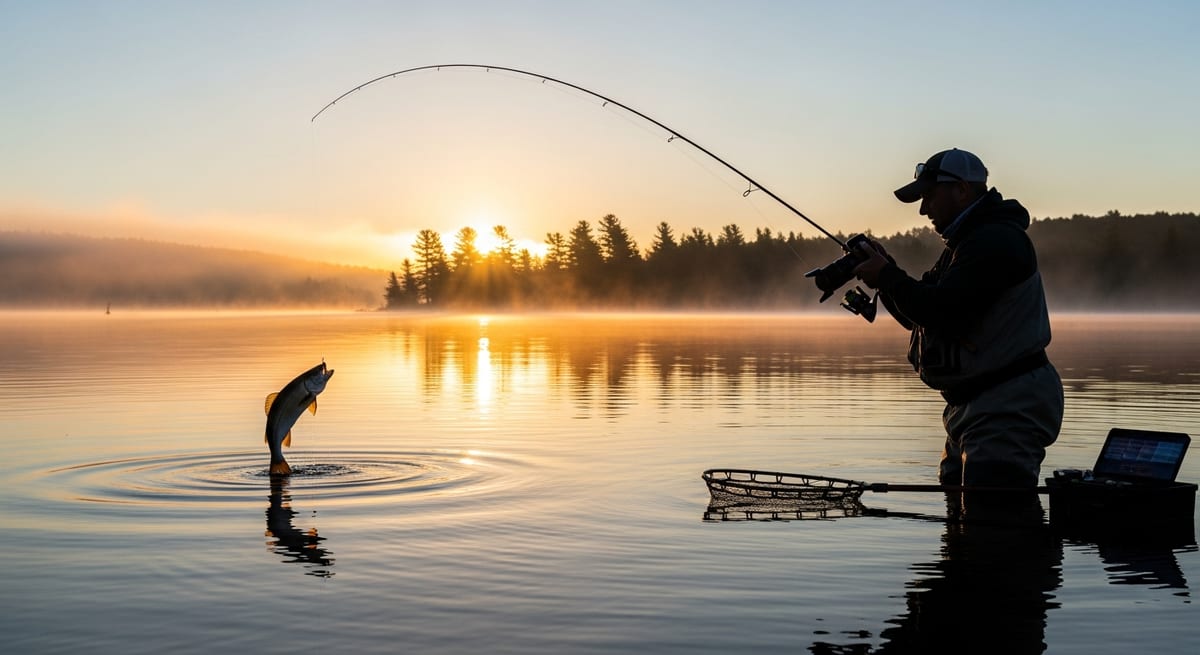
The fish photo is part of the fishing experience, documenting a good catch, sharing it with friends, or just having a record of a memorable day. But a poorly taken photo keeps the fish out of water too long, which reduces its survival odds. Here's how to get a great shot fast and get the fish back healthy.
Preparing Before You Land the Fish
The biggest time-waster in fish photography is scrambling for the camera after the fish is already in hand. Prepare before you land it:
Phone ready: Put your phone in an accessible pocket, not locked in a dry bag. If your phone has a waterproof case, great, if not, have a plan for getting it without dropping it in the water.
Know your shots: If you're solo, decide before the fish is landed whether you're going to set up for a self-timer shot or hold the phone in the other hand. Multi-person shots require telling your partner what to do before the fish comes to the boat.
Wet your hands: Before touching the fish, wet your hands. Dry hands remove the fish's protective slime coating, which protects it from infection. This is the single most important fish-handling habit you can develop.
Have the hook removal plan ready: Know whether you're using pliers, a dehooker, or fingers before the fish is alongside. The faster you remove the hook, the faster the photo and release happen.
How to Hold a Fish for Photos
Bass and most freshwater gamefish: Lip-grip with the thumb inside the lower jaw and the index finger curled underneath. The fish hangs vertically or can be cradled horizontally. Support the body weight horizontally if the fish is over 3 lbs, holding a large bass vertically by the jaw can damage the jaw joint.
Trout: Support the body fully with both hands or one hand under the belly and one at the tail. Trout have no jaw to grip, use a light grip around the body while supporting the belly. Keep the fish horizontal and near the water surface.
Striped bass: Thumb in the jaw, support the body with your other arm. Large stripers can be held horizontally across both forearms for the "hero shot."
Bluefish: Use a lip gripper tool or hold behind the gill plate, never put fingers inside a bluefish's mouth. They have razor teeth.
Fluke and flatfish: Support the belly. Fluke are delicate, handle gently with two hands.
The position that photographs best: Fish held at arm's length horizontally toward the camera, angler holding the fish out toward the lens. This perspective makes the fish look largest. A fish held tight to the body looks smaller. Camera slightly below fish level shooting upward looks better than looking down at the fish.
Getting the Shot Fast
The 15-second rule: Most healthy fish can tolerate 15-30 seconds out of water without significant stress. Your goal is one clean shot in that window.
Continuous burst mode: Set your phone to burst mode before reaching for the fish. Tap and hold the shutter button while holding the fish. You'll have 10+ frames to choose from and the best one will be sharp.
Lighting: Face the sun if possible so your face and the fish are both lit. With the sun behind you, the fish is well-exposed; shooting into the sun creates a silhouette. Overcast days are actually easier, diffuse light means no harsh shadows.
Background: A natural background (water, sky, vegetation) looks better than gravel, concrete, or a messy truck bed. Take 2 steps to position yourself with a cleaner background before lifting the fish.
If the shot isn't working: Don't extend the time out of water trying to get a perfect shot. Get one shot, put the fish back, let it recover for 30 seconds, then lift again for a second attempt if you really need a better photo. The fish's survival matters more than the Instagram version.
Releasing the Fish Properly
Don't drop or throw: Place or lower the fish into the water rather than dropping it. A large fish dropped from a height can sustain internal injury.
Support during recovery: Hold the fish upright in the water with one hand supporting the belly. Allow the fish to breathe water over its gills. If the fish is exhausted after a long fight, move it gently forward and back to force oxygenated water through the gills.
Release when it's ready: A recovered fish will kick strongly and pull out of your hand. Don't push it away, let it leave on its own. If the fish rolls to its side, bring it back to the surface and support it longer.
Watch for signs of poor recovery: A fish that rolls repeatedly after release may have barotrauma (depth-related pressure damage), be exhausted, or have a hook injury. In extreme heat or cold water, some fish take 5-10 minutes to recover fully.
If you're keeping the fish: Dispatch it immediately and humanely (a sharp blow to the back of the head), then ice it right away. A fish sitting on a stringer in warm water for 3 hours is not good table fare.
EVERY SATURDAY MORNING
Weekly fishing intelligence
Nationwide conditions, what's biting, and honest gear deals. One email, no noise.
No spam. Unsubscribe anytime.