
Connecticut Reservoir Fishing: Access, Species, and Tactics
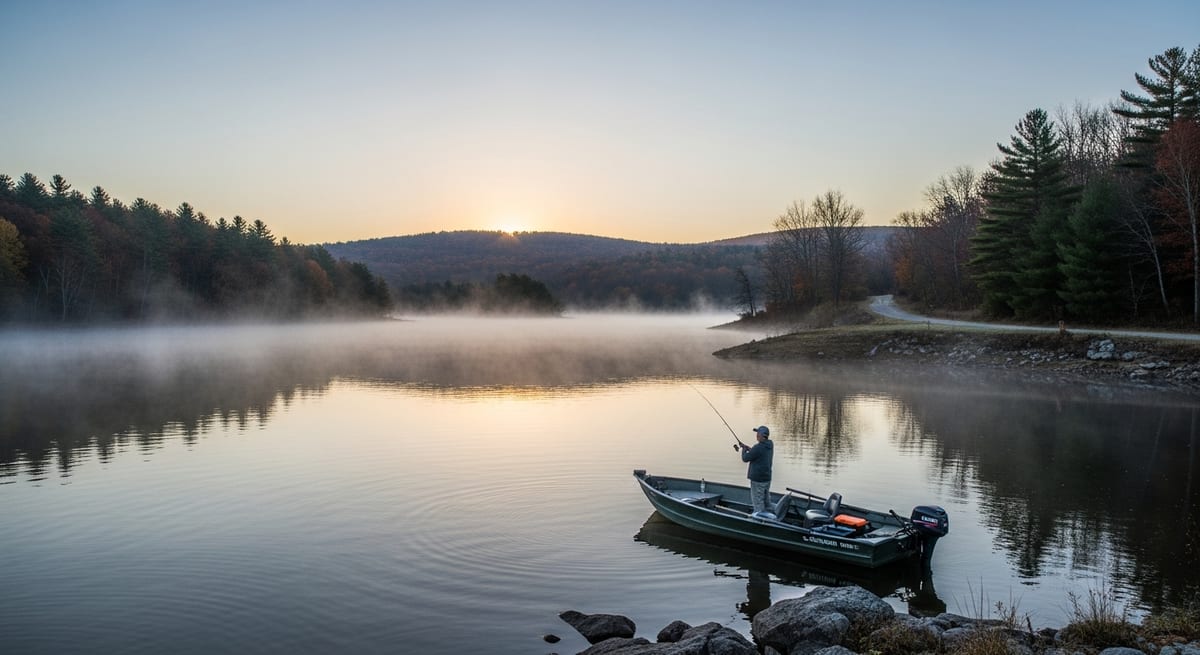
Connecticut has hundreds of reservoirs, built originally for water supply, flood control, and power generation. Many are restricted from public access to protect water quality. But a meaningful number are open to shore fishing, some allow non-motorized boating, and a few permit full motorized access. Navigating the access question is the first step to tapping this productive, relatively underutilized water.
Access: What's Open and What Isn't
Water company reservoirs: The South Central Connecticut Regional Water Authority, Metropolitan District Commission (MDC), and private water companies own the majority of CT's large reservoirs. Access policy varies:
MDC Reservoirs (greater Hartford area): MDC operates an extensive recreation program on its watershed lands. Fishing is permitted on many MDC reservoirs by permit. Anglers purchase an annual watershed recreation permit. Permits are available through MDC. No motors are allowed, but cartop boats (kayaks, canoes) are permitted at many sites. This is a significant and underutilized fishery.
South Central CT Regional Water Authority: SCCRWA allows recreation including fishing at many reservoir properties through a permit program. Check their website for current access sites and permit requirements.
Private reservoirs: Many smaller reservoirs are privately owned and inaccessible without owner permission.
Publicly accessible reservoirs: CT DEEP manages or has access agreements on numerous reservoirs statewide. The DEEP public fishing access guide lists specific waters open to fishing. Candlewood Lake (the largest, actually a private hydroelectric reservoir) has significant public access points around its perimeter.
Shore-only vs. boating access: Many open reservoirs permit shore fishing but restrict boats. Non-motorized kayak and canoe access is more commonly permitted than motors. Always check specific regulations for the water you're fishing. They vary.
Largemouth and Smallmouth Bass in CT Reservoirs
Many of Connecticut's larger reservoirs hold both largemouth and smallmouth bass. Bass populations in reservoirs with limited fishing pressure are often excellent, larger average size and less wary fish than heavily-pressured ponds and lakes.
Largemouth habitat in reservoirs: Coves with shallow flats, aquatic vegetation (pondweed, milfoil), standing timber in flooded areas, and woody debris banks. Target main lake points adjacent to deep water in summer. Bass use these to transition between feeding flats and deeper thermal refuge.
Smallmouth in reservoirs: Smallies prefer harder substrate, rock points, gravel shoals, and the main lake basin edges. Reservoir smallmouth fishing in CT is underrated; anglers focused on largemouth often walk past smallie water.
Seasonal patterns: Spring is the top bass season in reservoirs as fish move shallow for the spawn. May through June provides some of the most accessible fishing. Bass are concentrated in predictable shallow areas. Summer deepens bass considerably; target points, submerged structure (when visible on depth finders), and bridge/dam face structure. Fall produces a second shallow feeding period.
Trout and Walleye in CT Reservoirs
Stocked trout: DEEP stocks trout in many CT reservoirs in spring. Stocking lists are published at ct.gov/deep and updated throughout the season. Reservoir trout fishing is productive immediately after stocking; fish congregate near inlets, aeration structures, and deeper thermal areas. As the season progresses, uncaught trout become more spread out and harder to locate.
Wild trout in reservoir inlets: Some reservoirs have tributary streams that support wild trout populations. Fishing the inlet streams (where permitted) can produce brook trout or brown trout that use the reservoir but spawn and live in the feeder streams.
Walleye: Walleye are present in a limited number of CT reservoirs where DEEP has stocked them as predator management tools. Bantam Lake holds walleye; some reservoir walleye populations have established naturally from Connecticut River watershed fish. Walleye in reservoirs are best targeted at dawn and dusk using jigs and minnow-style crankbaits fished over deeper structure.
Yellow perch: Reservoir yellow perch are a bonus species, often abundant, fun on light tackle, and excellent table fare. Target them in late ice (ice fishing season) and early open water over rocky bottom and near submerged structure.
Tactics for Shore Fishing Reservoirs
Most CT reservoir access is from shore, which requires adjusting tactics compared to boat fishing:
Cast to deep water: From shore, you want to reach the deepest water you can access from your position. Longer casts with weighted rigs, heavier jig heads (3/8-1/2 oz rather than 1/4 oz), and lures that maintain depth on a long retrieve increase your effective range.
Find points and structure from shore: Topographic maps and satellite imagery (Google Maps satellite view) can help you identify where underwater points, coves, and depth transitions occur relative to shoreline access. A point that extends into the reservoir from the bank often continues underwater, position to cast along the structure.
Fish early and late: Shore fishing produces better when there's less boat pressure and lower light. On reservoirs with no motorized boats this matters less, but on mixed-use waters, early morning before boats launch gives shore anglers the best undisturbed water.
Live bait for multiple species: For shore anglers targeting multiple species, a slip-bobber rig with a live nightcrawler or small minnow near structure is consistent for bass, perch, crappie, catfish, and trout simultaneously. It requires little active fishing skill and works well for anglers who want to fish from a single position.
EVERY SATURDAY MORNING
Weekly fishing intelligence
Nationwide conditions, what's biting, and honest gear deals. One email, no noise.
No spam. Unsubscribe anytime.