
Eastern Connecticut's Quiet Corner Holds More Fishable State Forest Water Than Most CT Anglers Know, reports From Pachaug, Natchaug, and the Quinebaug Smallmouth Corridor Show the Pressure Rarely Matches the Productivity. What CT DEEP 2025-2026 Freshwater Regulations and Windham County Anglers Reveal About Brook Trout, Bass, Perch, and Pickerel Across the Region.
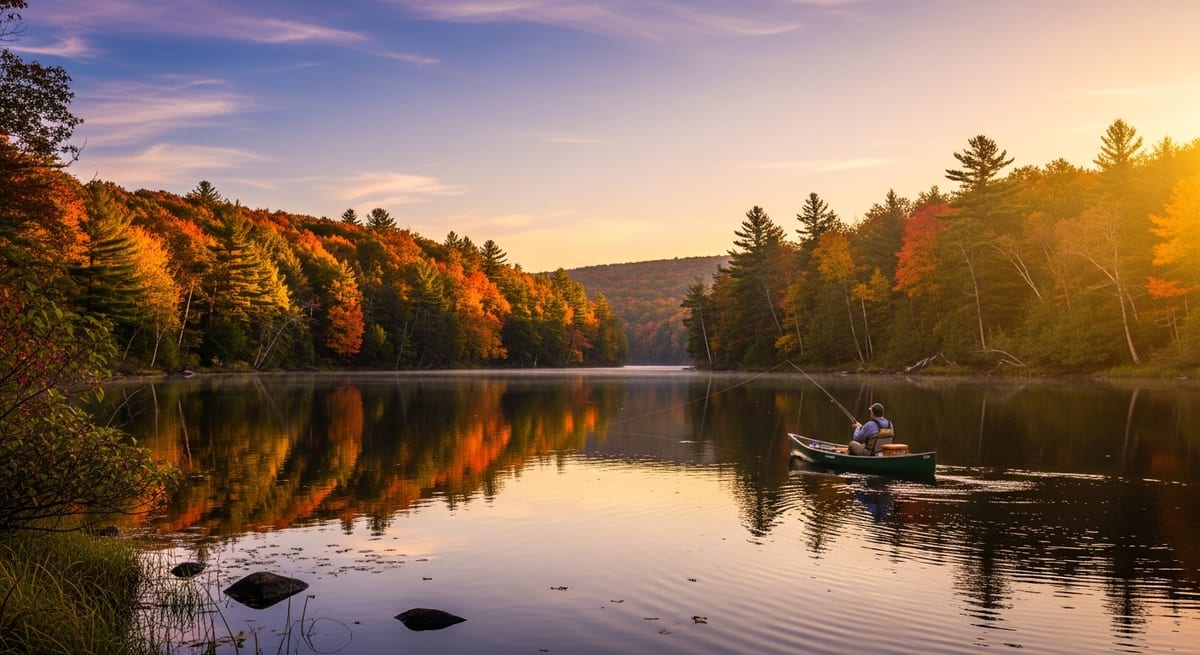
Anglers who fish Pachaug State Forest's ponds and back-coves in late spring report consistent largemouth bass and chain pickerel action across multiple named water bodies, in water that draws a fraction of the effort that similarly sized lakes in Litchfield County absorb on a typical weekend morning. That gap between productivity and angling pressure runs through nearly every water type in eastern Connecticut's Quiet Corner. The region spans Windham and Tolland County towns including Voluntown, Chaplin, Colchester, Putnam, and Killingly. Within Natchaug and Pachaug State Forests alone, the CT DEEP freshwater access map shows more named fishing water than most CT anglers associate with the eastern half of the state. CT DEEP 2025-2026 freshwater regulations apply throughout; annual stocking schedules for Bigelow Brook, the Natchaug River, the Salmon River, and the upper Quinebaug are posted at ct.gov/deep and are the practical starting point for any spring planning.
Bigelow Brook Brook Trout and the Natchaug River: What Stream Anglers in Chaplin and Hampton Report Through June
Natchaug State Forest (Chaplin, Hampton, Eastford) contains several quality fishing destinations across its river corridors and adjacent state park land.
Bigelow Brook: Stream anglers who fish Bigelow Brook in May describe consistent stocked brook trout action in the accessible sections, with wild brook trout reported in the upper headwater tributaries above the primary stocking reaches. CT DEEP 2025-2026 freshwater regulations cover season dates and creel limits for this water, download the current regulation booklet at ct.gov/deep before the spring opener, as Bigelow occasionally carries special designations. The approach Quiet Corner stream anglers describe most often is ultralight spinning gear in the 5'6 to 6 foot range with 4-6 lb monofilament and a #0 or #1 inline spinner. Early May through June, and again in September and October, are the windows that appear most consistently in local reports.
Natchaug River: The river draining Natchaug State Forest is a medium-sized stream with spring-stocked trout and resident smallmouth bass through summer. Anglers who wade the forest section describe moderate current and reliable access via marked forest trails. The consensus among Natchaug regulars is that natural bait, worms and minnows, outperforms artificials for stocked trout, while small spinnerbaits and tube jigs pick up more smallmouth through June and July.
Quaddick Reservoir (Thompson area, Quaddick State Park): A quality panfish and largemouth lake with a public boat launch. Local reports consistently describe good yellow perch from shore in April and May, with largemouth moving into shallow structure through summer. Worth a spring visit before post-spawn bass settle into their deeper summer holds.
Pachaug Pond, Beach Pond, Hopeville, and Hell Hollow: Bass, Pickerel, and Perch Reports From CT's Largest State Forest
Pachaug State Forest, at over 27,000 acres across Voluntown, Griswold, and Exeter, contains more named fishable water than any other state forest in Connecticut. CT DEEP's public freshwater access map shows several productive options within or adjacent to the forest boundary.
Pachaug Pond: A medium-sized lake within the forest boundary. Anglers who fish the back coves and weed beds report largemouth bass, chain pickerel, and yellow perch through the warm season. Pachaug regulars describe Texas-rigged soft plastics and topwater frogs in the weed edges as the standard summer presentations. A public boat launch provides access.
Beach Pond: On the CT-RI border, Beach Pond produces well for largemouth and chain pickerel. The consensus among eastern CT bass anglers is that the shallow Connecticut-side coves hold pre-spawn largemouth in May before fish spread across the main lake. Under CT DEEP 2025-2026 freshwater regulations, standard largemouth bass size and creel rules apply, verify any special designations for Beach Pond specifically at ct.gov/deep before fishing.
Hopeville Pond (Hopeville Pond State Park): A small lake with a boat launch and shore access. Reports from Hopeville regulars describe exceptional yellow perch fishing in spring, schools of 10-12 inch fish in shallow water that respond consistently to small jigs and worms under a slip float. Yellow perch carry no minimum size requirement under current CT DEEP freshwater regulations.
Hell Hollow Pond: A remote pond within Pachaug accessible by foot or via forest roads. Anglers who have made the hike describe largemouth bass fishing with minimal lure-conditioning pressure. Fish that respond to presentations they don't see often. The tradeoff is the effort to reach it; what Quiet Corner bass anglers who fish it regularly report is consistent action from fish that behave nothing like the reservoir bass in more accessible locations.
Salmon River Stocked Trout Through June, Lake Moodus Bass Through Summer: What Colchester-Area Anglers Report
The Salmon River corridor (Colchester, Hebron, East Haddam) covers several miles of productive water across two distinct seasonal fisheries.
Salmon River: Anglers who fish the Salmon River State Forest section in spring report solid stocked trout action through June, with the river receiving annual CT DEEP stocking early in the season. The lower section near East Haddam produces smallmouth bass through summer in the deeper runs and below rocky drop-offs. Salmon River regulars describe it as one of the more accessible medium-sized wade-fishing streams in central-eastern CT, enough variety to target multiple species on the same outing under a single regulation framework. Verify the current 2025-2026 stocking schedule and season dates at ct.gov/deep.
Lake Moodus Reservoir (Machimoodus State Park): A reservoir in the Moodus area with substantial weed cover and rocky structure. Reports from Moodus regulars describe largemouth bass and chain pickerel concentrated in the weed edges and cove entrances from late spring through fall. Night-fishing reports from Moodus in summer consistently mention large largemouth using dock and structure areas after the surface temperature peaks. The state park provides boat launch access.
Day Pond State Park (Colchester): A quiet, family-accessible pond within the state park. Shore fishing for panfish and small largemouth in the morning hours is the primary use reported by anglers who visit. Particularly productive in spring and early summer before aquatic vegetation reduces fishing-from-shore options at the accessible bank sections.
Quinebaug River Smallmouth From Putnam Through Killingly: Summer Rocky-Section Reports and the Spring Stocking Reach
The Quinebaug River runs through Putnam, Killingly, and Thompson in northeastern CT and provides fishable stretches for smallmouth bass, stocked trout, and chain pickerel in the slower mid-river sections.
Trout section (upper Quinebaug): CT DEEP stocks the upper Quinebaug in spring, and anglers fishing the Putnam and Thompson stretches early in the season report consistent access at multiple pulloffs and public right-of-way points. Holdover fish from previous seasons supplement the stocked population in stretches with reliable deep pools. Under CT DEEP 2025-2026 freshwater regulations, standard trout rules apply, verify stocking dates and any special designations at ct.gov/deep before the season opener.
Smallmouth bass (middle and lower sections): The Quinebaug through Killingly and Brooklyn holds resident smallmouth in the faster, rocky stretches. The consensus among Quinebaug smallmouth anglers is that a 6'6 to 7' medium spinning rod with a 3-4 inch tube jig or small crayfish imitation is the standard summer presentation, particularly where the river drops over ledge rock and gravel bars. Water temperature in the upper 60s to low 70s correlates with the most consistent action in community reports.
Kennedy Pond (Putnam): A small town pond accessible from the public boat launch. Largemouth and chain pickerel reports from spring describe fish moving into shallows in April and May. Worth a morning visit before bass drop into their deeper summer holding areas.
CT DEEP 2025-2026 Freshwater Regs, State Forest Access, and What Quiet Corner Tackle Shops Know That Maps Don't Show
The Quiet Corner's practical advantages for fishing, public land, multiple species options, light pressure, are straightforward to use with the right resources.
CT DEEP 2025-2026 freshwater regulations: The annual regulation booklet covers season dates, size limits, creel limits, and special restrictions for every significant water body in Windham and Tolland County. Download it from ct.gov/deep before any outing. The Salmon River, Bigelow Brook, and certain Pachaug waters occasionally carry special designations that differ from the statewide defaults.
Maps and access: CT DEEP's freshwater fishing access map shows public boat launches, shore access points, and right-of-way areas across the Quiet Corner. Natchaug and Pachaug State Forest roads provide access to water that doesn't appear on standard road maps. Some municipal watershed land in the region may allow fishing with a permit from the managing municipality, verify directly with local authorities before fishing any posted watershed property, as terms vary by owner.
Local tackle shop intel: Independent tackle shops in Plainfield, Putnam, and Griswold carry current local knowledge that stocking schedules and maps don't reflect, recent water clarity, which specific pools have been producing, and whether a given stretch is worth the drive this week. Anglers new to the Quiet Corner consistently report that a quick call to a local shop before a first visit saves real time on the water.
Seasonal windows across the region: Spring (April through June) for stocked trout and pre-spawn bass is the primary window in Quiet Corner fishing reports. Early summer (June-July) shifts to largemouth and panfish in the warmwater lakes and ponds. Fall (September-October) produces the strongest reports for large bass, chain pickerel, and yellow perch feeding before water temperatures drop below active-feeding thresholds.
EVERY SATURDAY MORNING
Weekly fishing intelligence
Nationwide conditions, what's biting, and honest gear deals. One email, no noise.
No spam. Unsubscribe anytime.