
Spinnerbait Fishing for Bass: When, Where, and How to Use Them
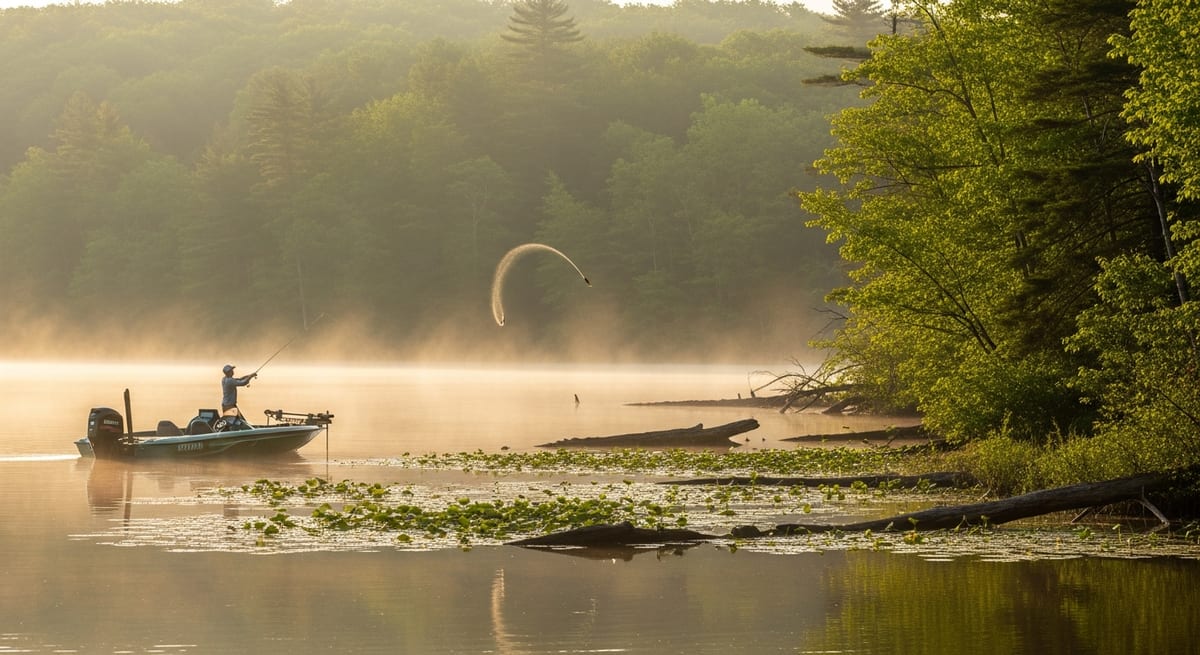
Spinnerbaits have been a staple bass lure for over 50 years, and they continue to produce in conditions that confound other presentations. They're particularly effective in stained water, around vegetation, and during the spring pre-spawn period, all common situations for CT bass fishing. Yet many anglers treat spinnerbaits as a secondary option, pulling them out only when topwater and soft plastics fail. Experienced bass fishermen often make spinnerbaits their first choice in specific conditions. Here's why, and when.
When Spinnerbaits Shine
Spinnerbaits perform best in specific conditions that align with their unique properties.
Stained or murky water: The primary situation where spinnerbaits outperform clearer-water presentations. Their vibration (lateral line stimulation) and flash allow bass to find them in water where visual presentations are less effective. After rain runoff, in tannin-stained CT ponds, and in any water where visibility is under 2 feet, a spinnerbait is often the first lure to reach for.
Spring pre-spawn: One of the most reliable spring bass lures for CT lakes. As water temperatures reach 55-65°F and bass move to pre-spawn staging areas, a spinnerbait slow-rolled along the bottom or near structure consistently produces quality fish. The Colorado blade (more vibration, less flash) is particularly effective in the cloudy spring water conditions common in CT.
Cloudy and overcast conditions: Reduced light levels make bass more willing to commit to reaction lures. Spinnerbaits excel on cloudy days when sun-driven bass behavior (tight to cover, deeper) relaxes. Overcast plus stained water is a spinnerbait's home conditions.
Around vegetation: Spinnerbaits are semi-weedless. The wire frame deflects most weed contact and the lure continues fishing through contact. Running a spinnerbait through, over, and along weed edges in CT lakes is highly productive throughout spring through fall.
Spinnerbait Blade Selection
Blade type significantly affects how a spinnerbait performs in different conditions.
Colorado blade: Round, cupped blade that rotates wide and creates maximum vibration and thumping sound. Less flash than willow blades. Best choice in murky water, cold water (slower retrieve), and low-light conditions where bass locate the lure by feel rather than sight. The go-to blade for CT stained ponds after rain or in early spring.
Willow leaf blade: Long, narrow blade that rotates tight with minimal water resistance. More flash, less vibration. Best in clearer water, faster retrieves, and situations where visual attraction matters more than vibration. Excellent for largemouth and smallmouth around clear-water rock structure.
Tandem (Colorado/Willow): The most common configuration. A Colorado blade at the top and a willow blade below. Combines the vibration of Colorado with the flash of willow. The most versatile all-around configuration for CT conditions.
Blade color: White/silver for clear water. Gold/copper for stained/murky water. Chartreuse for very murky conditions or bass that are being particularly aggressive.
Spinnerbait Retrieve Techniques
The retrieve determines how a spinnerbait fishes and which bass it targets.
Slow roll: The most important spinnerbait technique for CT spring fishing. Retrieve slowly enough that the blade barely stays turning, with the lure bumping along bottom. This is a cold-water, pre-spawn bass technique that produces large fish. Keep the rod tip low, reel slowly, and let the lure tick along the bottom in 6-12 feet of water near staging areas.
Steady medium retrieve: The most common technique. Reel at a pace that keeps the blades spinning and the lure 2-4 feet below the surface. This covers water efficiently and triggers reaction strikes from actively feeding bass along weed edges and structure.
Helicopter (falling): Cast near a weed edge or dock, let the spinnerbait fall on a semi-slack line (the blades helicopter as it falls). Bass often hit during the fall. Watch the line for a sideways twitch or the line going slack unexpectedly. That's a fall bite.
Ripping through vegetation: Cast the spinnerbait into or through vegetation, then rip it free with a sharp rod sweep when it gets hung. The sudden burst of speed and flash as it comes free triggers reaction strikes. Effective in lily pad fields and weed mats.
Trailers: The Overlooked Factor
A trailer (soft plastic bait added to the hook) significantly affects spinnerbait performance.
Why trailers matter: Trailers add bulk and action to the lure, improve slow-roll effectiveness (larger profile moves more water), and slow the fall for hesitant fish. They also add scent.
Best trailer options:
- Paddletail swimbait (3-4 inch): Adds swimming tail action and bulk. Excellent for slow rolling. Chartreuse, white, or shad-colored.
- Double-tail grub: Classic spinnerbait trailer. The dual tail kicks on slow retrieves, adding action below the blade.
- Living Rubber replacement skirting: If the original skirt is damaged or lacking action, replacement rubber skirts are available. They breathe in the water better than molded plastic skirts.
Trailer hook: For spinnerbaits where you're getting short strikes (fish hitting but not getting hooked), add a trailer hook. A second treble hook hooked through the eye of the main hook and left to trail. This catches short-striking fish but makes the lure less weedless.
Best CT Spinnerbait Situations
Connecticut lakes offer several specific situations where spinnerbaits consistently outperform other approaches:
Post-rain fishing: After heavy rainfall, CT lake tributaries and coves receive influxes of runoff that stain the water with silt and tannins. Bass often move to these influx areas to ambush confused baitfish. A chartreuse/white Colorado-blade spinnerbait retrieved in 3-6 feet of water in these areas is one of the most reliable post-rain bass presentations.
Spring reedy coves: The reed beds and emergent vegetation along CT lake coves come alive in May with pre-spawn bass. Slow-rolling a 3/8 oz spinnerbait along the outer reed edges, keeping the lure at the same depth as the base of the reeds, consistently produces pre-spawn largemouth.
Lake Lillinonah's weed flats: The large shallow weed flats in Lillinonah's coves are classic spinnerbait water, extensive vegetation, stained water in places, and active largemouth from May through October. A 1/2 oz tandem willow/Colorado with a white paddletail trailer fished along the outer grass edges is a standard Lillinonah summer approach.
Night fishing (summer): A single Colorado-blade spinnerbait in black or midnight blue, slow-rolled along structure at night, is one of the most effective summer night bass presentations. The vibration allows bass to track it in complete darkness, and the single Colorado blade produces more vibration than a tandem configuration.
EVERY SATURDAY MORNING
Weekly fishing intelligence
Nationwide conditions, what's biting, and honest gear deals. One email, no noise.
No spam. Unsubscribe anytime.