
CT Bass Anglers Who Fish Bantam, Lillinonah, and the Housatonic Backwaters Have Strong Opinions on Spinnerbait Blades. What the Community Reports About Colorado vs. Willow, Skirt Color, and When to Slow-Roll
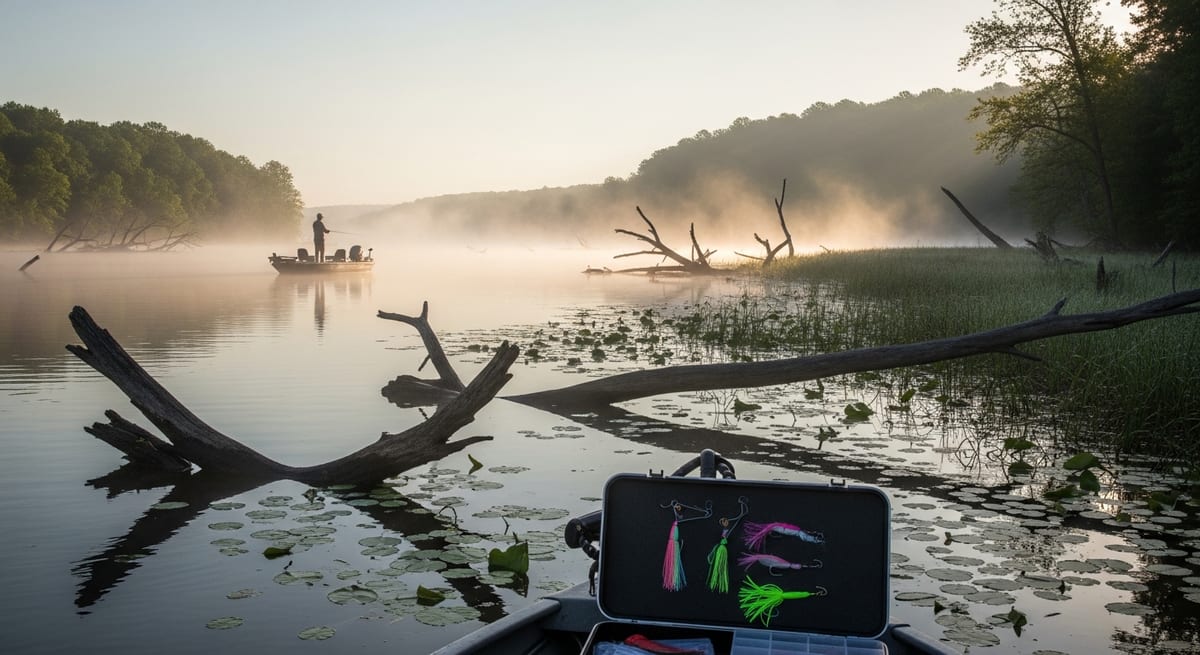
Anglers who fish Lillinonah and Candlewood in late April have documented a pre-spawn pattern that runs counter to conventional cold-water advice: spinnerbaits working the 5-to-8-foot transitional zone produce on days when water temperatures are still climbing through the low 50s, conditions most guides associate with jig or finesse presentations, not reaction baits. The gap between carrying a spinnerbait and knowing when to throw one comes down to blade selection, retrieve, and reading the specific water in front of you. What follows is what Connecticut bass communities have worked out across the state's stained-water lakes, clear-water impoundments, and tidal backwaters.
What Blade Shape Actually Does in CT Water Conditions
Blade shape determines two things: how much vibration a spinnerbait produces and how fast it needs to move to stay at depth. Both matter more in variable-clarity CT water than most national guides acknowledge.
Willow leaf blades are long and narrow. They spin fast, produce intense flash with minimal vibration, and slice through weeds more cleanly than rounder profiles. CT anglers who fish Candlewood's clear mid-lake humps in summer report that willow-leaf rigs outperform on high-visibility days. The flash mimics a fleeing shad without the heavy thump that can spook pressured fish in gin-clear water.
Colorado blades are nearly round. They rotate slowly, displace a lot of water, and generate thumping vibration that travels through murky water better than flash does. On Bantam Lake, where wind-driven runoff can knock visibility below a foot in spring, the consensus among anglers who fish the western weed edge is that a Colorado-bladed spinnerbait slow-rolled near the bottom covers stained conditions that would neutralize a willow rig entirely.
Indiana blades split the difference, oval, moderate flash, moderate vibration. Anglers fishing Lillinonah's mid-lake transition zones and the tannin-stained Housatonic backwaters tend to reach for Indiana setups when covering unfamiliar water.
Double willow and willow/Colorado combos are common on CT tournament circuits. The willow/Colorado pairing, one round blade for thump, one narrow blade for flash, is the most frequently cited early-morning configuration in CT bass communities for low-light passes on Candlewood and Bantam, when light levels shift fast and fish are actively feeding.
Weight, Skirt Color, and Matching the Water Clarity
Weight follows depth and current. A 3/8 oz head covers most CT lake situations, candlewood flats, Bantam's mid-depth edges, calm coves off the Connecticut River. A 1/4 oz head works shallower presentations and lighter line in spots like the upper Thames backwaters or protected CT River coves. Go to 1/2 oz or heavier in current (the Housatonic through Derby, the CT River main channel) or when wind pushes a lighter lure off the target line.
Skirt color responds to water clarity more than any other factor. The pattern that CT bass communities have settled on across Candlewood, Bantam, and Lillinonah roughly follows this framework: white in clear water with visibility over 3 feet; chartreuse/white in stained conditions; solid chartreuse or chartreuse/orange when turbidity drops visibility under 12 inches.
Blade color follows light levels, not clarity. Gold blades on low-light days, dawn, dusk, overcast fall mornings on Bantam or Lillinonah. Silver in bright midday sun on Candlewood's open water. Painted blades (chartreuse, orange) come out when turbidity makes reflective flash largely irrelevant.
When fish aren't responding to white in moderate conditions, CT anglers on the Housatonic and Connecticut River backwaters typically shift to chartreuse before changing blade, size, or retrieve. That one adjustment covers most stubborn sessions before more significant changes are warranted.
How CT Anglers Actually Work the Retrieve
Steady retrieve is the starting point for covering water, reel at a pace that keeps the blades spinning and the lure at depth. Anglers working Candlewood's mid-lake structure in spring typically start here, varying speed until they find what's triggering fish.
Slow roll means keeping the lure barely moving, just fast enough to keep the blades turning, often letting it tick bottom or drag through submerged grass. Colorado-bladed rigs hold their thump at the slowest possible speeds, which matters on cold-water days in March and early April when CT largemouth are still staging deep on Bantam and Lillinonah. CT bass anglers who fish slow-roll presentations consistently add a paddle-tail or swimming-grub trailer to amplify action at low retrieve speeds. The extra movement compensates for the reduced blade spin.
Burning is a midsummer technique, maximum retrieve speed, blades nearly breaking the surface. Anglers on Candlewood and the upper Connecticut River report that burning at dawn and dusk in July and August produces reaction strikes from feeding bass that won't chase a slower presentation. The window is typically short and tied to light levels more than water temperature.
Running structure means steering the lure along hard cover edges, dock pilings, submerged timber, laydown logs along Bantam's shoreline, and letting the deflection off contact trigger passive fish. Candlewood's flooded timber zones and Bantam's sunken brush piles are the most cited spots in CT bass communities for this retrieve variation. The key is letting the lure deflect off the cover naturally rather than pulling it clear.
When CT Bass Are Actually Catchable on a Spinnerbait
Pre-spawn (late March through May): Bass moving from winter staging areas toward spawning flats are among the most responsive to spinnerbaits in the CT season. Anglers who fish Lillinonah's point transitions and Candlewood's secondary coves in April and early May, targeting the 5-to-10-foot zone, report consistent pre-spawn action at moderate retrieves when water temps are climbing through the 50s.
Windy days in fall: A common report from CT bass communities fishing Bantam, Candlewood, and the Housatonic is that a sustained breeze improves spinnerbait production, surface chop reduces visibility from above and seems to loosen pressured fish, while vibration helps bass locate the lure in the disrupted water column. This is a widely shared observation, not a universal guarantee; it holds most consistently when fish are already in a feeding disposition rather than fully locked down.
Stained and murky water: When visibility drops to 12 inches or under. A frequent condition on Bantam and the lower Connecticut River after heavy spring rain, colorado-bladed spinnerbaits are among the most effective tools for reaching bass that can't locate presentations visually. Pair with a bright chartreuse skirt and a slow, bottom-proximate retrieve.
Post-frontal conditions: This is a contested call in CT bass communities. The common experience is that post-frontal bass go inactive and respond better to finesse, drop shots and shaky heads on Candlewood's pressured humps are the typical fallback. Some anglers report that a slow-rolled Colorado rig on Bantam's deeper weed edges still produces after light cold fronts, but the broader community consensus leans toward treating post-frontal days as finesse situations unless recent on-water reports say otherwise.
Connecticut DEEP sets the statewide minimum size limit for largemouth and smallmouth bass at 12 inches, with a 5-fish daily bag limit during open water season. Most CT bass waters, including Candlewood, Bantam, Lillinonah, and the Housatonic River, follow the statewide regulation; verify current-season rules at ct.gov/deep before the trip, as special regulations apply to some trophy designation waters.
EVERY SATURDAY MORNING
Weekly fishing intelligence
Nationwide conditions, what's biting, and honest gear deals. One email, no noise.
No spam. Unsubscribe anytime.