
The Spinnerbait Isn't a Clear-Water Lure. That's What CT Bass Anglers Who Fish It Effectively Already Know.
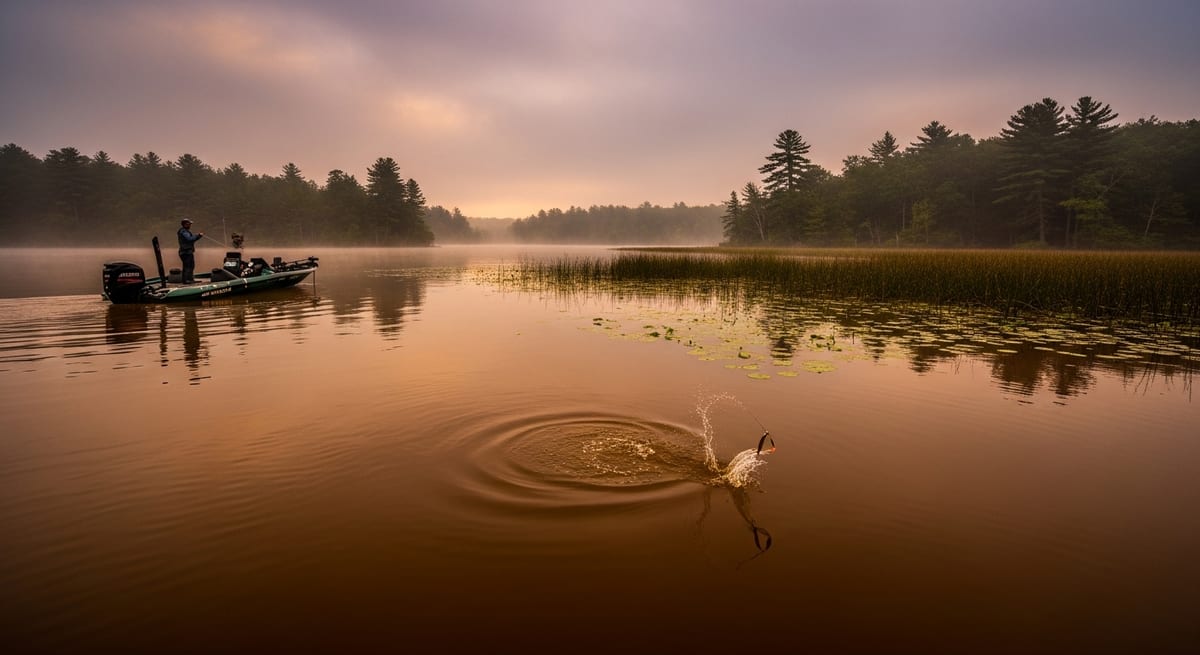
Anglers fishing the lower Housatonic and the backwaters of Lake Lillinonah in April and early May, when snowmelt pushes visibility down and bass are stacked in flooded brush, consistently put the spinnerbait at the top of their catch reports. The conditions other anglers call tough are exactly the ones where this lure earns its reputation. The spinnerbait is one of the most productive bass lures in the Northeast, and one of the most situationally misused. Most anglers throw it on a straight retrieve down a clear-water bank and set it aside when nothing bites. That leaves most of the lure's actual range untouched. The community of Northeast bass anglers who fish heavy cover and stained water through the CT DEEP warmwater bass season tend to work this lure very differently, four retrieves, matched to conditions, with blade choice driven by visibility rather than habit.
Why Spinnerbaits Excel in Off-Color Northeast Water
A spinnerbait combines three triggers that bring bass to the hook: vibration from blade rotation that bass detect through their lateral lines, flash from the spinning blade, and a baitfish or crawfish silhouette from the skirt. All three work together in exactly the conditions where bass rely on sound and lateral line input as much as sight, stained water, overcast skies, spring chop, and cold early-season water when fish are slower to commit visually.
The wire frame with the blade positioned above the hook lets the lure move through vegetation, wood, and submerged cover that would stop a crankbait on the first cast. For anglers fishing the flooded brush and grass edges common on Lake Lillinonah, the Connecticut River's northern backwaters, and the Farmington River corridor, that's a practical advantage that shows up in the catch count rather than just on paper.
The Conditions Where CT Anglers Reach for One First
Stained or off-color water: Reduced visibility, common on the Housatonic and Farmington River systems after spring rain, is where the spinnerbait's vibration and flash carry more weight than visual profile alone. In clear water under bright sun, bass can pick out the wire frame as unnatural, and bite rates typically drop. Anglers who fish both conditions regularly find the spinnerbait performs best when visibility is noticeably reduced, though the exact threshold varies by lake and light conditions.
Overcast skies and wind: Wind chop breaks up shadow lines and makes it harder for bass to identify hardware as unnatural. Overcast conditions reduce light penetration and tend to push fish into shallower, more aggressive feeding positions. Bass anglers fishing Bantam Lake and Lake Zoar report that overcast, windy mornings produce some of their best spinnerbait action of the spring season.
Spring and fall shallow periods: Bass in the 2-8 foot range, pre-spawn in April and May, fall feeding in September and October, are consistent targets. The lure covers water quickly and reaches the shallow wood and grass that concentrating bass use. Anglers on the Connecticut River's northern reaches report steady spinnerbait action through May when fish are staging in flooded brush before the spawn.
Heavy cover: Wood laydowns, grass edges, flooded bushes, dock pilings. A spinnerbait clears all of these without fouling the way a crankbait would. Slow-rolling one along the bottom under dock structure or through submerged brush puts the lure in front of fish that other presentations can't reach cleanly.
Four Retrieves CT Bass Anglers Use, and When Each Applies
Slow roll: Retrieve barely fast enough to keep the blade turning and let the lure drop toward the bottom between rotations. A heavier spinnerbait (3/4 oz or 1 oz) worked along the bottom in 6-12 feet triggers lethargic fish that won't rise to chase. Anglers fishing the Connecticut River in early spring report that slow-rolling a 3/4 oz spinnerbait before water temps reach 55°F produces fish when faster presentations get ignored.
Bumping cover: Cast past a laydown, dock piling, or weed edge, then retrieve so the spinnerbait makes contact with the structure. The deflection off wood or rock triggers reflex strikes from fish sitting tight to cover. Bass anglers who work the docks on Candlewood Lake use this approach consistently from late spring through summer.
Burning: A fast retrieve near the surface creates a thumping sound and visible disturbance that draws reaction strikes. In September and October, when bass are pushing alewife and shad against shallow structure. Many CT anglers reach for a willow leaf spinnerbait on a high-speed burn over grass flats. The retrieve is most productive when fish are visibly or audibly chasing bait nearby.
Helicopter drop: Near a dock edge or sharp drop-off, dropping the spinnerbait on slightly slack line causes the blade to spin on the fall. Northeast bass anglers fishing vertical dock structure on CT ponds and reservoirs report that strikes on the drop are common, particularly from fish suspended in the water column rather than holding on bottom.
Blade Choices, Trailers, and What Experienced Anglers Do Differently
Colorado blades: Round, wide blades that produce maximum vibration at slow speeds. Best in cold water, early spring on lakes like Bantam or Zoar when water is still in the low 50s, and in stained conditions where the thump matters more than the flash.
Willow leaf blades: Long, narrow blades that produce more flash with less drag. They run faster without fouling in weeds, making them the first choice for burning over grass flats or fishing moderately clear water. Most anglers targeting bass on Candlewood Lake in summer keep a willow leaf rig tied on when visibility allows it.
Indiana blades: Split the difference between Colorado and willow, steady vibration with better flash than a pure Colorado. Anglers who fish across a range of visibility conditions use the Indiana as their default starting point before adjusting based on what the water is doing that day.
Trailer hook: A single trailer hook threaded onto the main hook improves hookup rate significantly on short-striking fish. CT bass tournament anglers report that adding a trailer hook converts fish they'd otherwise lose when bass in July and August are following the bait but not fully committing.
Plastic trailer: A curly-tail or swimbait body trailer adds bulk and extra action to the skirt. Anglers fishing heavy grass and flooded brush on Connecticut River backwaters and central CT reservoirs consistently find that a 4-inch paddle tail in a shad or bluegill pattern increases the bait's appeal when bass are targeting larger forage.
One pattern that surfaces consistently in Northeast bass fishing forums and CT tournament post-mortems: anglers who've fished spinnerbaits for years tend to downsize blade weight and type in clear water and size up in stained conditions or wind, matching blade choice to visibility rather than just retrieve speed. That single adjustment, more than any specific retrieve trick, tends to be the separator between anglers who get consistent spinnerbait production and those who set the lure aside after a slow morning.
EVERY SATURDAY MORNING
Weekly fishing intelligence
Nationwide conditions, what's biting, and honest gear deals. One email, no noise.
No spam. Unsubscribe anytime.