
Bluefish Fishing in Connecticut: The Best Surf and Boat Fishing of the Summer
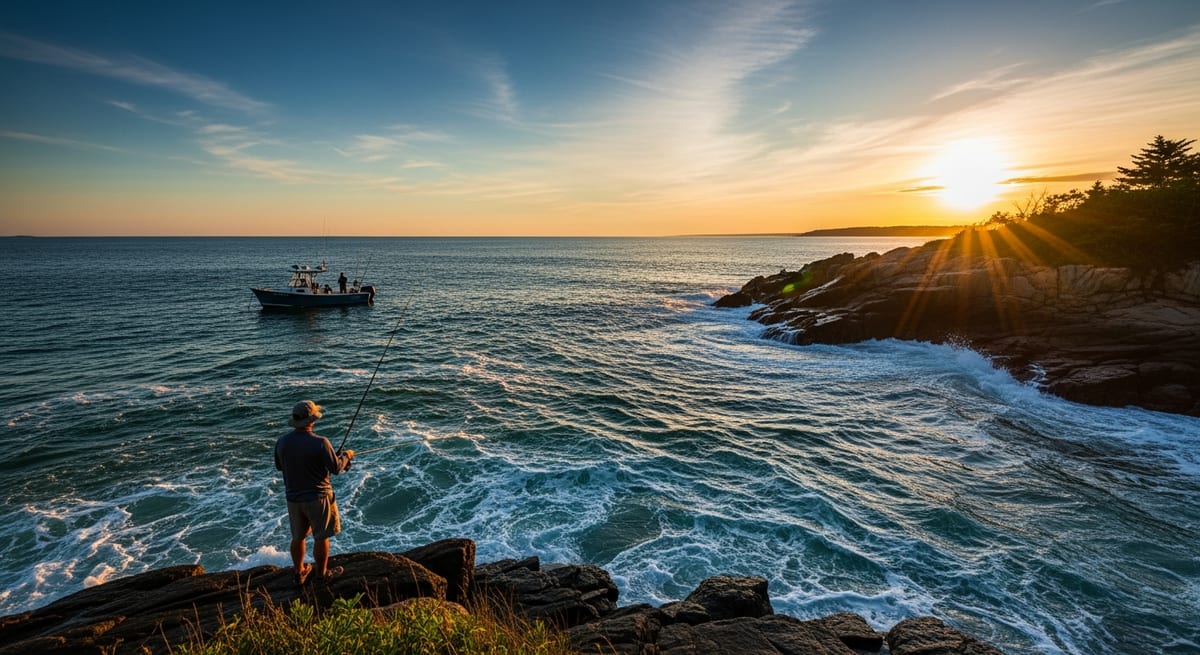
A bluefish blitz can cover a quarter mile of Long Island Sound surface in under a minute, terns screaming, bunker scattering, pencil poppers getting destroyed on first contact. Schools of adult blues typically appear in The Race and eastern Sound waters by late June, and by July surface action is common from Stonington down to Stratford. Pack wire leaders, a Hopkins, and long-nose pliers. July through late September offers some of the most intense saltwater action you'll find anywhere in the state.
When Bluefish Arrive in Connecticut
Connecticut bluefish season typically runs from late May through October, driven by water temperature and bait migration north along the coast.
Early summer (June): School blues, smaller fish typically in the 1-3 lb range, often arrive first. The Race at the eastern end of Long Island Sound is among the first areas to show fish, as tidal currents concentrate baitfish in its narrows early in the season. Western Sound also sees early action.
Peak season (July-mid-September): Adult bluefish, often in the 3-10 lb range, move through Long Island Sound in numbers. Surface blitzes over baitfish schools are most common during this period. This is peak season for both boat and surf fishing.
Fall run (late September-October): As baitfish schools push back south, blues often stage in numbers off the CT coast and in tidal river mouths. Many anglers find this produces the best inshore action of the season, bigger fish in shallow water, feeding aggressively before their migration.
Departure: Blues typically leave Connecticut waters by late October, though in warm fall years they can linger into November.
For anglers new to CT saltwater entirely, the inshore saltwater fishing beginners guide covers the gear, knots, and structure-reading habits that carry across blues, stripers, and fluke before getting into species-specific patterns.
Best CT Spots for Bluefish
The Race (eastern Long Island Sound) Where Long Island Sound narrows between Orient Point (NY) and the CT/Fishers Island shore. Strong tidal currents concentrate baitfish and predators from June through October. Access: Boat only. Launch from Noank Small Craft Area (Ward Ave, Noank) or the Groton Town Dock. Charter boats out of Niantic and Noank run regular trips to The Race.
Fishers Island Sound The waters around Fishers Island and the Stonington/Mystic area hold bluefish throughout summer. Adjacent Shelter Island Sound waters also produce well. Access: Primarily boat. Launch from the public ramp at Dodgingtown Rd in Stonington or the Noank Small Craft Area. Some shore access at the Stonington Borough breakwater at low tide.
Housatonic River Mouth (Stratford) The Housatonic dumps into Long Island Sound at Stratford. The river mouth flats and the adjacent Charles Island area are consistent producers through summer and fall. Access: Shore fishing at Short Beach (Laurel Ave, Stratford) and Long Beach. Both public, with paid parking in season. Town boat ramp off Birdseye St in Stratford for boaters.
Connecticut River Mouth (Old Saybrook) The CT River plume creates a feeding zone where baitfish stack up. Bluefish patrol the Saybrook Bar and the river mouth channel during peak season. Access: Shore access at Saybrook Point Park (1 Harbor St, Old Saybrook), public fishing, free parking. Ferry Landing State Park offers additional access. Boat ramps at Saybrook Point Marina and Clark's Marina nearby.
Hammonasset Beach State Park (Madison) One of the most reliable shore-accessible spots on the CT coast for summer bluefish. The points and jetties produce surface action when blues are in the area. Access: Public state park. Parking fee in season (typically $15-22 for CT residents, higher for out-of-state). Multiple jetties and points accessible on foot from the main lot. Get there at first light on productive days.
General Surf (Stonington to New Haven) Bluefish can show up at virtually any CT beach when they're actively pushing baitfish. Watch from shore for bird activity along the Route 1 corridor, diving terns visible in the distance often signal an approaching school.
Tackle: From the Shore
Shore and surf fishing for bluefish calls for gear that handles distance casting and can absorb violent strikes without failure.
Rod and reel: A 9-11 ft medium-heavy spinning rod paired with a 5000-6000 size spinning reel spooled with 30 lb braid is the standard surf setup. The longer rod helps with casting distance and keeps line off rough water near the wash.
Wire leader (non-negotiable): Bluefish teeth cut through fluorocarbon and mono instantly. Use a 6-12 inch section of single-strand wire (27-30 lb, coffee-colored) or a coated wire leader like American Fishing Wire Tooth Proof. Tie a small black barrel swivel at each end to prevent line twist. Always use wire, no exceptions.
Topwater from shore: A 2-4 oz Pencil Popper or Super Strike Darter casts far and works across a surface blitz with authority. Lead the school on your cast, throw ahead of where the blitz is moving rather than into the middle of it. Blues moving at speed will intercept a lure crossing their path more readily.
Metal jigs from shore: When blues aren't on top, a Hopkins or Kastmaster in the 1-2 oz range worked fast through the water column is the workhorse. Let it sink to depth, then retrieve fast with occasional pauses, strikes often come as the lure drops.
Tackle: From the Boat
Boat fishing lets you chase blitzes, troll structure, and work deeper water. Each scenario requires a slightly different approach.
Rod and reel: A 7-8 ft medium-heavy spinning or conventional rod with a 5000-7000 size spinning reel and 30 lb braid handles most situations. Bring a dedicated trolling outfit if you plan to tow spoons.
Trolling: Large bunker spoons (3-4 oz, gold or silver) trolled at 5-7 knots through bluefish-holding structure is effective when fish aren't showing on the surface. The flash at depth imitates an adult bunker well, and blues covering wide water will often commit to a moving bait.
Jigging under the boat: When fish show on the sonar but won't break the surface, drop a 2-3 oz diamond jig or butterfish jig straight down and work it with sharp upward lifts. Blues hit on the drop more than the lift, keep the reel engaged on the fall.
Rubber lures: A 7-9 inch paddle tail swimbait rigged on a 1-1.5 oz jig head catches fish but needs constant inspection. Bluefish teeth shred soft plastic fast, check the tail after each fish and replace before it falls apart on the next cast.
Handling Blues Without Losing a Finger
Bluefish have sharp, powerful teeth and a bite reflex that doesn't stop when the fish leaves the water. Every season anglers get bitten while unhooking blues carelessly. It happens fast and it's preventable.
Use long-nose pliers or a de-hooker tool. Never put fingers near the mouth of a bluefish of any size. A 5 lb blue can cause a serious puncture injury; larger fish can take off fingertips.
Keep the fish controlled. A bluefish flopping on a boat deck with treble hooks attached is a hazard to everyone on board. Use a net or lip gripper to control the fish before attempting to unhook.
Circle hooks for bait fishing: When using live bait or chunk bait, circle hooks reduce deep-hooking significantly and make safe release easier.
Eating bluefish: Best eaten fresh, ideally the same day. The fat content that makes them delicious also makes them turn quickly in the refrigerator. Bleed the fish immediately by cutting at the base of the tail. Smaller school blues (1-3 lbs) are noticeably milder in flavor than larger adult fish.
Reading a Bluefish Blitz
A surface blitz, bluefish pushing baitfish to the surface in a full feeding frenzy, is one of the most spectacular events in CT saltwater fishing. Knowing what to look for makes the difference between watching it from shore and putting fish in the cooler.
Bird activity: Terns and laughing gulls diving at the surface are the most reliable indicator. Where birds are diving, baitfish are near the surface, and predators are close behind. Visible from shore with binoculars or from a boat at distance.
White water: The surface disturbance from a blitz shows as choppy, discolored water with baitfish jumping randomly. Look for it in calm conditions, especially in morning light when the contrast is sharpest.
Casting position: Work the edges of the school, not the center. Blues charging through baitfish at full speed often ignore lures dropped into the churning middle. Fish on the perimeter are picking off stragglers and more likely to commit. Once you're in position, stay mobile; a blitz can travel a half mile in minutes.
Blitzes move fast: Don't anchor on a blitz. Follow at a safe distance and keep casting to the edges of the school. They can travel significant distances and disappear in minutes.
Eating Bluefish
Bluefish has a reputation as poor table fare that's not entirely deserved, and is completely deserved when the fish is mishandled.
The key is freshness and ice: Bluefish deteriorate faster than almost any other Northeast fish. A bluefish bled immediately at capture and packed directly in ice is excellent eating. A bluefish that sat in a bucket in the sun for three hours is barely edible. The difference is enormous.
How to eat bluefish:
- Grilled skin-on, same day: Fresh bluefish fillets with skin on, oiled, grilled over high heat for 4-5 minutes per side. The smoky char balances the rich oil in the flesh. Add lemon and capers. This is the classic treatment.
- Smoked bluefish: Bluefish's oily flesh makes it outstanding for smoking. A simple brine and cold or hot smoke produces smoked bluefish that rivals commercial smoked fish products. Many CT anglers specifically target bluefish to smoke.
- Bluefish pâté: Smoked bluefish mixed with cream cheese, capers, lemon juice, and fresh dill is a classic New England preparation. Serve with crackers.
Size matters for eating: Smaller bluefish (under 3 pounds) are milder and better eating than large slammers, which are oilier and stronger flavored. Many anglers keep cocktail blues and release large ones.
CT consumption advisory: Bluefish have elevated levels of PCBs in some waters. The CT DEEP consumption advisory recommends limited consumption, particularly for children, pregnant women, and women of childbearing age. Check the current advisory at ct.gov/deep.
EVERY SATURDAY MORNING
Weekly fishing intelligence
Nationwide conditions, what's biting, and honest gear deals. One email, no noise.
No spam. Unsubscribe anytime.