
CT Shore Anglers at Niantic Bay and the Thames River Mouth Report That Eels Outperform Plugs for Trophy Stripers After the First October Cold Snap, what CT DEEP Regulations, Night-Tide Timing, and Community Rig Preferences Reveal About the State's Most Effective Large-Fish Bait
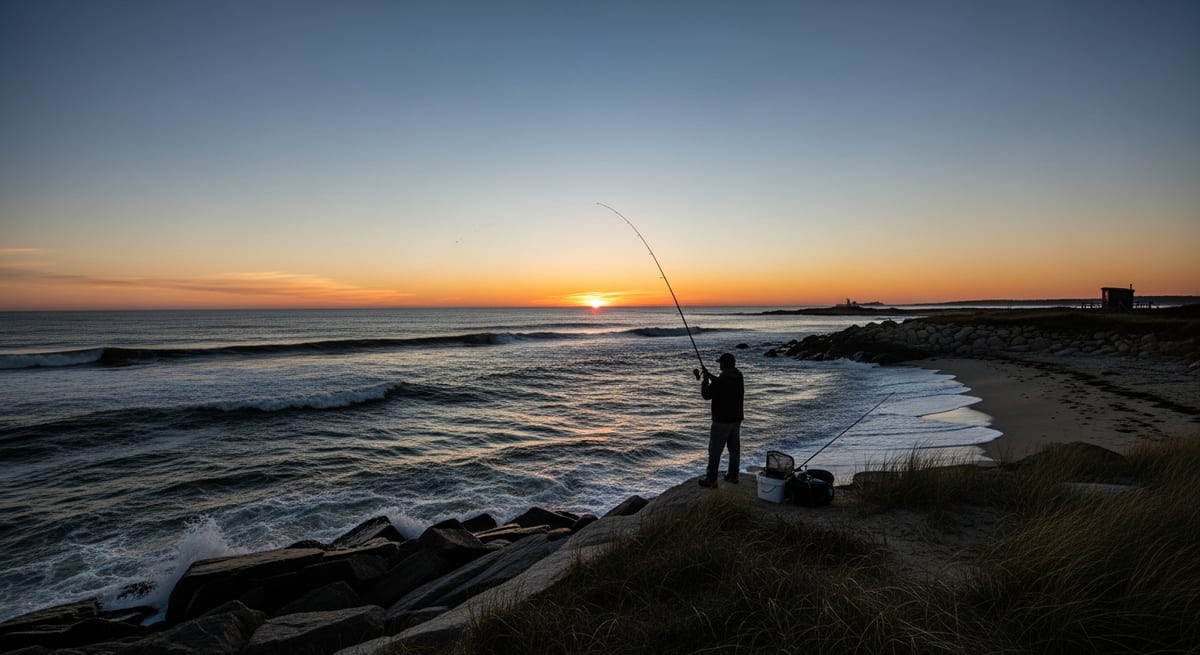
Eel anglers fishing Niantic Bay's rocky eastern shoreline in October and November report that the strike window producing most large stripers. Fish in the 36-inch-and-above range, runs from two hours before high tide through 90 minutes after, in complete darkness, with eels worked slowly along rocky structure rather than retrieved at pace. CT shore fishing reports from this window consistently describe catches that arrive after plugs have stopped producing entirely. That pattern, eels reaching fish that other presentations can't, in the coldest water of the fall season, is what positions live eels as the preferred trophy bait among fall-focused CT striper anglers.
Why Eels Reach Big Fish That Plugs Don't After Mid-October
American eels are a primary forage item for large stripers along Connecticut's tidal shoreline, and community reports from fall-season CT anglers document a recognizable transition: large fish that respond to topwater plugs in warmer water largely stop pursuing surface presentations as water temperatures drop toward and below 60°F, while continuing to feed actively on eels through November.
The behavioral shift anglers who fish this transition consistently describe: as bait concentrations change in fall and water cools, large stripers appear to shift from active chase feeding toward ambush feeding from cover. A live eel worked slowly along rocky structure fits the profile. It moves through precisely the zones those fish hold in, at exactly the pace they expect.
Size matters here as well. A 10-15 inch eel matches the forage profile that trophy fish in the 36-inch-plus class are likely hunting. Most undersized stripers struggle to get a solid hold on a substantial eel, which is part of why eel catch reports from CT shore anglers tend to skew toward larger individuals.
The mucous coating on live eels releases a scent trail in moving current that community reports describe as a meaningful factor in low-visibility conditions. In a strong tidal rip, that plume extends well downstream from the presentation. Anglers who fish rips at Niantic and the Thames report takes well before the eel reaches the structure they were targeting.
CT DEEP Possession and Transport Rules for Eels, what to Know Before You Buy
CT DEEP regulations apply to eels both as bait and as a harvested species. The rules have caught anglers off guard, and this is a legally material area for anyone sourcing live eels in Connecticut.
Bait transport: CT DEEP bait transport regulations prohibit moving live baitfish from one body of water to another. The rule is designed to prevent the spread of invasive species and pathogens. For saltwater eel fishing, anglers who purchase eels from a licensed coastal bait dealer for use in the same tidal area typically avoid the cross-watershed issue. Transporting live eels from an inland source into tidal water, or across watershed lines, may be restricted. Check the current CT Anglers Guide or contact CT DEEP Fisheries Division directly for the current bait transport language before sourcing eels from inland dealers.
Eel harvest: If catching your own eels, CT DEEP has historically set a minimum size and possession limits on recreational eel harvest. Specific limits and eligible waters change by season, confirm against the current CT Anglers Guide before keeping any eels taken by rod or trap.
Purchased eels: Most CT striper anglers avoid the transport question entirely by purchasing eels from licensed coastal bait shops. Shops in the Niantic, New London, and Milford areas typically carry live eels from May through November. Availability varies with conditions, call ahead, particularly in early and late season when supply is less predictable.
How CT Shore Anglers Rig Eels for Rocky Structure and Moving Current
The rigging approaches described across CT shore fishing communities reflect the specific demands of the Connecticut shoreline, rocky jetties, tidal rips, and bridge structure where eels need to swim freely and survive repeated casts.
Hook choice: A 6/0 or 7/0 live-bait hook (offset style) is the most frequently cited choice among CT shore anglers. Circle hooks in the 7/0-8/0 range appear with increasing frequency in community reports, particularly among anglers practicing catch-and-release, circle hooks allow the fish to run and seat in the corner of the jaw automatically on a tight line, rather than requiring a hard hookset that can result in deep hooking.
Hooking position: Lip-hooking (entering through the lower jaw and exiting through the upper) is the standard for slow presentations and drift fishing. For shore anglers making repeated long casts over rocks, hooking through the eye socket area is a common alternative. The hook stays in place through hard casts and the eel tends to remain lively longer.
Leader: 30-40 lb fluorocarbon in 18-24 inch lengths is the consistent recommendation. Community reports from calm, clear CT night sessions describe wire leader as reducing strikes noticeably. The consensus is to avoid wire unless bluefish are actively present in the area.
Weight: The consensus across CT eel fishing reports is that adding weight interferes with the natural swimming action that makes eels effective. Where current demands some depth control, a single small split shot 18 inches above the hook is preferred over a sinker at the terminal end.
The drop-back: Stripers typically grab eels by the middle and turn them headfirst before swallowing. CT shore anglers consistently identify striking too early as the primary reason for missed fish on eels. The approach described across community reports: drop the rod tip, allow 3-5 seconds of slack, feel the line come tight, then set.
Niantic Bay, the Thames River Mouth, and the Housatonic, where CT Eel Anglers Report Trophy Fish
Three Connecticut locations appear with particular frequency in fall eel fishing reports, each with distinct structural features that concentrate large fish:
Niantic Bay (eastern CT): The rocky eastern shoreline of Niantic Bay, particularly the stretch between the Amtrak rail bridge and the bay mouth, produces consistent fall eel reports. Anglers who fish this shoreline describe working rocky points after dark and casting eels along shadow edges created by bridge lighting. The Niantic River mouth on outgoing tides is a secondary focal point when bait is actively moving through. Public shore access is available along the shoreline adjacent to Rocky Neck State Park.
Thames River mouth (New London): The Thames produces trophy striper reports on eels in October and November, with the most consistent action in community accounts coming from rocky structure near the river mouth where it meets the Sound. Fort Trumbull State Park in New London provides public access to the rocky west-bank shoreline. Anglers who fish the area describe the ebb tide, particularly the last two hours of outgoing current, as concentrating fish at the channel edge.
Housatonic River mouth (Stratford): The Housatonic mouth's tidal structure at Stratford Point produces eel fishing reports from September into November. Channel edges on the falling tide are the structural element most often cited in accounts from this area. Short Beach in Stratford provides public shore access to the river mouth.
Across all three locations, community reports describe the same structural logic: fish hold at transition zones between moving current and slack water, at rocky bottom adjacent to depth, and along shadow lines created by overhead lighting. An eel presented to work slowly through these transitions, not retrieved at pace, is the standard approach described by regulars at each spot.
Night-Tide Windows, Water Temperature, and the Seasonal Signal CT Eel Anglers Track
The timing described across CT fall eel fishing reports is specific enough to plan sessions around:
Tide window: The most consistently productive period anglers describe runs from two hours before high tide to 90 minutes after. Moving current activates both eels and the fish hunting them. The high-tide slack creates a brief pause; outgoing current generates a second, often shorter productive window. Most valuable in locations like the Thames mouth where the ebb strongly channels bait along a defined edge.
Night as the differentiator: CT shore fishing reports are consistent that large stripers in the 36-inch-plus range are substantially more active on eels in complete darkness. Sessions between midnight and 3 AM generate disproportionately large fish in community reports from Niantic Bay and the Thames River mouth. The same spots fished at dusk on identical presentations commonly show far less action.
Seasonal window: Fall is the documented peak across CT community fishing reports. Stripers staging for southward migration tend to feed aggressively through October and November, and the largest fish of the season appear consistently in fall eel accounts. As of recent seasons, the Connecticut striper season remains open into late fall. Anglers should verify the current minimum size limit, possession limit, and exact season dates in the CT Anglers Guide before fishing, as these have been updated in recent years under Atlantic States Marine Fisheries Commission management.
Temperature signal: Water temperature in the high 50s to low 60s °F is the range most often mentioned in CT eel angler reports as the prime productive window. As water drops below 55°F, eel activity tends to slow and the bite typically weakens. Many CT anglers treat this threshold as the signal to shift toward chunk bait. Anglers fishing Niantic Bay and the Thames often reference NOAA buoy temperature data to track the late-season drop.
EVERY SATURDAY MORNING
Weekly fishing intelligence
Nationwide conditions, what's biting, and honest gear deals. One email, no noise.
No spam. Unsubscribe anytime.