
Two of Long Island Sound's Best Striper Windows Run With Almost No Competition, because Most CT Anglers Are Still Waiting for October
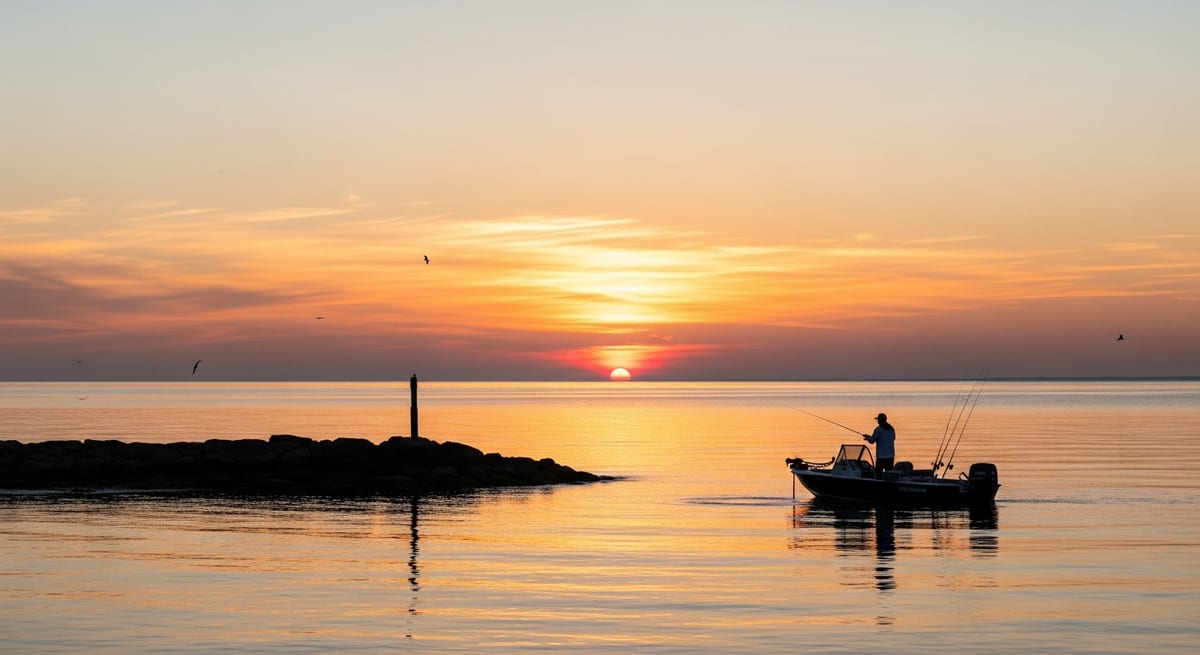
The Sound Has a Three-Season Striper Calendar, but the Fall Blitz Gets Almost All the Traffic
Boat traffic at the Connecticut River mouth in late April runs a fraction of what it sees in October, even when migrating stripers are stacked at the temperature break between warmer river outflow and the still-cold Sound. Anglers who fish both windows consistently report that the spring bite, particularly the first two weeks of May, offers some of the season's better big-fish opportunities with minimal competition.
Long Island Sound is a semi-enclosed estuary stretching from the East River mouth to the open water off the eastern Connecticut coast. A protected corridor with a shoreline that offers access at every level, from Greenwich to Stonington. Rocky reefs, tidal rivers, current rips, sandy beach edges, and dozens of public boat launches and jetties. Baitfish diversity drives the fishery: bunker, herring, sand eels, and squid cycle through on a schedule bass track reliably across seasons.
Anglers who fish the Sound from late April through November identify three distinct pattern windows: the spring river-mouth bite, the midsummer deep-and-dark adjustment, and the fall blitz. The fall gets the media coverage and the boat traffic. The other two run largely uncrowded.
Why the Spring River Mouth Bite Gets Almost No Pressure, and What Anglers Who Fish It Report
The spring migration timing varies considerably from year to year. In some years, fish are stacked at the Connecticut River mouth by the last week of April. In others, a cold snap pushes the timing into mid-May. Anglers who monitor CT DEEP water temperature data and public NOAA buoy readings cite river outflow temperatures in the low-to-mid 50s as a typical trigger, when the delta water begins warming while the Sound stays cold, bait and bass concentrate at the thermal boundary. Date-based planning tends to lag the actual fish.
Where fish concentrate: The mouths of the Connecticut, Housatonic, Niantic, and Thames rivers are the high-percentage targets. The temperature differential between warmer river outflow and the still-cold Sound concentrates bait and the bass that follow. Rocky points and current rips between those systems, particularly along the stretch between Lyme and Old Saybrook, see considerably less pressure than the named river mouths, and anglers who work that stretch report consistent spring results without the competition that clusters at the obvious access points.
What works in spring: Large soft plastic swimbaits (5-9 inch) rigged on jigheads for bigger fish. Bucktails with curly-tail or paddle-tail trailers fished along the bottom through current. Live bunker, when available from local bait shops, is the most-cited big-fish option among Sound regulars. Schoolies in the 20-24 inch range respond well to small swimmers and topwater plugs on moving water.
On tide timing: Anglers who fish the river mouths consistently emphasize the first two to three hours of a moving tide, incoming or outgoing, as the productive window. Current concentrates bait against structure; the bite during slack tide is described by regulars as noticeably slower, and most experienced Sound anglers build their schedules around moving water rather than fishing through the flat periods out of convenience.
Striper Fishing Doesn't Stop in July. Experienced Sound Anglers Adjust to Night Structure and Depth.
Surface temperatures in Long Island Sound's shallower coves and beaches typically climb well into the 70s by mid-July, conditions that push stripers off their spring feeding patterns. Anglers new to the Sound sometimes interpret the drop in daytime action as the fish leaving. Experienced Sound anglers describe a consistent seasonal shift: the fish move deeper or compress their feeding into low-light windows, and success requires matching that schedule rather than fishing the same spots and tactics as spring.
The adjustment is mostly about time of day and depth.
After dark, shallow structure produces. Jetties, rocky points, bridge pilings, and beach edges see consistent striper activity once surface temps drop in the evening. Dark-colored swimmers, black, purple, dark blue, fished slowly through those zones from 10 PM onward is the most commonly cited summer pattern among anglers who target the Sound through July and August. The Niantic jetty, the Old Lyme railroad bridge area, and rocky points along the Waterford and East Lyme shorelines are spots that regulars describe returning to during the summer night window.
During the day, fish hold deeper. Underwater ledges, humps, and rock piles in 20-50 feet hold fish through the heat. Jigging with large soft plastics, live eels on circle hooks, or drifting live bunker near bottom are the approaches experienced Sound anglers describe as consistently productive in summer. Slower and less visual than spring fishing, but the fish are in the water column.
When bunker push into shallow water, stripers and bluefish will drive them to the surface. Diving terns mark feeding fish reliably. Sound anglers consistently note that casting to the edges of the bait school, rather than into the center of the commotion, produces more hookups, as bass on the perimeter are actively chasing rather than disrupted by the chaos at the surface.
October Is When the Fall Reputation Either Earns Out, and Why November Shouldn't Be Written Off
October is when Long Island Sound's fall reputation is either confirmed or tested. Surface temps settling into the low 60s, large bunker schools staging for their southward push, stripers that have been feeding actively for weeks. The conditions for a genuine blitz concentrate more reliably in October than at any other point in the season. Charter captains working the eastern Sound and anglers who fish Niantic Bay and the waters off Waterford and New London regularly note that fall blitzes, when they form, can hold for an hour or longer with fish in the 30-40 inch range driving bunker to the surface.
The fall blitz is not a daily guarantee. Experienced Sound anglers describe seasons with multiple sustained blitz events and seasons with intermittent windows. The fish and the bait move on their own schedule, and reading bird activity, bait marks on the sounder, and current are how regulars locate fish on days when nothing obvious is happening at the surface.
Large poppers and pencil plugs, super Strike Little Neck poppers and Gibbs pencils are regularly cited by Sound regulars, are the go-to approach during an active blitz. Casting to the moving edge of the bait school rather than into the spray is a consistent point of advice from experienced fall anglers.
Shore access in fall: Harkness Memorial State Park in Waterford, Bluff Point State Park in Groton, Rocky Neck State Park in East Lyme, the Niantic River mouth at Smith-Harris Wildlife Area, and the Black Point area near Niantic are among the shore spots that see consistent fall angler traffic. Bluff Point in particular is described by regulars as wind-dependent. A northeast wind stacks bait against the western shore in a way that experienced anglers adjust their positioning for before committing to a parking spot.
Evening and late-night hours matter in fall. Anglers who fish structure at 9 and 10 PM in October consistently report the biggest fish of a session coming well after the daytime crowds have cleared. Moving bait and lower light appear to pull larger fish up from depth.
November is worth fishing for anglers willing to work through the cold. In years when bunker hold in the Sound late, bass often linger past Thanksgiving. The timing varies enough that no fixed cutoff date applies. Local fishing reports from shops like River's End Tackle in Old Saybrook and Black Hall Outfitters in Old Lyme are among the more reliable indicators for whether fish are still active late in the season.
2026 Regulations, verify Before You Go
Connecticut striped bass regulations have been adjusted multiple times in recent seasons as coast-wide stock management has evolved under ASMFC oversight. For 2026, verify current rules directly at CT DEEP before fishing. The specifics change year to year, and the consequences of harvesting outside current limits are real.
Recent seasons have operated under a one-fish-per-day slot framework; check ct.gov/deep for the current size thresholds before the season opens, as those parameters have shifted in each of the past several years. A Marine Recreational Fishing License is required for all anglers 16 and older. Review CT DEEP guidance for any applicable federal reporting requirements based on where you're fishing.
The striper population's documented recovery from the coastwide collapse detailed in ASMFC stock assessments through the 1980s and early 1990s is reflected in the current regulatory posture and in the angler reports coming out of Sound fisheries over the past decade. Releasing large females, particularly fish above 35 inches, is standard practice among experienced Sound anglers and is supported by ASMFC spawn-per-recruit analysis: larger females contribute disproportionately to egg production, and their protection has been central to the coast-wide recovery.
Current regulations and licensing: portal.ct.gov/deep/fishing
EVERY SATURDAY MORNING
Weekly fishing intelligence
Nationwide conditions, what's biting, and honest gear deals. One email, no noise.
No spam. Unsubscribe anytime.