
Brown Bullheads Are in Nearly Every CT Warm-Water Pond. Channel Cats on the Connecticut River Outsize Most Bass in the Same Water. Almost Nobody Targets Either.
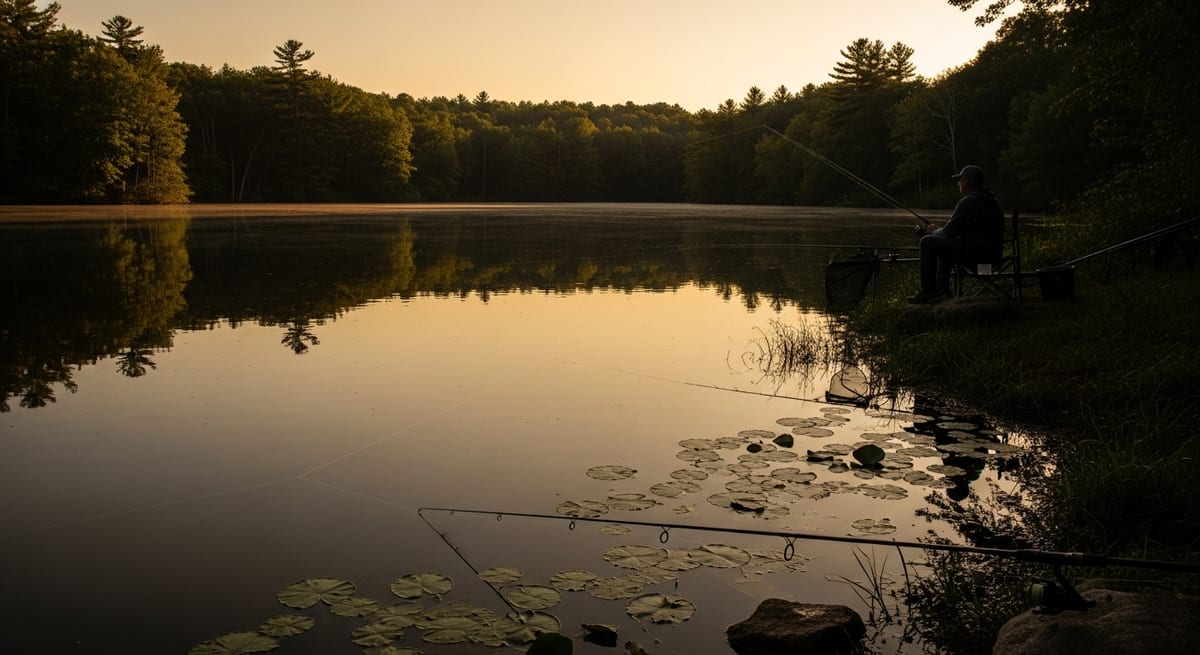
Anglers fishing the Connecticut River's deep holes between Middletown and Haddam on summer nights report channel catfish that outsize most largemouth bass sharing the same water. Fish the majority of CT freshwater license holders have never intentionally targeted. Brown bullheads appear in virtually every warm-water pond in the state according to CT DEEP survey data, yet dedicated bullhead fishing remains a niche pursuit. The channel cat bite on the Connecticut River is tightest from late June through early September, concentrated after dark, and most accessible to anglers willing to run a sliding egg sinker rig with cut shad from shore. For bottom-fishing regulars who've worked out the timing and access, the night bite draws far less competition than most CT trout or bass water.
What CT Waters Hold, and What DEEP Records Show
Channel catfish (Ictalurus punctatus): CT DEEP has stocked channel catfish in the Connecticut River system; current stocking locations are listed on the DEEP inland fisheries page. DEEP distribution data shows channel cats present in the Connecticut River and select larger tributaries. They have a forked tail, olive-gray coloration with dark spots on smaller fish, and a torpedo-shaped body. Anglers who fish the river describe channel cats in current as dogged fighters. They use the flow against you in a way that still-water bass fishing doesn't.
Brown bullhead (Ameiurus nebulosus): Connecticut's native and most widely distributed catfish. CT DEEP survey data documents brown bullheads in warm, weedy ponds across all eight counties, nearly any slow, weedy water in the state holds them. They average 1-2 pounds and top out around 3-4 pounds. With minimal gear requirements and wide distribution, they're one of the more accessible species for anglers new to bottom fishing.
White catfish (Ameiurus catus): Present in Connecticut's tidal rivers and the lower Connecticut River per DEEP distribution records. Similar to channel cats but with a shallower tail fork and broader head. Less commonly targeted than channel cats.
Flathead catfish: CT DEEP's current distribution records do not list flathead catfish as established in Connecticut waters, though flatheads are present in neighboring states and are an invasive species concern. Any large catfish with a flat head, protruding lower jaw, mottled coloration, and rounded tail should be reported to CT DEEP.
When the Bite Is On: Late June Through September, After Dark
The timing guidance shared among CT bottom-fishing regulars centers on water temperature and light level. Channel cats become most reliably active once Connecticut River temperatures rise above 65°F, typically mid-to-late June, depending on the year's runoff volume. The core productive window runs from late June through early September.
Channel cats that hold in deep holes and undercut banks during daylight move to feed after dark. Anglers who fish the Hartford-to-Haddam stretch describe the best window as running from an hour before sunset through midnight, with early-morning hours sometimes producing as well. Overcast days and stained water after rain extend productive hours into daylight; clear midsummer afternoons are the slowest conditions on CT rivers.
As river temperatures drop below 60°F, typically mid-October, channel cat activity slows significantly. The fall transition (late September through early October, water still in the mid-60s) produces fish for anglers willing to stay at it, but the consensus from CT bottom-fishing communities is that July and August represent the peak.
Brown bullheads are less temperature-sensitive and show up year-round in CT ponds, though they're most consistently catchable from May through early October.
Night fishing setup: Arrive before dark to rig and position. Rod holders or bank sticks keep rods secure while you wait, heavy strikes can pull an unattended rod off a rock in seconds. Bell clips or electronic bite alarms help distinguish takes from current drag and debris. Insect repellent is necessary from May through October on CT riverbanks; red-light mode on a headlamp preserves night vision without lighting up the water.
Connecticut River and Housatonic Access
Connecticut River (primary target): The main stem from the Massachusetts border south to Old Saybrook holds the state's most productive channel catfish water. The tidal reach from Hartford south also holds white catfish. Shore access points that CT bottom fishers return to regularly include Haddam Meadows State Park (good bank access, known for summer channel cat activity), the Portland boat launch area, Middletown riverfront parks, Wethersfield Cove, and Riverside Park in Hartford. Boat anglers can work deep holes and current seams more thoroughly, but shore anglers produce fish from most of these points on sliding rigs.
Housatonic River: CT DEEP distribution data places channel catfish in the lower Housatonic. The slower, deeper sections between Shelton and Derby are the stretches most frequently cited by anglers targeting catfish there, accessible from Birmingham parks and Derby riverside access. Brown bullheads are present throughout the Housatonic drainage.
Reservoirs: Several larger CT reservoirs hold catfish, primarily bullheads. Dedicated catfish fishing in reservoirs is underutilized compared to river fishing; bass anglers fishing deep at night occasionally report channel catfish in the mix.
Tidal stretches: White catfish appear in tidal portions of the Connecticut River and Housatonic. Shore access is limited in most of these areas; boat access from nearby launches is the practical option.
The Bullhead Option: Every Town Has a Productive Pond
Brown bullheads don't require a major river, a night session, or specialized tackle, and that's the point. CT DEEP survey data documents them in warm, weedy ponds across all eight counties. The two-acre impoundment in the local park almost certainly holds them.
A simple bottom rig works: size 4-6 hook, split shot or small egg sinker, single large nightcrawler, fished near weedy edges or soft-bottom areas. Medium spinning gear with 8-10 lb monofilament is adequate. Evening and night fishing produces more consistently, but bullheads bite during daylight hours in ponds with heavy weed cover.
Fish in the 1-2 lb range are the norm; a 3-pound bullhead is a solid catch. Local bait shops are the best source for which nearby ponds are producing, bullhead spots are the kind of local knowledge that's typically shared freely, and the shop will know which waters are cleanest for eating.
Bottom Rigs and Bait: What River Regulars Run
Standard sliding egg sinker rig: 1-3 oz egg sinker on the main line, stopped by a bead and barrel swivel; 12-18 inch leader of 20-30 lb monofilament or fluorocarbon; size 2/0-4/0 circle hook. The sliding design lets a catfish move with the bait without immediately feeling the sinker weight.
Three-way rig for current: A three-way swivel with a short dropper to a heavy sinker and an 18-24 inch leader with a hook. Keeps bait elevated above silt and weeds while the sinker holds position in current.
Bait, in the order CT River regulars tend to reach for them:
- Cut shad or skipjack herring: Fresh cut shad is the most consistently cited bait among Connecticut River catfish regulars, oily, bloody, and effective in current. Frozen skipjack or herring from bait shops is widely available as a close alternative.
- Nightcrawlers: Reliable on all CT catfish including bullheads. Less effective than cut bait for larger channel cats, but a standard fallback when cut bait isn't available.
- Chicken liver: Effective and inexpensive; falls apart quickly on the hook, elastic thread or a bait holder hook keeps it fishable longer.
- Commercial dip baits and punch baits: CT bottom fishers who've compared them directly against cut bait on the Connecticut River generally favor cut bait for channel cats. Punch baits paired with a sponge hook see use when fresh cut bait isn't an option.
Tackle: 15-25 lb monofilament or 20-30 lb braid with a 20 lb fluorocarbon leader covers CT channel cats. A 7-8 foot medium-heavy spinning or conventional rod handles both casting weighted rigs and fighting a large fish in current. For bullheads in ponds, a medium spinning setup with 8-12 lb mono is more than adequate.
CT Regulations and Consumption Advisories
A Connecticut inland fishing license is required to target catfish in CT's freshwater rivers, lakes, and ponds. As of the 2025-2026 season, CT DEEP's inland fishing regulations do not list a minimum size or daily bag limit for channel catfish, brown bullhead, or white catfish. Confirm the current regulations at portal.ct.gov/DEEP before fishing, rules are revised each year and can change.
Consumption advisories: The Connecticut River and several other CT waters carry fish consumption advisories, particularly for larger predatory fish. CT DEEP maintains an updated advisory table on their site. Anglers eating catfish from river systems regularly should check the advisory specific to that water body. Larger channel cats accumulate contaminants at higher rates than smaller bullheads, making the advisory especially relevant for keeping larger river fish.
Cleaning: Catfish have no scales and are skinned rather than scaled. After removing the head, grip the skin with pliers and strip it from the body. The pectoral and dorsal spines can cause painful punctures, cutting through the spine bases with heavy shears before free-handling reduces that risk. Bullheads from clean ponds are solid table fish; smaller fish pan-fry well whole after cleaning. Channel cat fillets are white, firm, and mild. They fry well in seasoned breading at 375°F, bake well, and work in fish sandwiches.
EVERY SATURDAY MORNING
Weekly fishing intelligence
Nationwide conditions, what's biting, and honest gear deals. One email, no noise.
No spam. Unsubscribe anytime.