
Warm-Water Discharge Stretches on the Connecticut River Stack Channel Catfish in Fall When Most CT Anglers Have Moved On. What DEEP 2025-2026 Freshwater Regulations, Night-Fishing Reports from Moodus Reservoir, and Bullhead Pond Communities Reveal
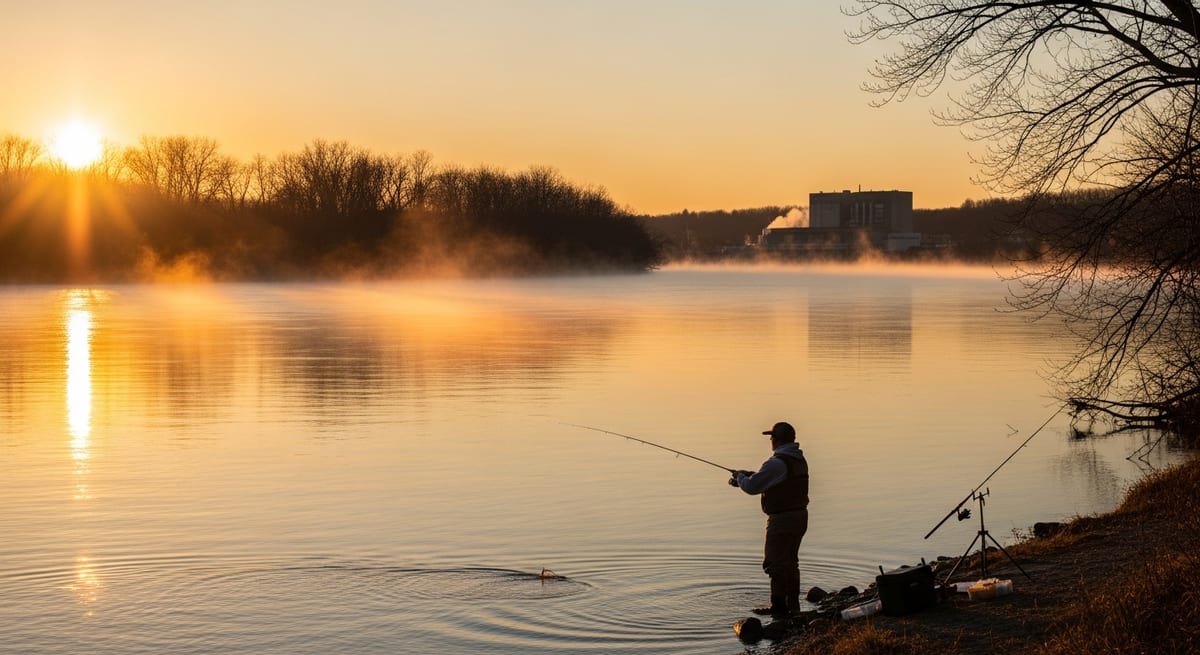
Warm-water discharge stretches on the Connecticut River concentrate channel catfish in October and November when most CT anglers have already pulled their gear. DEEP fishing program materials describe catfish as primarily nocturnal feeders that stack near thermal plumes as the main river cools, a seasonal pattern that anglers working the Middletown and Portland reach have reported consistently over multiple seasons. Connecticut holds two catfish species with very different habitat requirements. Channel catfish grow larger, favor clean, well-oxygenated water, and concentrate in river pools and the deeper basins of larger lakes and reservoirs. Brown bullheads are broadly distributed across the state, tolerating the silty, low-oxygen conditions of nearly every warm pond in Connecticut. Both respond to the same basic rigging approach, but the right water type separates the two targets entirely. The 2025-2026 CT DEEP Freshwater Fishing Guide sets a 12-inch minimum size limit for channel catfish. Verify current bag limits in the regulations before keeping fish.
Channel Cats vs. Bullheads: Water Type Is the Dividing Line
The catfish angler community in Connecticut treats channel cats and bullheads as two distinct targets. The rigs are similar, but the water those species inhabit barely overlaps.
Channel catfish (Ictalurus punctatus): Stocky, bluish-gray with black spots concentrated in younger fish, and capable of reaching 10 lbs or more in productive CT waters. DEEP stocking programs established channel cats throughout the Connecticut River system and in select impoundments; most populations are now self-sustaining. Channel cats prefer clean, well-oxygenated water with gravel or sandy substrate: deeper river pools, the mid-lake basins of large reservoirs, and the colder, moving-water sections that bullheads avoid.
Brown bullhead (Ameiurus nebulosus): Most CT fish run 8 to 12 inches, with a dark brown mottled pattern. DEEP electrofishing surveys consistently identify bullheads as one of the most broadly distributed freshwater species in the state, often dominant in warm, shallow impoundments where channel cats are largely absent. They colonize silty, weedy, low-oxygen habitat: shallow pond coves, slow backwaters, muddy creek bends. Anglers fishing the Glastonbury area ponds and the Town of Windham fishing areas regularly report 20-plus-fish evenings.
Named CT Waters: Where DEEP Stocking Records and Angler Reports Align
Channel catfish are concentrated in a specific set of CT waters. They are not broadly distributed across the state the way bullheads are.
Connecticut River (Hartford south through the tidal reach): The primary channel cat fishery in Connecticut. Anglers working deep pools below bridges and river bends from Hartford through the Haddam reach report consistent nighttime catches through summer and into fall. The warm-water discharge areas in the Middletown and Portland stretch concentrate fish in late fall as river temperatures drop, with catfish stacking in the warmer effluent plumes when the broader river cools well below their preferred range.
Moodus Reservoir (East Haddam): A reliable channel cat destination in the Salmon River watershed. Anglers who work the deeper basin sections and the inlet areas report fish in the 3-7 lb range. Shore access is available via DEEP public access points.
Lake Lillinonah (Southbury and Newtown): The Housatonic River impoundment produces channel cats through summer and into early fall. Anglers targeting the deeper coves after dark report consistent results.
Lower Housatonic River (Derby-Shelton reach): Night-fishing communities on the lower Housatonic report channel cats holding in the slower pools adjacent to faster runs, particularly near bottom structure and undercut banks.
For brown bullheads, the target list expands dramatically. Virtually any warm, shallow, productive CT pond holds them. The Glastonbury pond complex and the Town of Windham fishing areas are community-recommended starting points for anglers new to bullhead fishing in the state.
Bait Selection: What the CT Night-Fishing Community Puts on the Hook
Catfish locate food primarily through chemoreception. Their barbels and olfactory system outperform their eyes in most CT water conditions, which makes scent the primary bait-selection criterion.
What CT catfish anglers most commonly report using:
- Nightcrawlers: The standard bait for bullheads statewide and a reliable fallback for channel cats. A full worm or a cluster of two on a size 4-6 hook is the community default.
- Cut bait (fresh): Fresh-cut sunfish, perch, or chub is the preferred channel cat bait among experienced CT river anglers. Freshness matters significantly; the blood and scent oils from just-cut fish disperse faster and attract from greater distance than frozen bait. Cut into 2-3 inch chunks, skin-on.
- Chicken livers: A community standard, particularly for bullheads. Scent disperses widely through the water column, but soft texture comes off hooks easily. CT catfish communities commonly use mesh bait bags or elastic thread to keep livers secured through casting.
- Prepared stink baits (Sonny's, Catfish Charlie punch bait): Commercial formulations that work well for channel cats in river settings. Use with a sponge tube hook or treble hook depending on the product type.
- Crayfish (live or fresh-dead): Particularly effective for channel cats in rivers where crayfish are natural prey.
Anglers fishing both bullhead ponds and channel cat rivers report changing bait every 30 to 45 minutes. Fresh bait rebuilds the scent cloud; stale bait loses effectiveness faster than most anglers expect.
Catfish Rigs: The Short List CT Anglers Rely On
CT catfish anglers have converged on a short list of rigs that work consistently across both species and both water types.
Slip sinker rig (most common): Thread a 1-3 oz egg or no-roll sinker onto the main line, tie on a barrel swivel, then attach a 12-18 inch leader to a circle hook. Size 2/0-4/0 works for channel cats; size 2-6 for bullheads. The sinker slides freely on the main line, so a catfish picking up the bait does not feel resistance immediately. Most CT catfish anglers prop rods in rod holders and watch the tip for movement before reeling down.
Circle hooks: The preferred choice among experienced CT catfish anglers, particularly those releasing channel cats. Circle hooks are designed to set in the corner of the mouth when the fish moves away. No aggressive hook-set is needed; reel down steadily and lift the rod when the fish is felt. Hook-up rates are high and nearly all fish end up lip-hooked, which simplifies release.
Bobber rig for bullheads in shallow water: A slip bobber set 12-18 inches above a baited hook, worked along a shallow cove bank, is the standard bullhead approach on most CT ponds. It is readable at night under a headlamp and effective with nightcrawlers or chicken livers.
Line and rod setup: Most CT catfish anglers run 12-20 lb monofilament or braid on a medium-heavy spinning or casting rod. The fish are not especially leader-shy, and heavier line handles snags and river structure far better than light tackle.
The Night Window: Timing the Bite on CT Catfish Waters
DEEP fishing program materials describe catfish as primarily nocturnal feeders, and the CT catfish angler community consistently reports the most productive fishing occurring in the low-light window from late evening into the first few hours after dark. Anglers targeting channel cats on the Connecticut River during midday consistently report slower results than those fishing the same pools after sunset.
The specific window varies by water body and season. Anglers fishing the Connecticut River through the Haddam reach in June and July describe the bite often improving between 8 and 11 PM. Bullhead ponds can produce fish from the first dim of dusk and often run active until well past midnight on warm summer nights.
What experienced CT catfish anglers do differently:
Arriving before dark is a consistent recommendation across CT catfish communities. Setting rods before the bite window opens avoids disturbing structure and allows scent trails to establish in the water. CT regulations allow up to five lines per licensed angler; verify the current rule in the 2025-2026 DEEP Freshwater Fishing Guide. Setting rods at different distances and depths on a river pool lets anglers identify where fish are holding without repeated casts that can spook a pool.
Red-mode headlamps are a standard piece of kit. The red spectrum does not destroy night vision the way white light does, which matters when watching for subtle rod-tip movement in the dark.
Warm-water discharge timing in fall: As Connecticut River temperatures drop in October and November, channel cats that have distributed widely through summer stack in the warmer effluent plumes near thermal discharges. Anglers targeting the Middletown and Portland reach use this stacking behavior to locate fish during a period when the broader river population is harder to find.
Bullhead ponds as accessible water: Brown bullhead fisheries on productive CT ponds cooperate with beginning anglers in a way that few CT freshwater species do. Multiple rods, a comfortable spot on the bank, and any smelly bait is a workable setup. Anglers fishing the Glastonbury area ponds and the Windham fishing areas for the first time report catching fish repeatedly in a single evening when bullheads are the target species.
EVERY SATURDAY MORNING
Weekly fishing intelligence
Nationwide conditions, what's biting, and honest gear deals. One email, no noise.
No spam. Unsubscribe anytime.