
Connecticut Fishing License: How to Buy One, What It Covers, and What You Need to Know
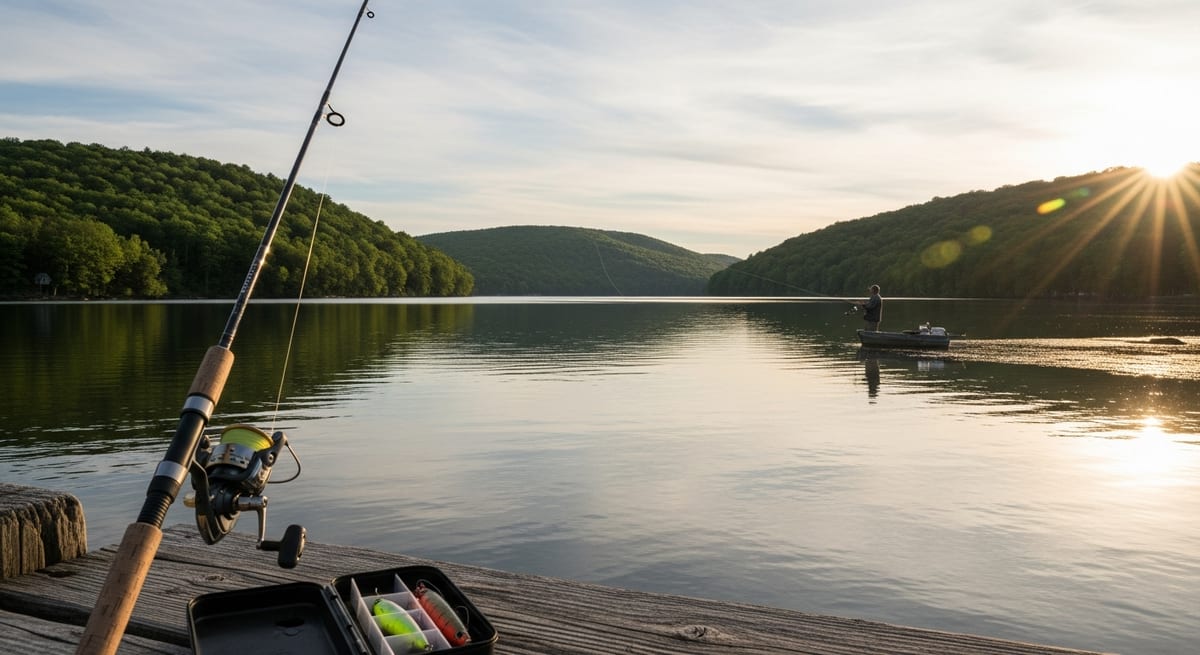
Connecticut stocks hundreds of thousands of trout each spring, rivers like the Farmington and Salmon are loaded with fish by late March, and a resident license to chase all of it costs less than a tank of gas. Before you put a line in the water, though, you need that license in hand. Getting one online takes about five minutes.
Who Needs a Connecticut Fishing License
Most anglers fishing Connecticut waters need a valid CT fishing license. Per CT DEEP, a few groups are currently exempt:
You don't need a license if you are:
- Under 16 years old (freshwater or saltwater)
- A Connecticut resident age 65 or older fishing in a private pond on private land
- Fishing a pond that sits entirely on your own property. This doesn't cover rivers, streams, or any water body that crosses a property line
- A licensed, disabled veteran on CT DEEP-designated free fishing days
Free Fishing Days: CT DEEP designates specific days each year, typically one weekend in June, when no license is required for anyone. Check ct.gov/deep for the current year's dates before you plan a trip around it.
Even if you're exempt from the license requirement, all standard fishing regulations still apply. Size limits, bag limits, and seasons are in effect regardless, exemptions cover the license fee, not the rules.
License Types and Costs
CT offers several license types. The figures below reflect 2026 rates, confirm current fees at ct.gov/deep before purchasing, as they can change year to year.
Freshwater fishing:
- Annual resident: around $19 (Connecticut residents)
- Annual non-resident: around $40
- 3-day non-resident: around $16, solid option for a long weekend trip
- 1-day non-resident: around $11
Saltwater fishing:
- Annual resident: around $10 (in addition to freshwater if you fish both)
- Annual non-resident: around $15
- Combination (fresh + salt) resident: around $28
- Combination (fresh + salt) non-resident: around $55
Senior resident (65+):
- Annual: around $8 (freshwater)
Lifetime licenses: CT offers lifetime fishing licenses for residents. If you plan to fish Connecticut for many years, the math typically works out after 10 to 15 years of annual licenses, worth running the numbers if you're under 50 and fish the state regularly.
Trout, Salmon, and Fishing Improvement (TSFI) stamp: Targeting trout or salmon in CT? You'll need to add a TSFI stamp, approximately $5, on top of your base license. It funds fish stocking and is required for anyone fishing waters stocked with trout. During the spring stocking push (typically March through May), that covers most CT freshwater.
How to Buy a CT Fishing License
Online: Go to ct.gov/deep → Licenses and Permits → Fishing. You can print your license immediately or save a digital copy to your phone. CT DEEP accepts digital copies as valid, though saving a screenshot before heading somewhere without cell service is worth the extra two seconds.
CT DEEP offices: Available at locations around the state. Hours vary by office, so check the website before making the drive.
Authorized agents: Bass Pro Shops, Cabela's, Dick's Sporting Goods, most local bait-and-tackle shops, and some Walmart locations all sell CT licenses. If you're stopping for bait before an early morning run on the Farmington or heading to the Sound for stripers, grabbing your license at the counter makes the stop worth it.
Phone: Call the License Division at (860) 424-3105 during business hours.
What you'll need: Connecticut driver's license or state ID for residents; any valid ID for non-residents. Your Social Security Number or state ID number is used as your license identifier.
License year: Annual licenses run January 1 through December 31, not 12 months from purchase date. A license bought in mid-November only covers you through the end of December.
Regulations You Need to Know
The license gets you legal to fish. The regulations are what keep you from getting a citation.
Where to find them: CT DEEP publishes a free annual Freshwater Fishing Guide and Saltwater Fishing Guide. Download both or request printed copies at ct.gov/deep. They list every species, size limit, bag limit, open season, and water-specific special rule.
Waters with rules that catch people off guard:
- Farmington River TMA (above New Hartford): Statewide trout regs as a baseline, but specific gear restrictions and minimum size rules apply within the TMA. Many anglers assume general regs apply everywhere and get surprised at the access points, read the TMA section in the guide before your first trip.
- Housatonic River C&R section (Cornwall Bridge to Housatonic Meadows): Fly fishing and artificial lures only. Catch-and-release only. This stretch plays by completely different rules than the rest of the river.
- Lake Lillinonah and Lake Zoar (Litchfield/Fairfield counties): Largemouth and smallmouth action typically heats up hard from mid-May onward. The coves and inlet areas are worth targeting at dawn before recreational boat traffic picks up.
Gear worth knowing before you go: On the Farmington TMA, a 7-foot light-action spinning rod with 4-6lb fluorocarbon and a small Mepps spinner or soft-hackle nymph handles most situations. For largemouth on Lillinonah, switch to medium-action with 10lb braid and a Texas-rigged Senko in green pumpkin, particularly around submerged structure near the coves.
Mistakes that get people cited:
- Not carrying your license on the water, per CT DEEP, you're required to have it on you while fishing
- Fishing trout-stocked waters without the TSFI stamp
- Overlooking special regulations on specific rivers. The Farmington TMA and Housatonic C&R sections both have rules that differ from general state regs
- Keeping undersized fish, size limits vary by species and sometimes by individual water body
Fishing without a license in CT typically carries fines up to $99 for a first offense, per CT DEEP. Fines for undersized or over-limit fish run substantially higher, and Conservation Officers patrol regularly, including smaller ponds and streams that most anglers assume nobody checks.
EVERY SATURDAY MORNING
Weekly fishing intelligence
Nationwide conditions, what's biting, and honest gear deals. One email, no noise.
No spam. Unsubscribe anytime.