
Connecticut's Overlapping Freshwater, Tidal, and Federal Rules Catch More Anglers Off Guard Than the Fishing Does. What CT Fishing Communities Report and the Current DEEP Angler's Guide Confirms About Licenses, Seasonal Limits, and the Species That Changed Most
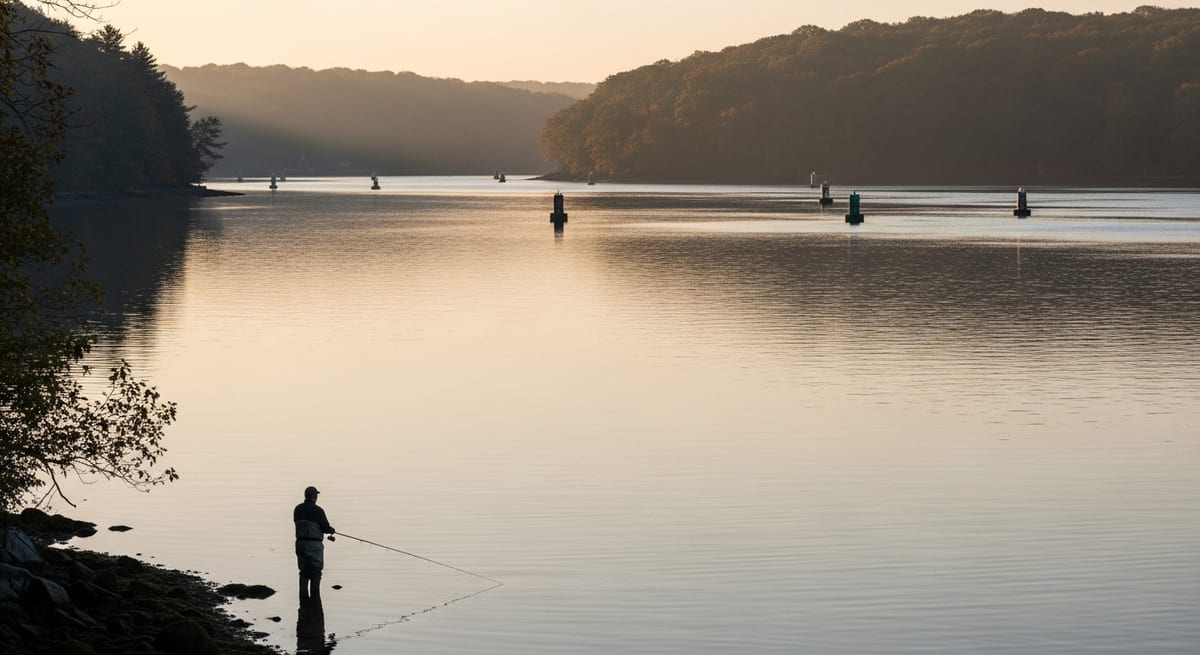
Tautog anglers on the Thames and Niantic who fish year-round have learned this the hard way: the state imposes significant seasonal closures that make blackfish effectively off-limits for months at a stretch, and the open windows shift with ASMFC review cycles. Community discussions on CT fishing forums consistently flag tautog season dates as the single most-asked regulation question among inshore anglers on the Sound. The same overlapping state and federal structure affects stripers, fluke, and black sea bass in ways that catch people mid-season. What follows draws from the current DEEP Angler's Guide and the practical experience CT fishing communities have accumulated about which rules get misread most. Always verify current-year rules directly at ct.gov/deep before heading out, since regulations change between seasons.
Who Needs a Freshwater License in Connecticut
The baseline rule per the current DEEP Angler's Guide: Any Connecticut resident or non-resident age 16 or older fishing inland freshwater waters needs a valid license.
Who is exempt:
- Children under 16 (no license required for freshwater fishing)
- Connecticut residents 70 or older
- Active duty military stationed in CT with a valid military ID
- Anyone fishing private property they own, or private water with documented landowner permission
Anglers who fish Bantam Lake, Candlewood, and the Farmington River regularly report that conservation officers check licenses more often at high-traffic access points, particularly in April around trout opener, than at lower-pressure waters. The exemption for anglers 70 and older is one CT fishing community members consistently flag as a rule people don't know until they're close to that age.
Getting licensed: Online at ct.gov/deep is the fastest path. Most sporting goods stores and license agents statewide also carry them. Annual fees vary by resident/non-resident status; check the current DEEP site for exact pricing, as fees update periodically.
One rule the community reports gets overlooked: Licenses expire December 31. Even if you bought yours in November, you need a new one on January 1.
Connecticut Saltwater Fishing: What the Registration System Actually Covers
Saltwater fishing in Connecticut covers tidal waters and the tidal stretches of rivers like the lower Connecticut and Housatonic. It operates under a separate registration system from the freshwater license.
CT Marine Recreational Fishing Registry: Free for Connecticut residents. Non-residents may have different requirements. Register annually at ct.gov/deep. CT anglers who fish Long Island Sound report this is easy to overlook because it's free, but wardens check it at launch ramps and access points.
Federal MRIP survey participation: Some registered anglers are contacted for the Marine Recreational Information Program, which collects catch data used to set federal quotas. Participation is required if selected. Most anglers are never contacted.
Federal permits for offshore and highly migratory species: Atlantic bluefin tuna above certain size thresholds and HMS species require federal permits beyond state registration. Anglers who run offshore out of Groton, New Haven, and Niantic report this is the layer of regulation most often missed by anglers new to offshore fishing.
Freshwater Size and Creel Limits for CT's Most-Targeted Species
Verify these against the current DEEP Angler's Guide before fishing. Regulations can change between seasons, and water body-specific rules differ from statewide defaults.
Largemouth Bass: 12-inch minimum. For the current daily bag limit, verify in the current DEEP guide before fishing, as CT bass regulations on specific waters sometimes differ from the general statewide rule. CT bass anglers who fish Candlewood, Bantam, and Lillinonah regularly note that the 12-inch minimum is widely understood, but the daily creel limit is the figure people are least consistent about checking each year.
Smallmouth Bass: Generally mirrors largemouth in most CT waters. Lake Lillinonah and sections of the Housatonic River have historically carried special smallmouth regulations; check the water body-specific section of the DEEP guide before targeting smallmouth in either location.
Trout (Rainbow, Brown, Brook): General season waters carry a 9-inch minimum and typically 5 per day. The general trout season opens the third Saturday in April. Heritage Trout waters and Trophy Trout sections carry different rules. CT trout anglers who fish the Farmington River's Heritage section, the Salmon River, and the Willimantic report that end-of-season dates and size limits on those designated stretches do not match general season rules. Verify the classification and specific rules for any stretch you're fishing.
Chain Pickerel: 15-inch minimum, typically 5 per day. Verify current limit in the 2025 guide.
Northern Pike: 24-inch minimum. Special regulations apply on some CT lakes; check before fishing any pike water.
Walleye: 15-inch minimum. Walleye are stocked in select CT waters including portions of the Connecticut River; verify current daily limits.
Panfish (Yellow Perch, Crappie, Sunfish): Generally no minimum size. Creel limits vary by species; confirm current numbers in the current DEEP guide. The consensus among CT panfish anglers is that sunfish regulations are among the most relaxed in the state, which is why small-pond panfishing is a reliable entry point for newer anglers year-round.
Catfish (bullheads and channel catfish): No minimum size. Verify current daily limit against the 2025 guide.
Waters with documented site-specific rules include Lake Lillinonah, Bantam Lake, and East Branch Reservoir, among others. The water body index at the back of the DEEP guide is the only reliable source for current site-specific regulations; it's the section most anglers skip and the one most worth reading.
Saltwater Limits on the Sound and CT Tidal Rivers: What Changes Most Often
CT inshore anglers on the Sound and the tidal Thames, Niantic, and Connecticut rivers consistently report that saltwater limits are the rules most likely to have changed since they last checked. Several key species are managed jointly by CT DEEP and federal agencies. The stricter of the two rules applies, and either layer can change mid-season.
Striped Bass: As of the 2025 season, a 28-inch minimum and 1 per person per day has been the reported baseline. Striper regulations have been in active revision under ASMFC Amendment 7, and in-season updates are possible. Anglers fishing the Connecticut River striper run, Long Island Sound shores, and the Thames report that verifying current rules within a week of the trip is standard practice among serious striper anglers. Confirm the current rule at ct.gov/deep and the ASMFC website before targeting stripers.
Bluefish: Bluefish bag limits have changed multiple times through ASMFC review cycles in recent years. CT fishing communities consistently flag bluefish limits as among the most frequently updated rules on the Sound. Do not rely on any printed or remembered number; check the current NOAA federal limit and the DEEP saltwater guide before your trip.
Fluke (Summer Flounder): 16-inch minimum, typically 4 per day per the current DEEP guide. Verify for in-season updates, as fluke regulations are often adjusted mid-season.
Black Sea Bass: 15-inch minimum, typically 5 per day. Seasonal closures apply and the open windows vary by year. Anglers who target sea bass out of Groton, Niantic, and New Haven report that confirming the exact closure dates is the most important step before booking a bottom-fishing trip.
Tautog (Blackfish): 16-inch minimum, 3 per day during open season. Tautog carry among the most significant seasonal closures of any CT target species, with substantial portions of the calendar year closed under current ASMFC rules. The consensus among CT tautog anglers on the Sound is to confirm the exact open window every single year, without exception. Do not assume last year's dates carry over.
Scup (Porgy): 9-inch minimum, 40 per day per the current DEEP guide. One of the more relaxed limits on the Sound, which is why scup are a reliable fallback when other species are in closure.
False Albacore: No size or creel limit. The near-universal practice among CT albie anglers, documented across CT fishing community reports, is catch-and-release. The fish are highly valued as a sport target and the consensus on table quality doesn't support keeping them.
How CT Anglers Actually Keep Up With Regulations, and What the DEEP Guide Doesn't Make Easy
The definitive source: The current-year DEEP Angler's Guide, published annually at ct.gov/deep. Download the PDF at the start of each season and keep it accessible on your phone. The water body index at the back is the section most anglers skip. It's also the section that covers site-specific rules for places like Bantam, Lillinonah, and Housatonic River segments.
For saltwater: Layer the CT DEEP Marine Fisheries page with NOAA fisheries rules for federally co-managed species. Stripers, fluke, black sea bass, and tautog all fall under joint regulation. The stricter rule applies, and mid-season updates happen on both sides.
What CT fishing communities report about the guide's weak spots: The water body-specific regulations section is consistently cited as the hardest part of the DEEP guide to navigate. Finding the entry for a specific lake or river segment requires working through the index rather than a site search. Active CT fishing forums and the DEEP's own regulation update email list are used by regulars to flag mid-season changes that the annual PDF doesn't capture. Subscribing to that list takes two minutes and has saved more than a few anglers on Bantam and Candlewood a citation.
The rules that never change: Carry your license or registration while fishing. Wardens check at popular access points. Bantam, Candlewood launch ramps, and public Long Island Sound access points see regular checks, particularly in spring and fall. Conservation officers at DEEP are generally approachable about pre-trip questions on specific waters or species.
EVERY SATURDAY MORNING
Weekly fishing intelligence
Nationwide conditions, what's biting, and honest gear deals. One email, no noise.
No spam. Unsubscribe anytime.