
Connecticut Largemouth Doesn't Shut Down in September, regional Tournament Reports and Angler Records Point to These Ten Public Lakes for Fall Production
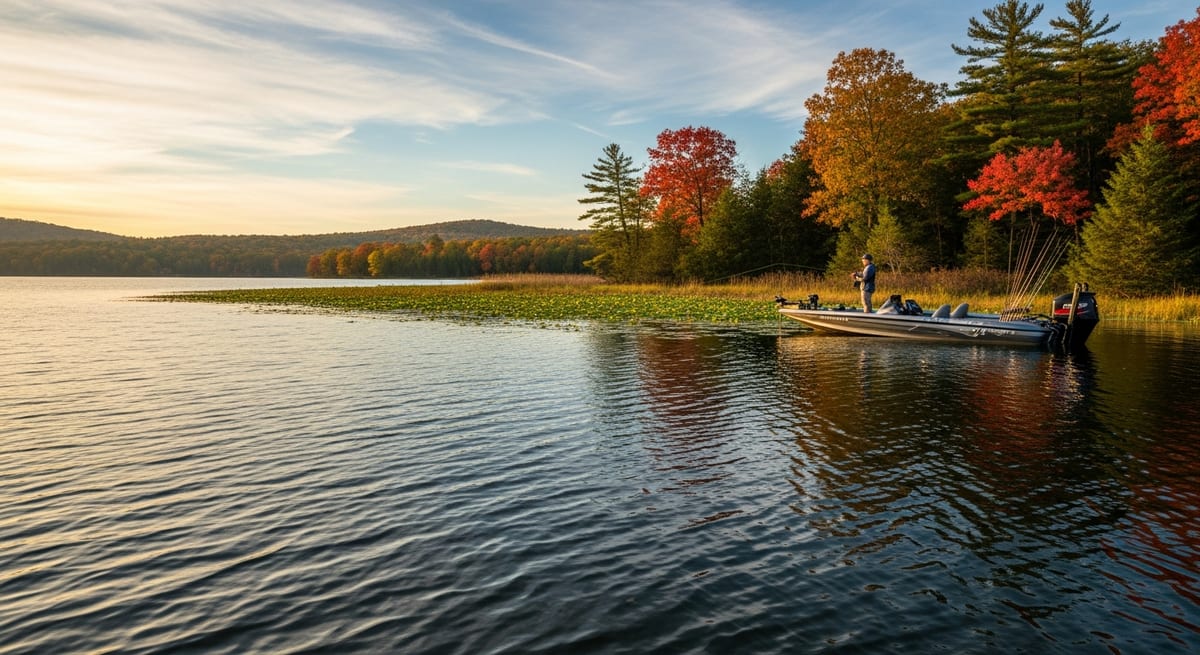
CT Largemouth Gets Dismissed, and Probably Shouldn't Be
Tournament anglers working the southern CT circuit have long flagged Lake Zoar's Route 34 cove as a spot that holds four- to five-pound largemouth into mid-October. A full month past when most local anglers have stowed their bass rods. That kind of late-season consistency turns up repeatedly in reports from anglers who fish the Housatonic impoundments, and it's part of why CT largemouth has developed a quiet regional following separate from the striper-dominated crowds on the coast.
Most traveling anglers pass through Connecticut targeting stripers or trout, and the pull is understandable. But CT DEEP public access records and regional tournament data suggest a well-developed largemouth fishery runs across the state's public lakes, largely uncrowded by comparison.
Connecticut's glacially formed lakes have consistent structural advantages: fertile, weedy shallows that warm quickly after ice-out, cold clear depths that keep fish healthy through summer, and enough pressure variation between weekdays and weekends that real feeding windows still exist. Some of the best largemouth water in the state sits adjacent to designated trout ponds and rarely gets touched for bass.
CT bass regulars, tournament circuits, kayak fishing groups active on CT Fishing Forums, and shore anglers who track public access points, have settled on a core set of public lakes that deliver reliably across the season. The ten below come up most consistently in those conversations.
Ten CT Lakes Where Regulars Keep Coming Back for Largemouth Bass
1. Lake Zoar (Monroe/Oxford/Newtown): A Housatonic River impoundment running between Derby Dam and Stevenson Dam, with multiple public launches and dam access. Tournament anglers who run the southern CT circuit consistently describe Lake Zoar as the most complete all-around largemouth lake in the state, extensive coves, heavy milfoil growth, and warm summer water that stretches the productive season well into fall. Work the milfoil flats in the main cove with a Texas-rigged creature bait from May through mid-June, then push to deeper structure once surface temps climb into the mid-70s. Accounts from CT bass forum regulars placed the Route 34 cove as actively productive through mid-October 2025.
2. Candlewood Lake (Western CT): CT's largest lake, stretching across five towns. The southern coves and tributary arms hold the best bass structure. The open main basin is dominated by boat traffic in summer. Candlewood regularly produces quality largemouth, with keeper-class fish turning up in tournament weigh-ins from this water over multiple seasons. Pre-dawn launches are the consensus recommendation for summer weekends when pressure builds fast after sunrise.
3. Moodus Reservoir (East Haddam): One of the more underrated largemouth lakes in eastern CT, based on accounts from regional bass club members who rotate through the area. Extensive shallow coves, heavy aquatic vegetation, and good water quality. Bass tend to average solid keeper size, and the spring bite along emergent grass edges draws consistent reports from anglers who fish the area each May.
4. Lake Saltonstall (Branford/East Haven): Limited public access. A launch permit is required through the regional water authority. Confirm current permitting details on their site before making the drive. Reduced fishing pressure has kept the population in good shape, and water clarity here runs noticeably cleaner than most CT lakes. A point that surfaces regularly in DEEP water quality monitoring summaries for the area.
5. Amos Lake (Preston): A smaller lake with reliable public access and consistently solid bass fishing from anglers who work through the eastern CT circuit. Chain pickerel mixed into the catch keep things lively on lighter gear, bring a wire leader if you're throwing soft plastics near the weed edges.
6. Lake Lillinonah (Newtown/Bridgewater): Another Housatonic impoundment with excellent structure, rocky points, shallow coves, and flooded timber in the back ends of the arms. Largemouth are regularly reported stacking around cove entrances in May. Smallmouth and catfish round out the catch and give the water variety across the season.
7. Saugatuck Reservoir (Easton/Weston): Restricted access through Aquarion Water Company, check their current permit process before planning a trip. Anglers who have obtained permits over the years consistently describe fish that hit more readily on standard soft plastic rigs than comparable public water. The limited pressure keeps fish less conditioned to presentations. A consistent theme in reports from anglers who've fished Saugatuck over multiple seasons.
8. Coventry Lake (Coventry): Reliable public access, a functional year-round boat ramp, and a steady largemouth population. Bass club anglers who rotate through eastern CT lakes keep Coventry on the circuit because the ramp is dependable and the fish show up consistently. A solid starting point for anglers building a rotation through the eastern part of the state.
9. Pachaug Pond (Voluntown): Part of the Pachaug State Forest complex. The lily pad fields and emergent vegetation edges hold largemouth through the summer months. Kayak and canoe anglers who fish the forest complex regularly include Pachaug on their routes; a small motor launch handles it fine as well.
10. Twin Lakes (Salisbury): Two connected lakes in northwest CT with quality bass and good weed structure in the shallower northern lake. The combination of clear water and structured weed growth draws Litchfield County regulars who describe the northern lake's largemouth fishing as worth the drive up Route 44. A conclusion that tracks with creel reports from CT DEEP's northwest zone monitoring.
What Experienced CT Bass Anglers Do Differently, Season by Season
Spring (April-May): Pre-spawn and spawn fish are shallow and feeding actively. The consensus among CT bass regulars for this window: start on the darkest-bottomed, warmest shallows, spots with protected southern or eastern exposure that absorb heat faster after ice-out. Texas-rigged creature baits, jigs walked along the bank, and topwater on calm mornings are the dominant techniques. Most anglers who track spring timing on CT lakes note that main-lake shallows can lag a week or more behind well-protected back coves in coming alive after winter.
Summer (June-August): By late June, fish push to deeper structure during midday hours. Morning and evening topwater. A prop bait like a Heddon Torpedo worked on flat water, on the shallow flats, then crankbaits or football head jigs worked at depth when the sun is high. Depth is structure-dependent and varies by lake, but summer reports from CT bass anglers regularly place fish in the 12-18 ft range on thermocline breaks during midday. A recurring theme in those accounts: spots that held fish at dawn go quiet by mid-morning. The fish have moved to deeper structure.
Fall (September-October): Fall is the window CT bass regulars describe most consistently as peak largemouth season. Bass feed aggressively before temperatures drop, baitfish push into the shallows, and fish relocate to weed edges and transition areas. Lipless crankbaits, spinnerbaits, and swimbaits worked along the outside edges of milfoil beds draw the most consistent reports through this window. CT tournament records from the fall 2024 season placed October as the month with the highest reported incidence of five-plus pound largemouth across the public lakes that run active tournament circuits.
Working Vegetation: Most CT largemouth hold around weed structure, milfoil, lily pads, emergent grass. A Texas-rigged soft plastic worked slowly through these areas is the standard starting point across all seasons on most of the lakes above, based on what anglers on these waters consistently report back.
CT Bass Regulations: Pull the DEEP Guide Before You Launch
CT largemouth and smallmouth bass regulations vary by water body and change from year to year by CT DEEP. Pull the current freshwater fishing guide directly at ct.gov/deep before your trip. The 2026 season regulations are posted there.
A general size minimum applies to most CT waters; designated trophy or management lakes carry a higher minimum. Some waters carry additional restrictions during spawn windows. An inland fishing license is required for all anglers 16 and older.
For tournament fishing, confirm individual event rules before you compete. Some tournaments enforce catch-and-release requirements that go beyond the current state minimum for that water.
The rules differ lake to lake. Checking the DEEP site before you launch takes two minutes and is how regulars on these waters avoid violations that come from assuming statewide rules apply everywhere.
EVERY SATURDAY MORNING
Weekly fishing intelligence
Nationwide conditions, what's biting, and honest gear deals. One email, no noise.
No spam. Unsubscribe anytime.