
CT Striper Tackle Shops Restock the Same Four Lure Categories Every Spring. Which One Gets Tied On Depends on Current Stage and Structure, not Season.
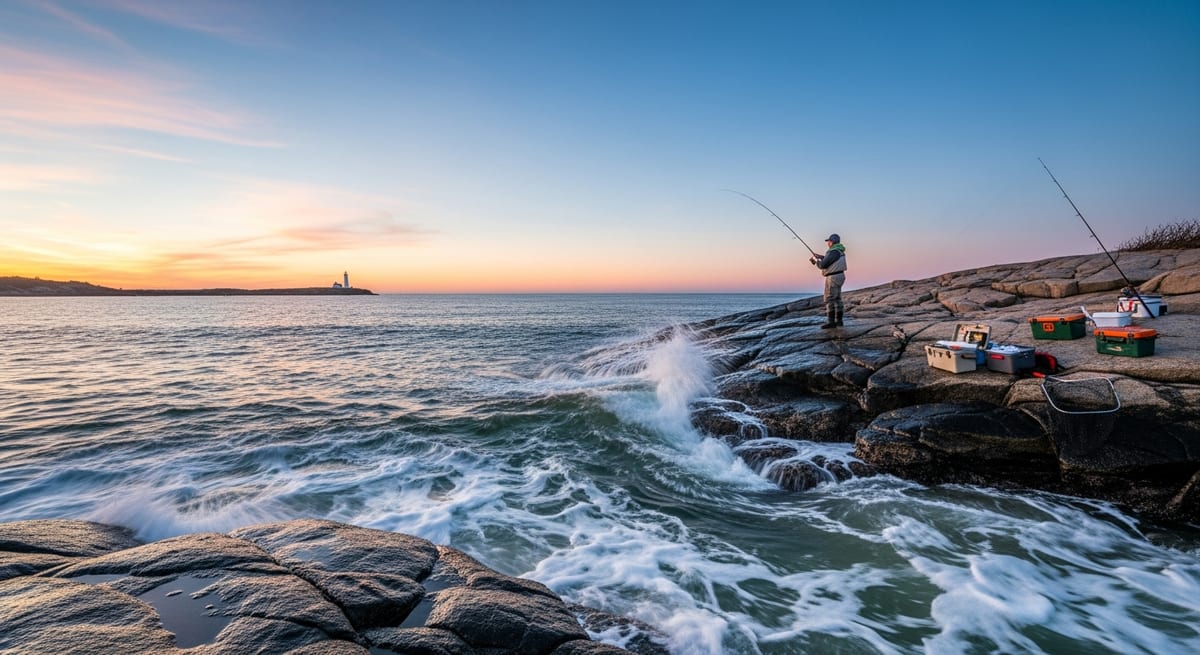
Tackle shops along the Old Saybrook-to-Niantic stretch restock roughly the same short list of striper producers every spring: bucktails in a range of weights, white soft plastics, metal lip swimmers for the rocky shore crowd, and pencil poppers for the surf casters. The consensus among anglers who fish the Sound regularly is that lure selection isn't arbitrary, specific presentations outperform at Cornfield Point versus the Housatonic River mouth versus the open beach at Hammonasset, based on current stage, depth, and what bait is holding in the water column. Understanding the logic behind each lure type is what shortens the learning curve on a new stretch of water rather than extending it.
Bucktail Jigs: Weight, Current, and Getting the Presentation Right
Bucktail jigs are what the anglers who fish the Sound's stronger tidal current edges, race Rock, Cornfield Point, the ledge drops on the east side of the Niantic River mouth, reach for when conditions demand precise bottom contact. A weighted head with deer hair or synthetic fiber tied behind the hook, worked along the bottom with the current, accounts for striper catches from ice-out through the November run, but anglers who fish those stretches consistently report that weight selection is where the most inconsistency enters the picture.
The presentation the striper community describes for CT tidal current edges: cast uptide, count the jig down to the bottom, then hop it along with the current as it swings through the zone. The natural movement imitates disoriented baitfish and crabs being swept downcurrent. The same presentation stripers are conditioned to expect at the rocky points where bait concentrates against structure. At the shoal edges east of Hammonasset Beach State Park, anglers working the bottom-contact retrieve consistently report out-producing those working mid-column on the same tide stage.
Weight selection follows one rule: maintain contact with the bottom using the lightest jig that still stays down. In the strong current at the Race or off the Niantic inlet jetties, 3-4 oz is typically needed; in harbor sections with minimal tidal push, 1 oz often handles it. Anglers who regularly fish both environments describe going heavier than necessary as the most common bucktail problem, too much weight deadens the hair's action and reduces the lifelike pulse that draws strikes.
A 4-6 inch curly tail grub or a strip of pork rind on the hook adds profile and scent. Chartreuse, white, and white/red are the most consistently restocked bucktail colors at CT Sound tackle shops. Anglers fishing the tannin-stained water near the Connecticut River mouth often report better results with chartreuse over white in low-visibility conditions.
Metal Lip Swimmers After Dark: The Rocky Shore Tradition
Metal lip swimmers, wooden or urethane plugs with a lip that generates a wide, rolling side-to-side action, are how the CT surf community has targeted trophy-class stripers at night for decades. Names like Gibbs and Atom have been on CT tackle shop shelves since the 1950s, and the tradition of slow, deliberate night fishing with a metal lip over rocky structure at spots like Cornfield Point, Black Point, and the ledges near Avery Point represents one of the more distinctly regional striper traditions on the Sound.
These aren't blitz lures and the anglers who fish them regularly know it. The slow, wide-swimming action with substantial surface disturbance triggers deliberate strike responses from large predatory fish, not reaction strikes from schoolies chasing sand eels. CT surf anglers targeting 30-pound-plus class fish tend to concentrate their metal lip work between 9 PM and 2 AM on new and full moon tide phases, when current pushes bait against the rocky points and large stripers take up feeding positions in the eddies just out of the main flow.
The retrieve is slow and steady, cast downtide or across the current and let the plug work. The side-to-side rock should be visible when conditions allow you to see it. Anglers who fish the fall run consistently describe slowing down more than feels natural once October water temperatures drop below 60 degrees; the plug should barely be moving and the current does the rest.
On brands and sourcing: Gibbs and Atom have documented production histories on the CT surf, and custom metal lip builders working out of the Old Lyme, Westbrook, and Stonington areas supply a portion of the local market directly through tackle shops and personal order. Any production brand name that doesn't appear on CT tackle shop shelves is worth confirming before purchasing. The custom and small-batch nature of the metal lip market means unfamiliar names may be regional-only operations that don't maintain consistent availability or have the same build quality as established names.
Soft Plastics: What CT Sound Anglers Actually Reach For Day to Day
Soft plastic swimbaits on jig heads have become the practical workhorse between trophy sessions, affordable, adaptable, and what accounts for the majority of schoolie-through-medium striper encounters on the Sound. A 5-6 inch paddletail on a 1-2 oz jig head covers most CT scenarios from the tidal flat shallows at Hammonasset Beach State Park to the channel edges near Rocky Neck State Park.
Elongated sand eel imitations. The Hogy Epoxy Jig and similar profiles, match the forage that stripers key on heavily throughout the Sound's spring and early summer season. Anglers who fish the sand-bottom flats off Hammonasset and Rocky Neck report that during the May-June sand eel concentrations, slow swimming retrieves at mid-column depth and vertical presentations over structure both outperform most other approaches. The Hogy sliding harness rig, which suspends the plastic on a weedless hook that moves along the body, is well-regarded among CT kayak and shore anglers fishing those sand eel blitzes for its reduced fouling rate during fast repeat-cast conditions.
For larger profile applications: 8-10 inch swimbaits on 3-5 oz jig heads. The angling community splits on how reliably they draw disproportionate attention from larger fish. The volume of reports from anglers fishing rocky structure at Race Rock and the Housatonic River mouth during the fall migration suggests larger plastics produce more 30-inch-plus encounters per outing compared to schoolie-sized presentations, though the tradeoff is far fewer total strikes. Whether that ratio is worth it depends on the goal of a given session.
Color choices vary by visibility: off-color water after storm fronts moves the consensus toward white and white/chartreuse; when bunker are visible and present, olive-brown and baitfish-match patterns tend to produce; glow finishes see consistent use on darker shoreline stretches without ambient light.
Surface Plugs: First Light, Blitz Conditions, and the Rocky Shore
Surface plugs, pencil poppers, cup-face poppers, and chuggers, produce the most visually striking striper encounters on the Sound, and CT anglers who fish the rocky shore points from Black Point to Harkness Memorial will tell you the margin between a full surface blow-up and nothing at all is often measured in minutes around first light or the last moments of evening.
Pencil poppers are the dominant surf plug for CT striper anglers casting from rocks and jetties. The long, slender metal pencil works on a walk-the-dog retrieve that darts the lure left and right on the surface, danny pencil poppers and versions from Roberts and the New England custom surf builder community have been the standard on CT jetties and rocky shore points for decades. The typical 2-3 oz casting weight matters on surf-exposed points where headwinds and distance come into play at the same time.
Cup-face poppers: the Gibbs Polaris Popper has been a standard CT shelf item for decades, though tackle shops along the Sound rotate in other Gibbs cup-face models depending on season availability and inventory, work their best during active surface feeding, when stripers are already oriented upward and a loud water-spitting report on each jerk draws strikes from fish looking up. The distinction matters in practice: cup-face poppers produce well during a blitz already in progress; pencil poppers are typically the more productive searching lure worked over structure before the action starts.
The conditions CT anglers identify for topwater striper work: first and last light over rocky structure; active blitz conditions where fish are visibly pushing bait; warm September and October nights along the Connecticut River mouth and the tidal creeks near the Sound, when large stripers move into shallow water to push bunker. A distinction anglers fishing the rocky shore consistently note between stripers and bluefish: stripers stalk surface plugs before committing, often tracking 10-20 feet before striking, while bluefish blast on contact. CT surf anglers fishing Race Rock and Cornfield Point at first light describe watching fish follow a pencil popper through multiple rod lengths without committing, then hitting it on the pause.
The CT DEEP Slot Limit: What It Actually Says and Where Anglers Get Caught
Striped bass regulations in Connecticut are managed through CT DEEP Marine Fisheries in coordination with the Atlantic States Marine Fisheries Commission, which sets coastwide measures for the species and issues addenda that adjust size and possession limits between seasons. As of the 2024-2025 season, the recreational limit for Connecticut tidal waters is one fish per day within the established slot parameters, verify the current minimums and upper slot limit in the CT DEEP Marine Fisheries season-opening bulletin before fishing, since ASMFC addendum changes can shift the slot window from one season to the next.
The regulation that generates the most enforcement contact, per CT DEEP warden accounts and angler reports in CT fishing forums, is the slot limit itself, specifically, anglers retaining fish that fall outside the allowable size window, or keeping a second fish before confirming the first is within the slot. The rule is clear in writing but requires physically measuring every potential keeper before it goes in the cooler.
Anglers running multi-species sessions that include bluefish alongside striped bass should note that bluefish carry separate size and possession limits under CT DEEP Marine Fisheries. The limits are not interchangeable. A flexible measuring board or a knotted cord cut to the slot parameters works well for shore and kayak access where a rigid measuring device is impractical.
CT DEEP Marine Fisheries posts annual regulation summaries at ct.gov/deep/fishing at the start of each season. ASMFC coastwide measures can change on short notice when stock assessment data warrants emergency action, so checking the bulletin within two weeks of the season opener is more reliable than relying on the previous year's slot parameters.
EVERY SATURDAY MORNING
Weekly fishing intelligence
Nationwide conditions, what's biting, and honest gear deals. One email, no noise.
No spam. Unsubscribe anytime.