
Fall Bass Fishing: How to Adapt as Water Cools and Bass Feed Up for Winter
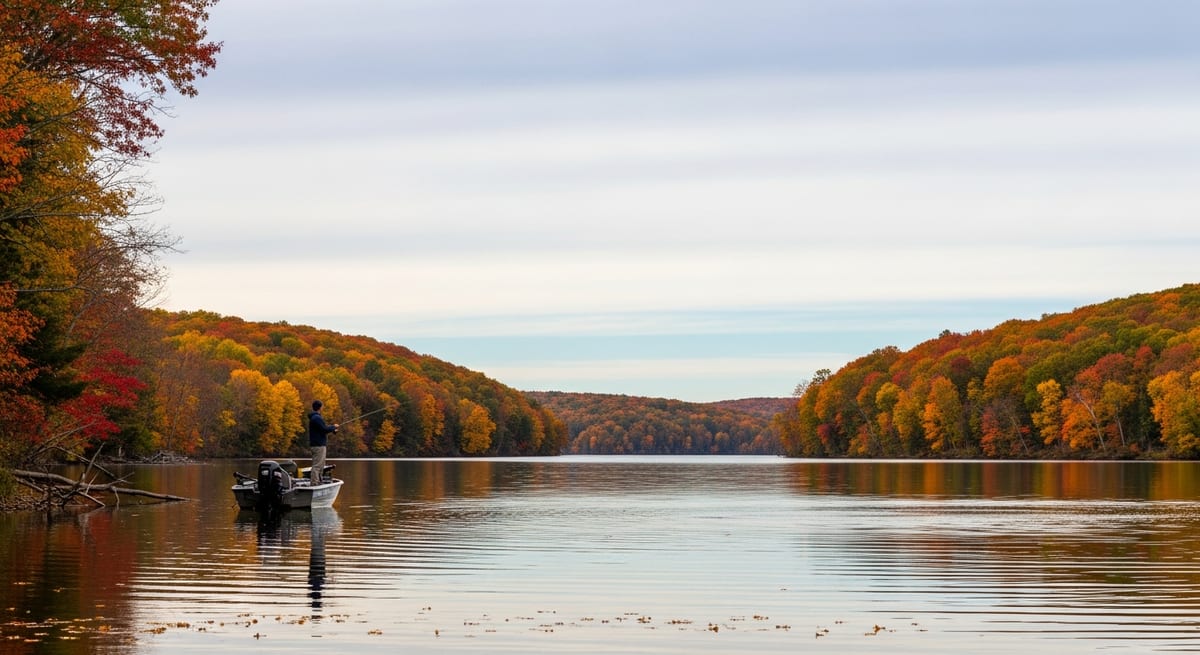
Fall is arguably the best bass fishing season of the year in Connecticut. Fish feed aggressively to build reserves for winter, the pressure from summer crowds drops significantly, and the cooler air makes being on the water genuinely enjoyable. Understanding the fall transition makes the difference between slow fishing and some of the best sessions of the year.
The Fall Transition
Fall bass fishing begins when water temperatures drop below 70°F, typically late August to early September in Connecticut. As surface temperatures fall, the thermocline (the layer of temperature separation that forms in summer) breaks down. This is called the fall turnover, deep, oxygen-depleted water mixes with the oxygenated surface water, temporarily disrupting fish patterns. During turnover (usually 1-2 weeks): fishing can be inconsistent. The water may smell like sulfur near the surface and appear discolored. Bass scatter as the thermal structure collapses. After turnover: fish redistribute throughout the water column. Baitfish (shad, perch) move to shallow flats and creek arms as they begin their own fall feeding frenzy. Bass follow the bait. This post-turnover period, september through November in CT, is prime fall bass fishing.
Following the Shad Migration
Fall bass fishing is a shad-following game on most Connecticut lakes. Gizzard shad and threadfin shad schools move from deep summer haunts to shallow feeding areas as water cools. When you find the shad, you find the bass. How to locate shad: look for nervous water on the surface (dimpling, small ripples from a school of fish moving just below the surface). Watch for diving birds over water (birds diving on baitfish from above). Use your fish finder to identify suspended baitfish clouds at specific depths. Shad typically move from 20-40 feet in summer to 5-15 feet in fall. On CT lakes with shad (Gardner Lake, Bantam Lake, Lake Lillinonah), following shad schools with reaction baits produces exceptional autumn bass fishing.
Reaction Baits for Fall Bass
Fall bass are aggressive and willing to chase fast-moving lures. This is the season when reaction baits really shine. Squarebill crankbait: one of the best fall bass lures. Work it along shallow rocky flats, points, and boulder fields in 3-6 feet. The deflections off rocks trigger reaction strikes. Strike King KVD 1.5 or Rapala BX Brat are excellent CT fall choices. Spinnerbait: cast to shallow banks with any remaining vegetation. White spinnerbait with a trailer covers water fast and matches the shad profile. Work it around points and submerged timber. Chatterbait (bladed jig): versatile fall bait that can be fished at multiple depths. Swim it parallel to points or over shallow grass remnants. Topwater: dawn and dusk topwater action continues strong into October in CT. Zara Spook along points, Whopper Plopper on weed flats. As water cools below 60°F, topwater bites diminish.
Structure Fishing in Fall
As fall progresses and water temperatures drop below 60°F (typically late October in CT), bass increasingly relate to deeper structure. Main lake points: the classic fall structure. Fish the entire length of a main lake point, from the shallow flat at the tip down to where it drops into deep water. Run a jig or deep-diving crankbait along the depth transition. Humps and underwater islands: these mid-lake structures concentrate fish in fall as bass stage before winter. Find them on your fish finder and work them methodically. Rock piles: any hard bottom structure in 10-25 feet holds fish in fall. Jigs and football heads dragged slowly along rocky bottom produce large fish. Boat docks (again): fish move back under docks in fall for the same reasons as summer, structure and nearby depth. The fall dock bite is underrated.
Lure Color for Fall
Fall is a season of natural colors. Baitfish are silver, gray, and white, match that profile. Shad patterns (silver/gray, white), natural perch colors (green/gold), and crawfish tones (brown/orange) are all appropriate for fall CT bass. As days shorten and skies become more overcast, chartreuse accents become useful, adding a chartreuse tail or chartreuse/white spinnerbait improves visibility in the reduced light of fall days. In November on clear, high-pressure days: go natural and subtle, green pumpkin jigs, watermelon soft plastics, natural shad crankbaits. In fall overcast or rainy conditions: slightly brighter options are fine.
Extending the Season: Late Fall Bass
CT bass fishing continues productively through November and into December in most years. Late fall bass (below 55°F water) require slower presentations. Jigs fished very slowly along rocky bottom in 15-25 feet. Football jig is excellent, dragged slowly, it triggers sluggish fish. Swimbaits fished slowly on a heavy head. Tube jigs on a shaky head. The key: match the fish's reduced metabolism. They need to eat less frequently in cold water, so each presentation needs to be in front of them longer and slower. The fish are still there in December. They're just not moving as fast. Equipment: cold hands reduce line feel and dexterity significantly. Good fishing gloves, hand warmers, and layered clothing allow you to stay on the water when other anglers have given up for the season.
EVERY SATURDAY MORNING
Weekly fishing intelligence
Nationwide conditions, what's biting, and honest gear deals. One email, no noise.
No spam. Unsubscribe anytime.