
CT Shore Casters at Hammonasset Point, Harkness, and the Niantic River Mouth Report the Fall Striper Window Peaks in a 3-Week Northerly-Wind Corridor, what Water Temp Triggers, Bait Presence, and the Shore-Plugging Community Reveal About Timing Connecticut's Most Compressed Beach Fishery
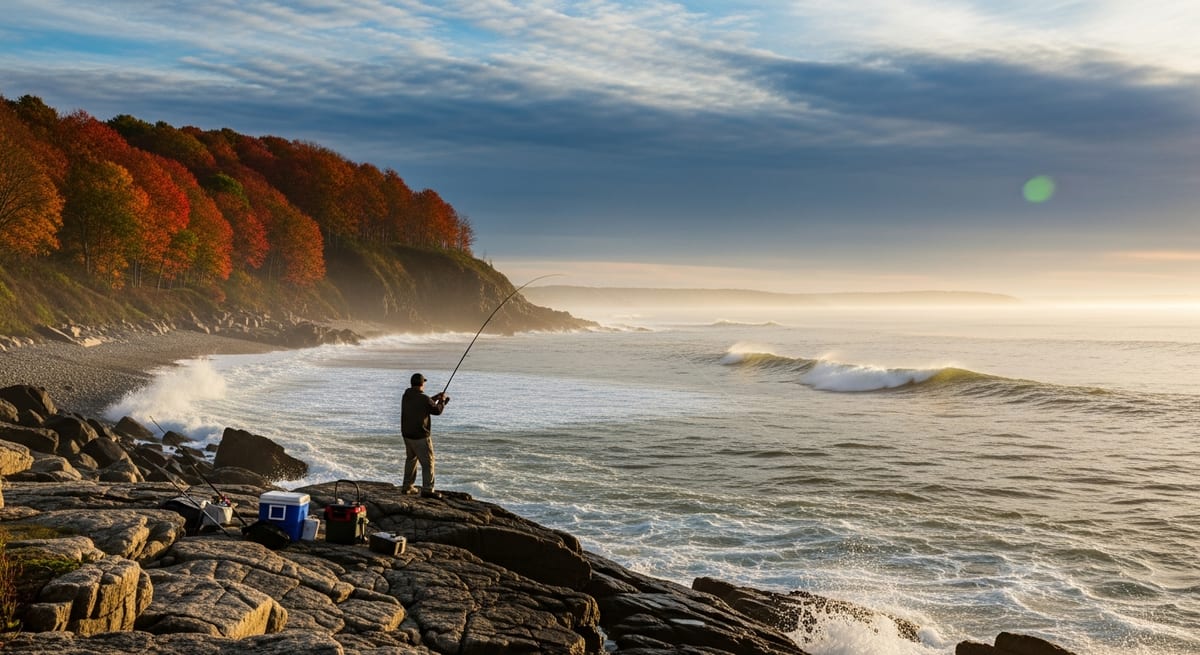
Shore casters who fish Hammonasset Point in mid-October report that in some years the entire bunker school stacks against the bar in a single tide, pulling stripers from 20 to 45 inches into casting range simultaneously; in other years the bait disperses offshore and the beach stays quiet through November. Anglers who regularly work the CT shoreline during the fall run report the difference nearly always traces to wind direction, dropping water temperature, and whether northerly cold fronts arrive early enough to pull the migration tight against the coast. Connecticut shore-plugging forums and community catch reports from Long Island Sound regulars describe the fall run as the most compressed productive window of the CT saltwater season. In years when summer heat extends deep into September, anglers fishing Harkness State Park, the Niantic River mouth, and Rocky Neck State Park report that the window when large concentrations of stripers reach casting range from shore can narrow to three weeks or fewer before water temperatures push fish offshore and the season effectively ends.
The 3-Week Peak Window and What Collapses It Early
CT DEEP marine fisheries reports and community catch records from Long Island Sound regulars generally place the fall striper migration in motion when water temperatures fall below 65°F, a threshold that typically arrives in late September on the western Sound and progresses eastward. The peak window most often falls in the second and third weeks of October for the central CT shoreline, though anglers who track NOAA water temperature buoys (buoys 44039 and 44025 near Long Island Sound are the ones CT shore casters most commonly reference) report year-to-year timing shifts of one to three weeks depending on when summer warmth releases.
Early October: Community reports from CT shore-plugging groups note that scout fish, mostly schoolies under 24 inches, move first. The larger fish haven't pushed through yet and bait schools are often still dispersed, which is why experienced CT shore casters tend to fish these early trips lightly and save serious days-off for the mid-month window.
Mid-October to early November: Shore anglers fishing Hammonasset, Harkness, and the Old Saybrook outer beach consistently describe this as the window with the most fish present. Water temperatures are typically in the 58 to 63 degree range. Bunker schools are moving west along the Sound and stripers are often concentrated directly behind them.
Late November: Anglers who stay into the tail of the run describe this as the period most likely to produce very large fish pushing south late in the season, but overall shore-accessible fish density drops sharply once water falls below 50 degrees. The window collapses faster in years when early November cold fronts arrive without a warming break between them.
The Northerly Wind Trigger: What Shore-Pluggers Check Before Driving to the Beach
The single condition CT shore-plugging community members cite most consistently as a blitz trigger is a sustained northerly or northwest wind following a cold front. North and northwest winds push surface water against the CT shoreline, concentrate bait near the beach, and can trap bunker schools in the shallows where stripers gain direct access to them.
Anglers who fish the western Sound shore report that a northerly blow of 15 to 20 mph sustained for several hours, particularly when it follows a day or two of dropping water temperatures, tends to produce the most concentrated shore-side fishing of the fall season. CT fishing forum reports describe anglers checking extended forecast models for this pattern two to three days ahead before committing to a pre-dawn drive to spots like Hammonasset or the Niantic River mouth.
Bird activity is the on-the-water confirmation. Diving terns and gannets working a surface boil typically indicate bait and feeding stripers below. Community reports from CT surf casters describe scanning from elevated points during peak fall weeks, with Harkness State Park's western shoreline offering higher ground for glassing the water before committing to a spot.
Water clarity is a factor shore anglers often underweight. After significant rainfall, nearshore water can stain considerably from river and storm drain runoff. CT shore-plugging community members typically report waiting 24 to 48 hours after heavy precipitation before making a long drive to spots like the Old Saybrook outer beach or Niantic Bay, where visibility matters more than at rockier, current-washed points.
Hammonasset, Harkness, and the Niantic Mouth: Access Points and Tide Windows CT Shore Casters Prioritize
Hammonasset Beach State Park (Madison): The point on the eastern end of the park is what Connecticut surf-fishing community forums most consistently identify as the top CT fall shore-striper access point. Moving water deflects around the point and creates a rip that shore casters use as their primary casting target. Anglers who fish this spot regularly report that positioning on the eastern point as the tide begins to move, before sunrise, is the standard approach among experienced visitors.
Harkness Memorial State Park (Waterford): Community reports from anglers who work the rocky shoreline on the park's eastern side describe consistent fall striper action when bunker schools push through eastern Long Island Sound. The park offers structured rocky bottom accessible from shore and tends to be less crowded than Hammonasset. CT shore-plugging regulars report it produces particularly well on outgoing tides when bait concentrates along the rocky drop-offs.
Niantic River mouth (Niantic): The outlet of the Niantic River on an outgoing tide is a classic fall location that CT shore-fishing community members reference consistently. Bait concentrated in the estuary flushes out on the ebb and stripers reportedly stack in the channel just outside the inlet. Anglers who fish this location describe it as particularly productive when wind and outgoing tide align to concentrate forage at the mouth simultaneously.
Rocky Neck State Park (East Lyme): Shore access along the western side of the park provides rocky structure with direct exposure to the eastern Sound. Anglers who have fished multiple fall seasons from this location report it produces most consistently when the bait push is coming from the east, early in the migration window before fish have passed the midpoint of the Sound.
CT shore-fishing community groups and Long Island Sound fishing forums are the fastest way to identify active concentrations during any given week. When a blitz occurs at Hammonasset or Black Point, community reports typically surface within hours.
Bait Size First: How the Shore-Plugging Community Reads and Matches the Fall Forage
CT shore casters who fish the fall run consistently describe bait matching as more consequential in October than at any other time of year. The key variable, according to community reports from Long Island Sound regulars, is distinguishing between large adult bunker (menhaden in the 8 to 12 inch range) and juvenile peanut bunker, which typically run 2 to 4 inches.
Large bunker patterns: When bunker schools visible from shore are adult-size, anglers fishing Hammonasset and Harkness report heavier presentations produce most consistently. Metal jigs in the 3 oz range in bunker colors, large bucktails with paddle tail trailers, and 6 to 8 inch swim shads on heavy jig heads are among the presentations CT shore-plugging community members describe as their go-to options. For surface fishing large-bait blitzes, metal lips and large swimming plugs in bunker colors come up repeatedly in CT surf fishing community discussions.
Peanut bunker: When surface blitzes are on juvenile menhaden, the approach shifts. CT shore-plugging community members describe smaller metal jigs in white or silver in the 1.5 to 3 oz range, compact bucktails under 2 oz, and small surface plugs in white or chrome as the standard options. Peanut bunker blitzes are typically fast-moving; community reports emphasize covering water and keeping the presentation moving rather than working a single zone.
Night fishing: October nights along the CT shore are described by shore-plugging forum regulars as the highest-probability window for large fish from beach and rocky-point access. Bigger stripers reportedly move into shallower water after dark. Shore casters fishing rocky points at Harkness and the eastern end of Hammonasset after midnight report that large surface plugs worked on a slow, steady retrieve produce fish that won't touch a moving lure in daylight conditions. Cold-weather layering is standard practice among experienced CT fall shore anglers, as night temperatures along the Sound in late October often drop to the low 40s.
CT DEEP Slot Limit and Why Shore Anglers Release Most of What They Catch in Fall
Striped bass in Connecticut are regulated under ASMFC guidelines that CT DEEP adopts each season, and regulations are subject to annual revision. Anglers should verify the current slot limit and bag limit directly at the CT DEEP Marine Fisheries website (ct.gov/deep/fishing) before keeping any fish, as the specifics can change between seasons.
As of the 2024 season, Connecticut had been operating under a one-fish, 28 to 35 inch slot limit consistent with regional ASMFC conservation adjustments, but anglers should confirm the current season's exact regulations directly with DEEP before fishing. No regulation citation in a third-party article substitutes for checking the current year's CT Marine Fisheries Regulations.
CT shore-plugging community members broadly describe a strong voluntary release ethic during the fall run, particularly for fish at the upper end of the slot range. Large stripers are the most reproductively valuable fish in the population, and experienced CT shore casters who follow community forums often note they release fish above 32 inches regardless of whether the current regulation would permit keeping them.
For anglers who do keep a fish, CT shore-fishing community discussions generally suggest that a fish in the lower portion of the slot range provides better eating than larger fish, which accumulate more contaminants over their longer lives, particularly in Long Island Sound.
Tagged fish should be reported to the contact number printed on the tag. CT DEEP's marine tagging program and the Atlantic Cooperative Research program use fall migration data to track population movement and inform future management decisions. Shore casters who encounter and report tagged fish contribute directly to the dataset that shapes upcoming regulations.
EVERY SATURDAY MORNING
Weekly fishing intelligence
Nationwide conditions, what's biting, and honest gear deals. One email, no noise.
No spam. Unsubscribe anytime.