
How to Prepare for Your First Bass Tournament
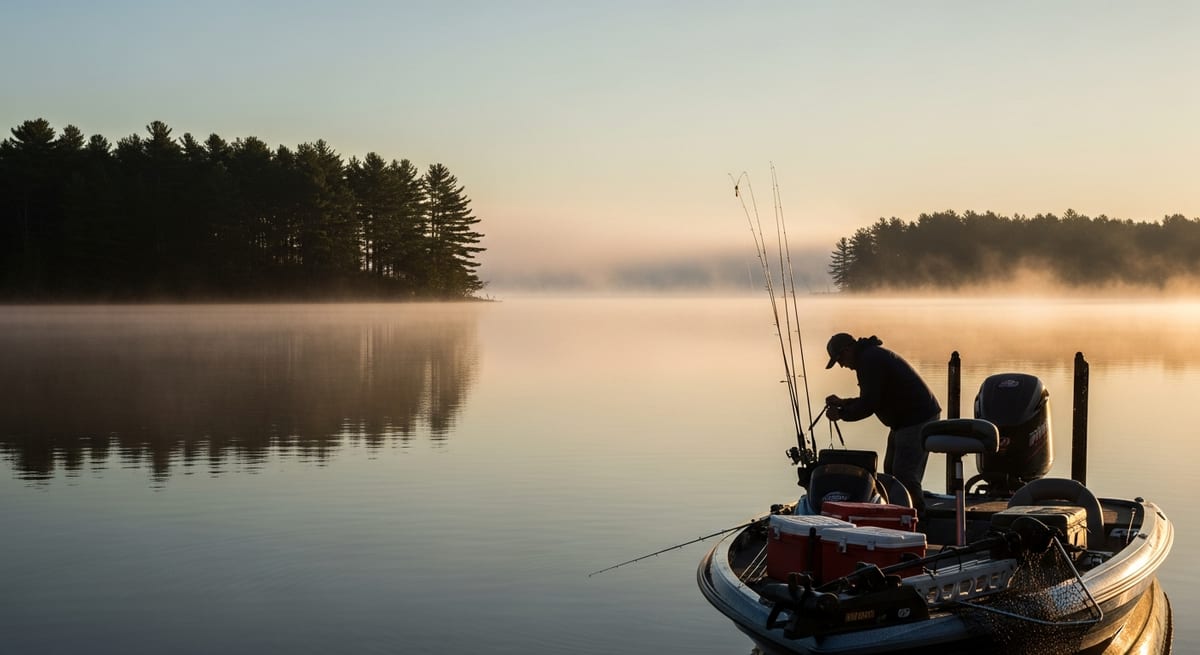
Entering your first bass tournament is a significant step. The fishing is the same but the context is entirely different, time pressure, scorecard anxiety, and competing against anglers who've been fishing this specific lake for years. Most first-time tournament anglers are either underprepared or overthink the preparation. This guide gives you what you actually need to show up ready.
Types of Connecticut Bass Tournaments
Understanding the tournament landscape helps you choose the right entry level. Club tournaments: Local bass clubs (CT Bass Federation, various lake-specific clubs) run club events that are lower stakes and more community-focused. Entry fees are typically $20-50, top payouts are modest, and the atmosphere is welcoming to new competitors. Club tournaments are the best entry point for first-timers. Open team tournaments: Partner-boat events where two anglers fish together. Entry fees of $50-200 per team, with larger fields. B.A.S.S. Nation / FLW Federation: CT has active B.A.S.S. Nation chapters that run federation events qualifying for regional and national competitions. These are more serious events with greater regional significance. Lake-specific tournaments: Many popular CT bass lakes (Candlewood Lake, Bantam Lake, Lake Lillinonah) have lake association tournaments and open events specifically for that water. Good choice because local anglers know the water and conditions; you can find information about past performance and patterns. Fishing derbies: Less formal than tournaments, time-limited events, often family-friendly, with a simpler weigh-in structure. Good introduction to competitive fishing for beginners.
Pre-Fishing: How Pros Prepare
Pre-fishing is the practice fishing done before tournament day to locate fish and establish patterns. How much time to invest: Serious tournament anglers pre-fish 2-5 days on a large unfamiliar lake. For club events on a lake you know, pre-fishing the week before for 1-2 sessions is adequate. What to focus on during pre-fish: Find multiple productive areas. You need a primary and backup pattern. Tournament day pressure (multiple boats hitting the same water) will push fish off your primary spots. Don't burn every spot: If you find a productive dock or point during pre-fish, don't hammer it. Mark the location, make a few casts to confirm fish are there, and leave. Fishing a productive area extensively before the tournament depletes it. Record everything: Write down or waypoint every productive location, gPS coordinates, depth, structure type, lure used. You can't trust memory on tournament morning. Pattern fishing vs. spot fishing: Experienced anglers find a pattern (shaded docks at 10-14 feet, weed edges in 6-8 feet on a specific shoreline) and fish the pattern rather than specific spots. Patterns scale better to a full day of fishing.
Tournament Day Preparation
The practical preparation that experienced tournament anglers don't think about anymore but first-timers overlook. Night before: Rig all your rods. Have your likely presentations ready on separate rods so you're not rigging on the water. Check regulations for the specific tournament (most have specific rules about lure types, live bait, boat/safety equipment). Pre-tie your knots at home in good lighting rather than tying in the dark or under pressure. Fuel the boat. Map review: Look at the lake map and mark your planned stops in sequence. Think about boat traffic, popular areas get hit first at launch, so consider sequencing your stops to minimize competition. Livewell: Check livewell function (pump, aeration) and tournament rules on livewell requirements. Add tournament salt or ice to condition water for fish health. Safety check: Life jackets accessible and appropriately sized for all occupants. Emergency equipment present. Kill switch lanyard connected. Early arrival: Arrive at least 30 minutes before captain's meeting. Confirm all registration is complete. Attend captain's meeting, rules updates and catch instructions are often given here. Latecomers miss critical information.
Tournament Fishing Strategy
Tournament fishing requires different decision-making than recreational fishing. Time management: Calculate how many stops you can realistically make and the travel time between them. Don't spend 3 hours on one area hoping, if it's not producing after an hour, move. The angler who catches 5 fish of 2 lbs each wins over the angler who catches 2 fish of 3 lbs each (if the tournament is based on total weight). Culling: Once you have your 5-fish limit, continue fishing to improve your bag. Catch a new fish, compare it to your smallest current fish, if the new fish is heavier, release the smaller fish (cull it out of the livewell). Keep only your best 5 at all times. Reading the field: Watch where other boats are fishing at launch. Heavy boat concentration on certain areas tells you where fish were caught in pre-fishing. You can either avoid these pressured areas and look for less-pressured water, or fish them knowing the patterns work there. Mental game: Tournament fishing involves long stretches without bites. Don't abandon a working pattern after one slow hour. Stay confident in your pre-fish information while adjusting presentations based on current conditions.
Weigh-In and Post-Tournament
The weigh-in process has specific protocols that first-timers should understand. Livewell care: Throughout the tournament day, add fresh water to the livewell periodically (surface water temperatures are often cooler). Use tournament additive (Bass Formula, Rejuvenade) to reduce stress and keep fish healthy. Dead fish penalties: Most tournaments penalize dead fish, typically 1 lb or 8 oz per dead fish deducted from your weight. Keeping fish alive is worth time and attention; a dead 3 lb fish may effectively count as a 2 lb fish. The weigh-in process: Most tournaments require you to bag your fish in a tournament-provided bag before going to the weigh-in stage. Handle fish as quickly as possible. The weigh-in volunteer will scan or count, weigh, and release your fish. Live release: Most modern tournaments immediately return fish to the water after weigh-in, at a tournament release location or directly off the weigh-in stage. CT tournaments typically release fish directly back into the tournament water. Post-tournament: Talk to other anglers about what worked. The information exchange after tournaments is where you learn fastest. Ask what pattern and lure caught fish. Most anglers are willing to share after the event is over.
EVERY SATURDAY MORNING
Weekly fishing intelligence
Nationwide conditions, what's biting, and honest gear deals. One email, no noise.
No spam. Unsubscribe anytime.