
The Barometer Matters More Than the Spot. What CT Anglers Watch Before They Launch.
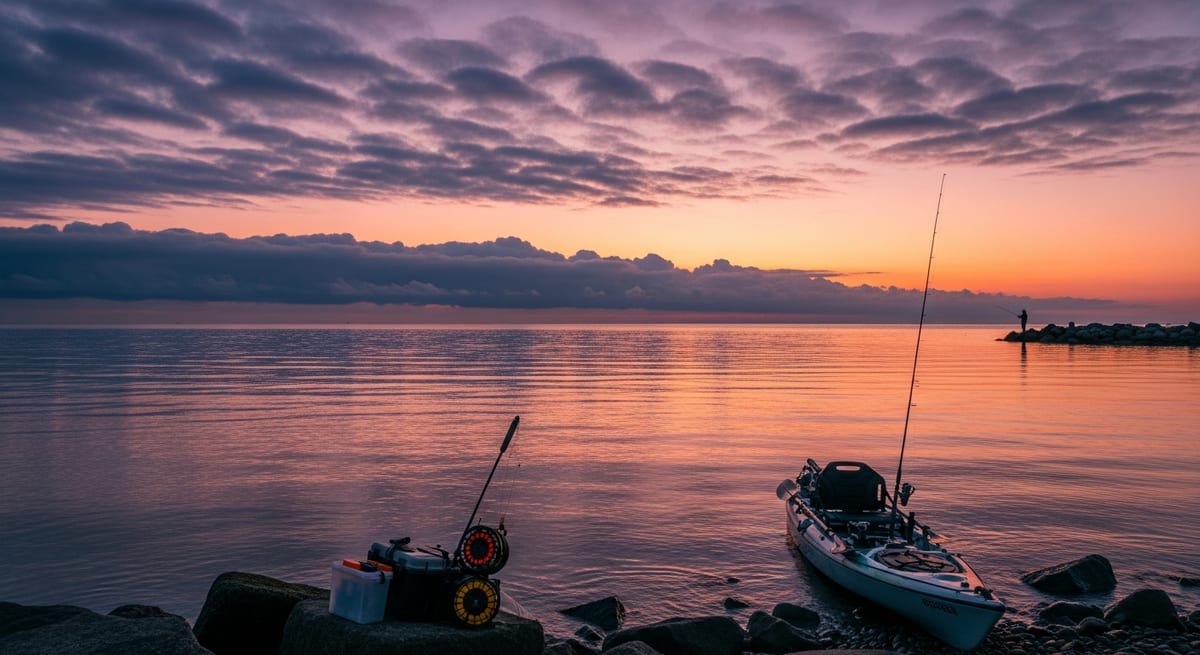
Anglers fishing the tidal Connecticut River near Old Saybrook report that a sustained rising barometer, combined with water temps in the 58-62°F window, produces some of the most aggressive striper feeding of the fall season, often on unremarkable weekday mornings with little boat traffic. That pattern repeats itself across CT water. The question newer anglers keep asking is 'where do you fish?' but the more useful question is when, and under what conditions. The anglers who put up consistent numbers from the Housatonic flats near Derby to the striper rips off Stonington aren't just picking better spots. They're reading conditions before they leave the dock.
Why the Barometer Is the First Number Serious CT Anglers Check
Barometric pressure, measured in inches of mercury (inHg) or millibars (mb), correlates more reliably with fish activity than almost any other single variable. The trend matters more than the absolute reading.
Rising pressure: Typically the best fishing conditions. A building high-pressure system, pressure climbing from 29.5 toward 30.5 and above, lines up with active feeding across most species. Fish sense the change and feed more aggressively during the rise.
Stable high pressure: Good to excellent fishing in the first 1-2 days of stable conditions. After extended high pressure, activity often levels off as fish settle into the new normal.
Falling pressure: Mixed behavior, but the window just before a major front moves through is widely reported among CT anglers as one of the more productive short windows of any given week. That's community consensus, not a controlled finding, but it's consistent enough to plan around.
Low pressure / during storms: Generally poor fishing for most species. Fish seek deeper water and reduce activity significantly.
After a cold front: Clear skies, high stable pressure, cold temperatures. This combination produces some of the slowest fishing of the month. Fish go lethargic for 24-48 hours post-front. Slow down, go deeper, and downsize your presentation.
Download a standalone barometer app and track the trend line over 6-12 hours. Whether pressure is rising, stable, or falling guides the decision more than any raw number.
What the Thermometer Tells You Before You Make a Cast
Cold-blooded fish run on the water's schedule. Their metabolism, digestion rate, and willingness to chase a fast-moving bait all track water temperature directly. An inexpensive clip-on or digital thermometer is one of the most underrated tools in any CT angler's bag, check it before you commit to a spot and technique.
Largemouth bass in CT lakes and ponds:
- Below 50°F: lethargic, slow finesse presentations, deeper water
- 50-65°F: increasing activity, transitional setups work well
- 65-75°F: peak feeding range, topwaters, crankbaits, full range of presentations
- Above 80°F: stress; bass push deep toward thermoclines in lakes like Candlewood and Lillinonah
Trout (Farmington River, Housatonic, Salmon River):
- Below 40°F: minimal activity; slow nymphs near the bottom
- 45-65°F: optimal feeding range. Anglers on the Farmington West Branch consistently report the best dry-fly and nymph action through this window, typically running from March into late May depending on snowmelt
- Above 68°F: thermal stress builds; catch-and-release mortality risk increases meaningfully
- Above 72°F: CT DEEP advises stopping C&R fishing on designated wild trout waters under thermal stress conditions, check current CT DEEP regulations and any posted river advisories before fishing trout in summer heat
Striped bass (Long Island Sound, tidal CT River):
- Spring migration northward typically begins when nearshore Sound water hits 50-55°F, in recent seasons that's tracked late April to mid-May depending on winter conditions
- CT Sound anglers report consistent feeding through the 55-68°F range, but productive fall bites run well outside that window as water cools into October, don't pack it in when temps drop past 65
- In the tidal CT River, stripers push upriver as spring conditions stabilize. The Old Saybrook to East Haddam reach receives fish earlier than the upper river, which warms faster and turns fish around sooner
Tracking NOAA buoy data for Buzzards Bay or Block Island Sound stations gives a useful real-time proxy for Sound temperatures when nearshore readings are patchy.
Wind and Light: Two Variables That Reposition Every Fish in the Water
Wind: Surface chop reduces a fish's ability to spot anglers and presentations from below. This typically improves fishing, not hurts it. Wind-driven current also concentrates bait and positions predators on the downwind side of points and coves.
Guides and experienced shore anglers working the rocky stretch between Stonington and Niantic consistently note that rougher surf conditions improve striper and bluefish action along the boulder fields, turbulence creates ambush cover that fish use heavily. Strong sustained wind above 20-25 mph can scatter bait on smaller inland ponds, but on the Sound, a little chop is generally welcome.
Cloud cover: Overcast skies reduce light penetration and tend to trigger more active feeding in the shallows across most species. The consensus among CT freshwater anglers is that cloudy days, especially when a rising barometer is also in play, consistently outperform bluebird sunny days for largemouth, pickerel, and river bass. Don't count out a grey morning just because it looks uninspiring from the parking lot.
Bright sun: High sun, clear water, and bright conditions push fish deeper and into heavy cover during midday. The adjustment: fish deeper, slow down, go finesse. Or target the 30-60 minutes around first and last light. The low angle and rapid transition trigger aggressive feeding even on otherwise clear days.
Tides and Moon Phase: Different Rules Depending on the Water
These two variables get lumped together, but they work very differently depending on where you fish.
Tidal water (Long Island Sound, tidal CT River, Niantic Bay, Stonington area): The moon drives tides, and tides drive everything in tidal fishing. New moon and full moon produce the strongest spring tides, maximum current, maximum bait movement. Anglers fishing the rips off Watch Hill and the tidal flats near Old Lyme and Old Saybrook consistently report that timing the tide stage matters more than any other single variable in those spots.
The pattern CT Sound veterans describe: the last two hours of incoming tide and the first two hours of outgoing produce the most consistent bites at structure-heavy spots. Dead slack tide is usually slow. Know the tide chart before you launch on tidal water, skipping that step is where trips go sideways.
Freshwater lakes and ponds: The moon's direct effect on freshwater fish is less settled. Research on solunar theory remains inconclusive, and the practical value of major and minor periods may have as much to do with prey behavior, crayfish, frogs, and insects tracking their own cycles, as with any direct fish response to lunar position.
For CT lake and pond fishing, solunar tables are a rough planning guide but shouldn't override a strong barometric window or a water-temp trigger that lines up with the species you're targeting. A rising barometer on a cloudy, 68°F morning on Bantam Lake beats any moon position.
Anglers who've fished the lower CT River from East Haddam to Deep River during the late May convergence of rising pressure, incoming tide, and cooling evening light describe it as some of the most productive striper fishing available in the state. A pattern that surfaced repeatedly in community reports through the 2024 and 2025 seasons.
EVERY SATURDAY MORNING
Weekly fishing intelligence
Nationwide conditions, what's biting, and honest gear deals. One email, no noise.
No spam. Unsubscribe anytime.