
The Best CT Fishing Often Happens on Days That Look Wrong in the Forecast, what Barometric Pressure, Wind Direction, and Water Temperature Actually Predict
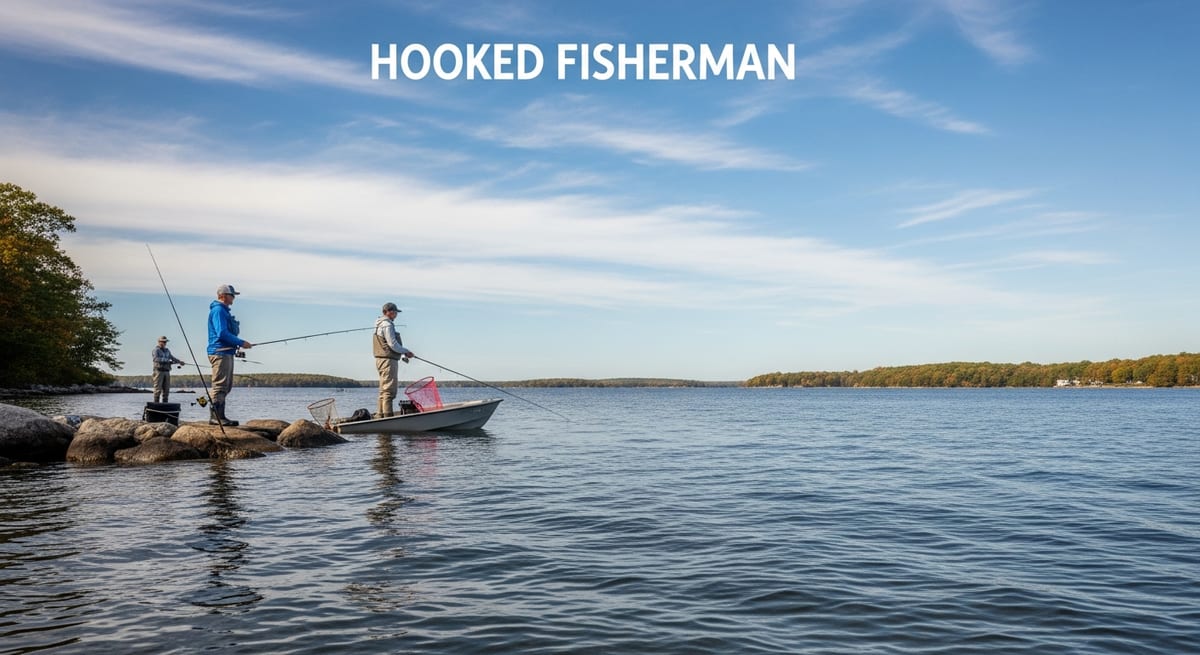
The six hours before a major storm system hits CT water, when the barometer is falling fast, clouds are building, and most anglers are checking the radar instead of rigging up, consistently appear in bass club debrief threads and kayak trip reports as among the most productive feeding windows of the season. Largemouth and smallmouth bass on Candlewood, Lillinonah, and the Housatonic respond to falling pressure by pushing shallow and feeding aggressively ahead of the front, then go nearly silent once the system passes and the sky clears. Understanding which weather variables predict that pattern, and which days are actually worth launching into, is one of the more reliable edges available to CT anglers who check the forecast the night before. Barometric pressure is the variable most apps bury. Experienced local anglers check it first.
Pressure Trend, Not Pressure Reading: What CT Anglers Who Watch the Barometer Actually Track
The barometric pressure reading itself, whether it shows 29.8 or 30.2 inches of mercury, matters less than the direction it's moving and how fast. That distinction is lost on most consumer weather apps, which display the current reading but bury the pressure tendency (rising, falling, or steady) under additional taps or omit it entirely. The National Weather Service hourly forecast does include a tendency field, and CT anglers who build it into their pre-launch routine consistently describe it as one of the most useful free tools available for predicting fish behavior.
Before a storm system arrives (falling pressure): Freshwater anglers fishing CT ponds and rivers report some of the most aggressive feeding they see all year during the six to twelve hours before a significant storm arrives. Reports from bass club members on Candlewood Lake and Lake Lillinonah describe largemouth pushing into shallow water and hammering topwater presentations in conditions that normally have fish sitting deeper or going inactive. Chain pickerel and smallmouth respond similarly. On Long Island Sound, charter captains and anglers running out of Niantic Bay and the Housatonic River mouth describe bluefish entering what many call a "pre-blow feed", aggressive and largely unselective, hitting surface poppers and swimbaits in building chop ahead of a northeast blow. Reports from those waters tend to describe the bluefish as feeding hard regardless of presentation, which is not their typical behavior in stable conditions.
After the front clears (rising pressure): The 24-to-48-hour window after a cold front passes and pressure climbs tends to produce reliable, sustained action across most CT freshwater. Fish that shut down during the active storm begin moving shallow again and feeding more predictably. Bass club trip reports from the CT River and Lillinonah consistently identify this window as the most productive stretch of a multi-day outing, not the dramatic burst of the pre-front feed, but fishable throughout the day without the boom-and-bust cycle that precedes the storm.
Stable high pressure: Extended clear, calm weather creates the most demanding conditions on CT water. Bright conditions push most freshwater species deeper during midday; shallow fish become noticeably warier in glassy water. Anglers fishing Candlewood, Lillinonah, and the CT River reservoirs during stable high-pressure stretches routinely report that early morning (before 7 AM) and evening are the productive windows, with a significant midday slowdown. Finesse presentations, drop-shot rigs, ned rigs, slow-rolled small swimbaits in the 8-15-foot range, consistently outperform reaction baits during these periods according to club meeting fishing reports and online forum trip summaries.
During and immediately after an active storm: Active storm conditions push most freshwater species deep, and fishing is generally unproductive and potentially hazardous. The 24-48 hours immediately following a fast-moving fall cold front can lock up bass in CT's shallower ponds; smaller impoundments swing temperature faster than deep reservoirs like Candlewood, which holds heat longer and often fishes better right after a front than shallow-cove water does.
The pattern CT bass anglers consistently describe across tournament debrief threads and club meetings: the best fishing happens when pressure is actively changing, not when it's parked high or bottomed out. A digital barometer mounted in the boat, common on local bass rigs, is useful not for the current reading but for watching the trend shift in real time during a long day on the water.
Wind Direction Repositions CT Fish, and Tells You Where to Fish, Not Whether To
Wind is one of the most reliable indicators of where fish will be on a given day on CT water, and it is consistently underestimated by anglers newer to the region. It physically moves water, which moves baitfish and zooplankton, which repositions predators. The question experienced local anglers ask isn't whether to launch in wind. It's which bank, point, or cove it's pushing bait toward.
Light to moderate wind (5-15 mph): Surface chop scatters sunlight penetration and reduces the visibility advantage that makes shallow fish wary on calm days. Some of the biggest bass reports from CT ponds come from skinny-water presentations on breezy mornings when flat conditions would have kept those fish tight and cautious. Wind-driven current concentrates zooplankton and small baitfish on the downwind shore or point, stacking predators predictably. Anglers regularly fishing Candlewood and Lillinonah describe a consistent approach for breezy days: find the downwind bank or point and work it first with a swimming jig or swimbait before covering anything else. The bait is already concentrated there, and bass follow it in.
Dead calm: Flat water is where topwater presentations shine earliest in the morning. A walk-the-dog surface bait in a protected cove on the CT River or a buzzbait along submerged timber before the sun clears the treeline draws surface strikes that often don't materialize once the water is fully lit. Once the surface is glassy and the sun is up, anglers fishing still-water CT ponds typically shift subsurface: drop-shot and ned rigs in the 8-15-foot range are widely reported in local fishing forums as the most consistent producers through the midday window in calm, bright conditions.
Strong wind (20+ mph): Boat control on open CT water becomes difficult above 20 mph; covering structure efficiently is nearly impossible with the drift. Shore anglers fishing protected banks often have the best of it. Fish tuck in out of the current, and a longer cast from a fixed position reaches the structure holding them. For boat anglers on the Sound in smaller craft, strong-wind days are either protected-water days or stay-home days. CT anglers fishing river bends and tucked-in lake points in high-wind conditions frequently report a heavy football head jig dragged slowly along the bottom as one of the most effective presentations when the main basin is whitecapping.
The saying that "wind from the east, fish bite least" is one of the more persistent pieces of Northeast fishing folklore, circulating on CT angler forums and at Housatonic Valley club meetings with some regularity. It isn't entirely without basis, easterlies in New England often accompany pre-storm unsettled air and shifting pressure trends, but anglers who treat it as a rule rather than a heuristic miss productive days. What matters is whether the wind is directing bait and chop onto the productive side of the structure being fished, regardless of compass direction.
Why Water Temperature Governs Where CT Fish Are, and Why Air Temperature Misleads
Air temperature swings far faster than water temperature, and fish respond to the water they're in, not the morning air reading. A sharp cold snap in October may barely move a deep CT reservoir like Candlewood or Barkhamsted Reservoir, but can drop a shallow cove three degrees by dawn, enough to push fish off a flat they were stacked on the previous day. That distinction is why experienced CT anglers check water temperature on launch, not just the overnight low.
CT DEEP species profiles and fisheries literature point to general temperature activity windows that local anglers use to calibrate where to target by season:
- Largemouth bass: Most active roughly in the 65-75°F range; feeding noticeably slows below about 50°F in most CT waters
- Smallmouth bass: Generally prefer slightly cooler water than largemouth, around 60-70°F. Smallmouth anglers on the Housatonic below Stevenson Dam and the CT River between Hartford and the Haddam reach consistently report their best action in May and again in late September, when river temperatures typically fall in that window
- Striped bass (Long Island Sound and CT River): Most actively targeted in roughly the 55-68°F range; midsummer pushes larger fish deeper or north, while September through November brings them back into range for CT shore and boat anglers
- Brown and rainbow trout: Most active around 52-64°F; stress and feeding shutoff become significant concerns above 68-70°F. A threshold CT DEEP's cold-water fisheries guidance references in its catch-and-release survival recommendations
- Brook trout: CT's native char needs the coldest water, roughly 50-60°F. Brookies retreat to headwater feeder streams in summer; responsible CT anglers avoid fishing them hard above 65°F, aligned with CT DEEP's native brook trout conservation guidance on thermal stress
- Bluefish (Long Island Sound): Follow warm-water temperature bands, generally mid-60s to mid-70s°F, tracking bait schools and temperature breaks that shift through the season
Experienced CT kayak and bass boat anglers consistently carry a basic surface thermometer for exactly this purpose: checking water temperature before rigging up on unfamiliar water. The consensus among regular CT freshwater anglers is that if a target species is more than 10 degrees outside its productive range, the problem is likely location rather than the day itself.
For CT seasonal shorthand: spring means fishing shallower as water warms toward each species' productive range. Summer means going deeper or finding moving water to chase cooler zones. Fall, september through mid-November in particular, tends to produce the most consistent sustained action across CT freshwater as surface temperatures drop back into feeding range and fish push shallow again. Tournament anglers and bass club members across CT consistently identify that fall window as the most reliable extended bite period of the year on freshwater.
Reading a Week of CT Weather to Decide Which Days Are Actually Worth Launching
CT anglers who fish regularly, particularly those running tournaments on Candlewood and Lillinonah or working the CT River striper run in the fall, tend to evaluate a week of weather the same way. The framework that emerges from tournament debrief threads, club discussion boards, and charter captain posts is consistent enough to be worth understanding.
Days worth prioritizing:
- The day before a storm system arrives, falling pressure, building clouds, fish feeding aggressively ahead of the front. Early alarm, get on the water before the weather fully changes.
- Two to three days after a cold front clears, pressure rising and stabilizing, fish recovering from post-front lockdown, conditions becoming consistent and fishable throughout the day.
- Overcast, mild days with stable or slowly rising pressure, not dramatic, but productive all day without the midday slowdown that accompanies bright high-pressure conditions.
- Dawn and dusk on any high-pressure day. The productive window on bright, calm CT water is consistently described as the margins of the day, not the middle.
Days to adjust expectations:
- The 24-48 hours immediately after a fast-moving fall cold front, especially on shallower CT ponds, where water temperature swings quickly and bass can go nearly unresponsive for a day or two.
- Bright sun, dead calm, high noon on clear water, finesse gear and slower presentations outperform reaction baits by a wide margin; a 3-inch finesse worm on a light jig head is a better choice than anything with a blade, based on the pattern reported across local fishing forums in these conditions.
- During active thunderstorms, dangerous on the water and unproductive regardless; fish have already gone deep before the lightning arrives.
The National Weather Service hourly forecast includes a pressure tendency field, rising, falling, or steady. That most consumer weather apps omit or bury several taps deep. CT anglers who check it the night before and again the morning of a planned trip consistently report it as one of the more reliable free pre-launch tools available.
What experienced CT bass anglers describe as the most common pattern among anglers who consistently outperform expectations: they launch on the gray, choppy, pre-front mornings that send most other boats back to the ramp. The conditions that keep launches empty, building chop, charged air, greenish pre-storm sky, are often the exact window where the most aggressive feeding of the season occurs on CT water. Post-front bluebird days are more comfortable to be on the water. Pre-front ugly mornings, the data from club weigh-ins and trip reports consistently suggests, often fish better.
EVERY SATURDAY MORNING
Weekly fishing intelligence
Nationwide conditions, what's biting, and honest gear deals. One email, no noise.
No spam. Unsubscribe anytime.