
CT Boat Anglers at The Race, Niantic Bay, and Old Saybrook Report Doormat-Class Fluke Concentrate on the Outgoing Tide, what Drift Windows, CT DEEP Regulations, and Community Rig Preferences Reveal About Summer Flounder in Long Island Sound
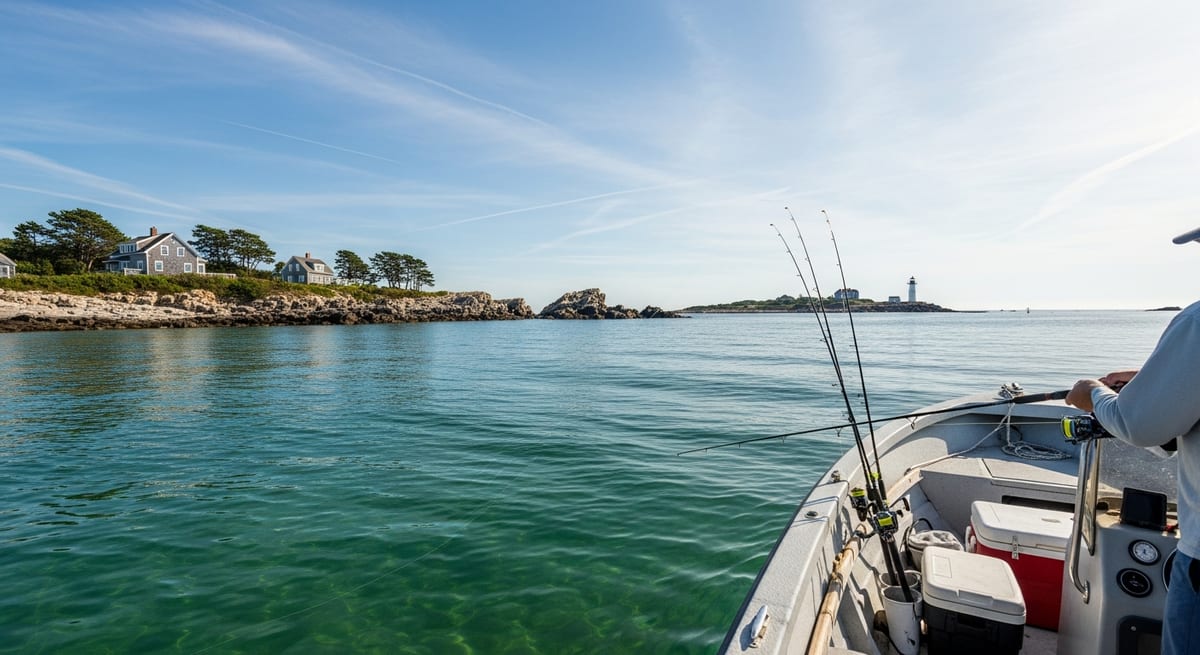
The Race, the tidal channel at the eastern mouth of Long Island Sound between Orient Point and Fisher's Island, runs 6 to 7 knots on a strong ebb tide, and anglers who fish it consistently report that current speed matters as much as bait selection when targeting doormat-class summer flounder. Summer flounder, formally classified as fluke by regulators, stage throughout eastern Long Island Sound from roughly late May through early October, and CT DEEP creel surveys have documented the Sound as one of the species' most consistent inshore ranges north of New Jersey. The complication for new participants is that fluke regulations change annually, the most productive windows are tied to tide rather than time of day, and fish over 5 lbs tend to occupy different water than the school-sized fish most inshore anglers encounter.
Why Fluke Behave Like a Predator, Not a Passive Bottom Fish
Fluke are flatfish, with both eyes on the top of the head and mottled camouflage on the dorsal surface, but the Long Island Sound boat angling community consistently emphasizes that fishing them like a passive bottom feeder underproduces. Unlike winter flounder, which forage slowly along soft substrate, summer flounder are ambush predators that track moving prey and strike from below.
This behavioral difference explains why drift fishing outperforms anchoring in most conditions. A bait or jig moving across the bottom at 0.5 to 1.5 knots mimics the way Atlantic silversides and sand lance move through the water column, triggering the lateral-line response that makes fluke commit.
Anglers who fish the eastern Sound regularly note that fluke spend most of the day staged on sandy or gravelly bottom, surging up to intercept prey passing overhead. On soft mud bottom they are present but harder to locate without sonar. On the sand-gravel mix found off Old Saybrook and in the Niantic Bay approaches, concentrations are more predictable and the community reports reflect that consistency across multiple seasons.
Fluke typically arrive in CT waters when bottom temperatures reach 55 to 60°F, generally in late May, and stage offshore as water cools in October and November. CT DEEP seasonal data shows peak abundance in July and August, with larger fish tending to hold in deeper water (40 to 80 feet) while school-sized fish concentrate in 15 to 30 feet.
The Race, Niantic Bay, and the Spots Where CT Anglers Concentrate Summer Flounder
Eastern Long Island Sound consistently produces the best CT fluke fishing, and the boat angling community has concentrated effort at a handful of named locations over many seasons.
The Race (between Orient Point and Fisher's Island) is the most cited trophy-fluke location among CT boaters. The channel runs 80 to 150 feet deep with fast current on tide changes. Anglers launching from the Niantic River Marina ramps or the ramp at Harkness State Park in Waterford work the Race on the first two hours of the outgoing tide, when current speed and bottom visibility align. Doormat-sized fish, those topping 5 lbs and above the DEEP minimum size threshold, are reported most often here across forum threads from the 2022 through 2024 seasons. The Race is deep, fast water; the consensus among regulars is that it is not appropriate for vessels under 18 feet when wind and tide oppose each other.
Niantic Bay (accessible from the Niantic River launch ramp at the end of Pennsylvania Avenue in East Lyme) offers a more sheltered alternative with sandy 15 to 30 foot bottom. Community reports through the 2023 and 2024 seasons placed Niantic Bay as a reliable producer of keeper-class fish in June through August, particularly on the outgoing tide over the sand flat south of the bay entrance.
Old Saybrook and the Connecticut River Mouth hold mixed-bottom structure at 25 to 50 feet. Anglers launching from Saybrook Point Marina or the town ramp at Fenwick describe a wider size distribution here, with school-sized fish alongside occasional larger ones. The tidal rip where river outflow meets Sound current concentrates bait and holds summer flounder through the season.
Offshore and Rhode Island waters: Fluke range well beyond the Sound, and CT anglers who run to Block Island or south toward Montauk generally report larger average size than inshore Sound fishing. These runs are 20 to 40 miles from eastern CT launches and fall under federal water regulations, which have diverged from CT state rules in multiple recent seasons.
Drift Speed, Jig Weight, and the Combination CT Fluke Anglers Rely On
The community consensus among CT fluke anglers is that drift technique accounts for more variance in catch than bait choice does. A productive drift keeps the presentation in the bottom 2 feet of the water column at a speed the sinker or jig can maintain contact with the bottom, typically 0.5 to 1.5 knots depending on current and depth.
Traditional drift rig: A bank or fluke sinker (1 to 4 oz, scaled to current conditions: heavier at The Race, lighter in Niantic Bay) on the main line, a 3-way swivel, a 12 to 18 inch dropper to the weight, and a 24 to 36 inch fluorocarbon leader (20 to 30 lb test) to the hook. Hook size typically runs 1/0 to 3/0 depending on bait. When drift speed falls below 0.5 knots, anglers who fish eastern CT waters describe using a trolling motor or short engine bursts to maintain presentation movement.
Bucktail jig with Gulp!: The 1 oz white bucktail tipped with a 4-inch Berkley Gulp! Swimming Mullet in white or chartreuse is the single most commonly cited CT fluke combination across forum posts and trip reports from the 2022 through 2024 seasons. The slow rod-pump retrieve, lifting 18 inches and letting the jig fall, with the drift providing horizontal movement, keeps the presentation in the strike zone. Anglers fishing The Race describe going heavier (1.5 to 2 oz) to maintain bottom contact in the current.
Teaser rig: Some eastern Sound anglers run a secondary hook above the main jig on a short dropper, tipped with a squid strip. The consensus is that the teaser produces on days when fish are following without committing to the primary jig, though it adds some tangle risk that puts off anglers fishing solo.
Squid Strips, Gulp!, and the Fresh-Bait Debate Among Sound Regulars
Squid is the consensus primary bait for CT fluke fishing. Cut fresh or frozen squid into 3 to 4 inch strips, run the hook through the narrow end once, and let the strip flutter on the drift. Fresh squid from a bait shop the morning of the trip is consistently rated higher than frozen by anglers who have compared both on the same day, though frozen grocery-store calamari remains a functional option that many Sound regulars use without apology.
Live spearing (Atlantic silversides) is rated highly by anglers who obtain them. These baitfish are natural summer flounder prey and community reports describe more aggressive strikes compared to squid on the same rig. The challenge is sourcing live spearing: cast-netting productive areas or finding bait shops that stock them in season. That sourcing difficulty makes squid the practical default for most trips.
Berkley Gulp! products have become the functional equivalent of fresh bait for many Sound fluke anglers. The scent dispersion from Gulp! material in saltwater is strong enough that a significant portion of experienced anglers report no meaningful difference between the 4-inch Swimming Mullet in white and fresh squid on productive drifts. Gulp! has the additional advantage of lasting multiple sessions when stored in the original jar and requiring no live-well management on the water.
White fish strips cut from a fresh porgy, sea robin, or other white-fleshed baitfish remain a traditional CT choice. Anglers who fish the Sound describe sea robin as an underrated strip bait that produces well on slower drift days when reduced current limits the action a soft-plastic bait can generate.
CT and Federal Fluke Regulations: What to Verify Before You Launch Each Season
Fluke regulations are among the most frequently adjusted in the Northeast and should be verified against the current season's published rules before every trip. They change year to year based on stock assessment data from NOAA Fisheries and the Mid-Atlantic Fishery Management Council, and CT state waters sometimes carry different rules than federal waters.
For CT state waters, the DEEP Fisheries Division publishes season dates, minimum size, and bag limit each spring at portal.ct.gov/DEEP and in the printed CT Recreational Fishing Guide. As of the 2024 season, CT required a minimum size of 19.5 inches and a 3-fish daily bag limit in state waters. Both numbers have shifted between seasons in recent years, and what was true in 2023 may not hold in the current season.
Federal waters (3 miles offshore and beyond, applicable to anglers running to Block Island or south of Montauk) are governed by NOAA Fisheries under the Mid-Atlantic Summer Flounder, Scup, and Black Sea Bass Fishery Management Plan. Federal and state limits have diverged in multiple recent seasons. Anglers who run offshore should pull the current federal rules from fisheries.noaa.gov separately from the CT DEEP publication.
Measurement: fluke are measured from the tip of the lower jaw with the mouth closed to the end of the tail. The boat angling community recommends a flat measuring board rather than gunwale marks, which shift with wear. For undersized fish, horizontal support across the belly during handling and a quick return to depth are the standard approach among anglers practicing release, and summer flounder typically recover well when handled this way.
EVERY SATURDAY MORNING
Weekly fishing intelligence
Nationwide conditions, what's biting, and honest gear deals. One email, no noise.
No spam. Unsubscribe anytime.