
CT Fluke Anglers Who Drift the Race and the Mid-Sound Lumps Report Keeper Rates Below 20 Percent Is the Summer Baseline, Not a Bad Day. What Long Island Sound Charter Communities and Annual CT DEEP Regulations Reveal About Summer Flounder Drift Windows, Niantic Bay Tactics, and Why Offshore Structure Changes the Catch
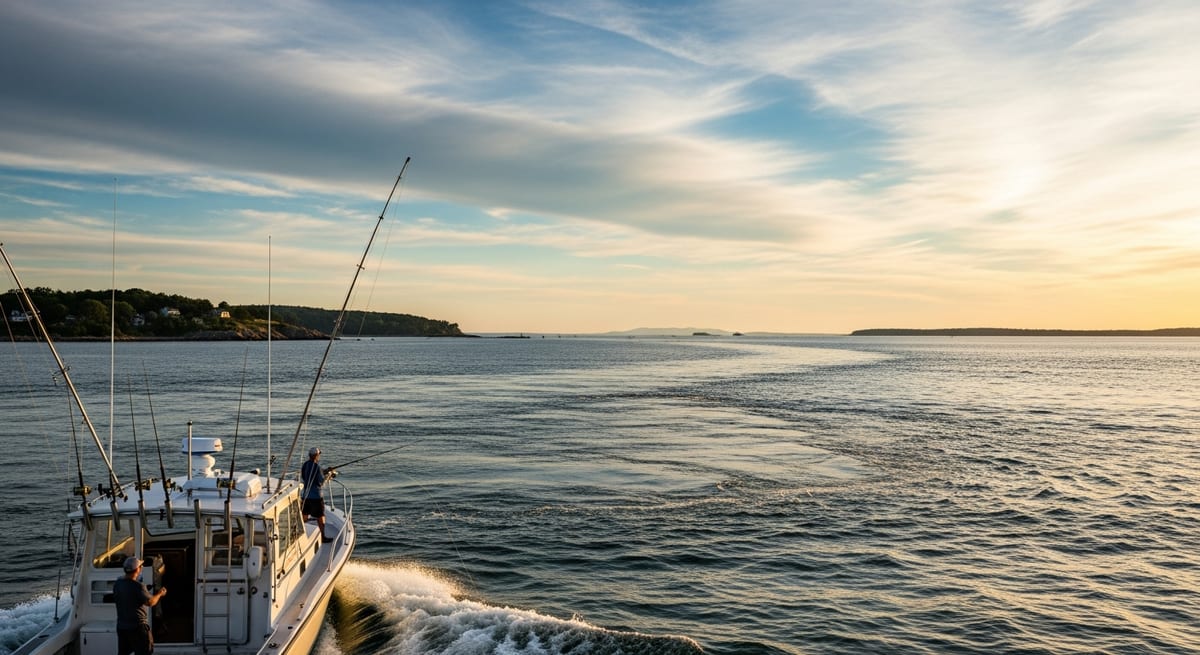
Keeper rates below 20 percent at inshore sites are what CT fluke regulars describe as a typical summer day on Long Island Sound, not a slow one. A benchmark that reshapes how productive drift anglers approach the season. Whatever size minimum CT DEEP Marine Fisheries and ASMFC establish for a given year (regulations are revised annually; verify at ct.gov/deep before launching), charter communities running out of Groton and New London consistently report that the Race. The deep-water tidal zone at the eastern end of the Sound near Fishers Island, produces proportionally more legal fish than accessible inshore zones like Niantic Bay or the Housatonic mouth. Anglers who have logged time on the Long Island Sound drift circuit describe summer flounder as a species that rewards reading bottom structure and dialing drift speed far more than simply adding hours on the water.
What CT DEEP and ASMFC Set Each Year, and Why You Must Check Before You Launch
Fluke regulations in Connecticut are set annually through a joint ASMFC and CT DEEP Marine Fisheries process, and numbers shift from season to season. Recent seasons have seen size minimums and daily bag limits revised more than once in a short span, do not rely on last year's rulebook or any number you read online. The current year's CT DEEP Marine Fisheries fluke bulletin at ct.gov/deep is the only authoritative source before your first trip.
The size minimum, whatever CT DEEP establishes in a given year, is the single most consequential number on the water. CT charter captains describe the keeper bar as the feature that separates a productive drift from an educational one: at typical inshore sites, anglers handle the majority of fluke they catch without keeping any. The larger, older fish are concentrated in deeper mid-Sound structure and tend to appear later in the season as Long Island Sound water temperatures peak. Keeping undersized fish is not worth the fine and contributes to a stock managed under significant ASMFC pressure.
The Race, Niantic Bay, and Mid-Sound Lumps: Where Long Island Sound Fluke Stack
The Race. The deep, fast-water passage at the eastern end of Long Island Sound near Fishers Island, is the location CT charter communities mention most consistently when discussing keeper summer flounder. Strong tidal currents concentrate bait over mixed sand-and-gravel bottom in the 40-80 foot range, and anglers running out of Groton, New London, and Mystic report the Race produces proportionally more large fish than inshore zones throughout the summer. The tradeoff is exposure: the Race builds chop quickly when southwest wind fights an outgoing tide, and it is not a beginner water in any significant breeze.
More accessible inshore and mid-Sound zones hold fish at workable depths for much of the season. Niantic Bay and the area off Black Point hold fluke in the 15-30 foot range, particularly early in the season before surface temperatures push fish deeper. The shoals off Madison and Guilford, the Housatonic River mouth approaches, the Connecticut River flats, and the channel edges near Milford Harbor and New Haven Harbor all appear in CT fishing community reports as consistent inshore producers, reachable from town ramps without crossing exposed Sound.
Mid-Sound structure in the 30-70 foot range tends to hold proportionally larger fish from July through August. Anglers targeting the New Haven Harbor approaches describe channel edges and the sand-to-mud transition zones as the most productive drift lanes, where forage concentrates on the current seam.
Drift Speed and Current Angle: Why Most Boats Fish Through Concentrations Without Knowing
CT fluke charter captains describe drift speed as the variable most recreational anglers underestimate. The productive window, based on what communities running Long Island Sound consistently report, is roughly 0.8-1.5 mph over the bottom. Above 2 mph, rigs bounce unproductively and fish rarely commit to a moving bait. Below 0.5 mph, presentation stalls and fluke lose interest.
Check actual GPS drift speed, not estimated speed, wind and current can combine to push a boat faster than it looks from the helm. When a drift runs above 1.8 mph, regulars typically add weight rather than abandon a productive lane: stepping from a 1 oz to a 1.5 oz or 2 oz bucktail keeps the rig in bottom contact without having to reposition.
Mark a GPS waypoint when a fish is caught or a strong hit occurs, then come back and re-drift the same lane. CT fishing community reports describe fluke as holding in concentrations on productive structure, one fish is a signal, not coincidence. Anglers who treat each keeper as a random event and move on consistently report lower catch rates than those who work a marked zone repeatedly.
The CT Charter Rig Consensus: Bucktails, Gulp!, and Squid Strip Combinations
The rig setup CT charter communities describe most consistently is a 3/4-1.5 oz white or chartreuse bucktail jig tipped with Gulp! either Gulp! Shrimp, a Gulp! Mullet strip, or a Gulp! Curly Tail grub. Scent dispersion from Gulp! is cited across Long Island Sound charter reports as contributing as much to hookups as presentation action, particularly on slower drifts when the bait has more bottom time.
A traditional fluke rig, bank sinker on a three-way swivel, 18-24 inch fluorocarbon leader, long-shank 2/0-4/0 hook tipped with Gulp! is standard at inshore depths where achieving bottom contact with a bucktail alone would require too much weight. Regulars fishing Niantic Bay and the Housatonic mouth commonly run a teaser: a smaller hook on a 6-inch dropper tied 12 inches above the main hook. Fluke frequently hit the teaser, and it adds nothing to rig complexity.
Adding a 3-4 inch strip of fresh squid above the Gulp! improves scent dispersion, particularly in low-clarity or post-rain water. Charter anglers working the Race report squid strips make a measurable difference on post-peak-current drifts when fluke are less aggressively feeding. Keep fresh squid on ice, warmed squid loses scent quickly and becomes a presentation liability.
Reading the Bite and the Two Points Where Anglers Lose Fish
Anglers who fish the Long Island Sound drift circuit regularly describe the fluke bite as inconsistent in feel, sometimes a solid thump, sometimes a subtle weight change, occasionally just a rod that goes slightly heavier as the fish picks up the bait and runs. The consensus approach among experienced CT drift anglers: when the bite registers, drop the rod tip slightly to give the fish a moment to commit, then reel down tight and sweep upward firmly. Waiting too long is the more common error; fluke have soft mouths and will drop bait if given extra time.
The second loss point regulars describe is at the surface. As a fluke nears the boat, it flares sideways and creates sudden lateral resistance. The head shake that sends hooks back at unprepared anglers. Steady pressure through that final moment, rather than lifting hard, is what keeps fish pinned. Regulars on CT charter boats describe this as the moment that separates anglers who net fish from anglers who describe the one that got away.
The Keeper Window: Why Size Limits Reshape the Entire Drift Strategy
The size minimum CT DEEP sets for a given year, check current regulations, restructures the approach more than any other variable in the CT saltwater calendar. At recent size limits, anglers at typical inshore sites handle the majority of fluke they catch without keeping a single fish. Charter communities describe this as the feature that separates productive drift anglers from frustrated ones: the goal shifts from catching fluke to finding the drift lane holding legal fish, which is a different and more structured exercise.
Deeper mid-Sound zones. The Race, offshore lumps in the 40-70 foot range, hold proportionally more legal fish later in the season. Anglers targeting those areas from July through August describe keeper-per-drift rates that inshore Niantic Bay and Housatonic mouth zones don't consistently match. For anglers without offshore access, the early-season window, when fish are shallower and size distribution is broader across inshore flats, is the most productive period at sites reachable from local ramps.
Fluke is regarded across the CT charter community as among the top table fish from Long Island Sound, mild, firm, and versatile across cooking methods. Bleed them immediately by cutting behind the gills and get them on ice; the flesh degrades faster in a warm boat than most anglers expect. Fluke over 20 inches yield four fillets, two from each side, and the bottom fillets, though smaller, are still worth keeping. Standard fillet technique works cleanly: long horizontal cuts from head to tail on each side, keeping the knife flat against the backbone.
EVERY SATURDAY MORNING
Weekly fishing intelligence
Nationwide conditions, what's biting, and honest gear deals. One email, no noise.
No spam. Unsubscribe anytime.