
CT Fluke Anglers at the Race, Housatonic Mouth, and Niantic Bay Report Current Transitions Over Sand-Gravel Bottom Outproduce Flat Areas by a Wide Margin. What LIS Community Reports, DEEP 2025-2026 Marine Regulations, and ASMFC Summer Flounder Assessments Reveal About Catching Legal Fish in Connecticut Sound
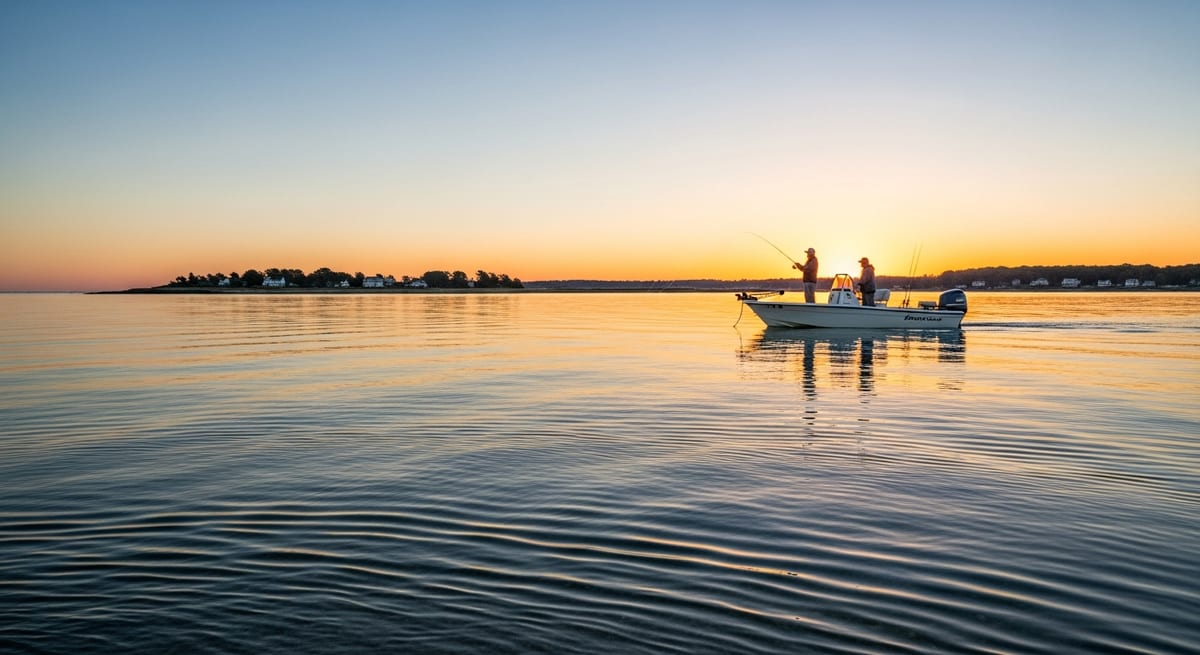
Anglers drifting the sand-to-gravel transitions at the mouth of the Housatonic and along the Race's fast tidal current report some of the most consistent keeper fluke in Long Island Sound through July and August, while boats working the flat center of the Sound often struggle to find legal fish at all. Summer flounder, widely known as fluke in Connecticut (CT DEEP uses the formal name in its regulations and management documents), are one of the more technically demanding inshore targets in the Sound: they feed in tight windows tied to current and bottom structure, spit hooks with regularity, and arrive in legal-keeper size far less often than raw catch counts suggest. The ASMFC summer flounder stock assessment has driven meaningful regulatory tightening in recent years. Under the 2025-2026 CT DEEP Marine Fisheries rules, the minimum size is 19.5 inches with a 4-fish daily bag limit. Understanding where legal fish concentrate, and how to drift a bait naturally through the productive zone, is what separates consistent keeper trips from a boat full of short releases.
Why Current Breaks Outproduce Open-Water Drifts
Fluke are ambush predators built around a very specific feeding geometry. Both eyes migrate to the same side of the body as juveniles, and adult fish spend most of their time partially buried in sand or gravel, facing into the current and waiting for prey to be swept within range. The detail LIS regulars consistently describe in community reports: flat, featureless bottom produces very little, even when depth and season look right.
The productive pattern runs structure to structure. Sand-to-gravel transitions, the edges of channel drop-offs, rips that form where hard bottom forces current upward, bridge pilings and pier footings, and the downstream side of artificial reef structures concentrate fish because baitfish congregate there first. CT boat anglers who target the Race near Fishers Island, the channel edges at the Housatonic River mouth, and the drop-offs along the Niantic River estuary describe the same geometry regardless of location.
Current speed adds a second variable. The productive drift window most LIS fluke anglers describe runs from 0.5 to 1.5 mph. Below that, a natural bait presentation loses action. Above it, bait moves through the strike zone faster than most fish commit. A drift sock slows things down in strong tidal current.
Fluke arrive in Connecticut Sound as water temperatures climb above 55 degrees in spring, typically reaching fishable density by late May and early June. Peak season runs July through mid-September. By late September, fish begin their offshore migration to deep Atlantic water off the continental shelf.
Where CT Fluke Concentrate: Named Spots and Access Notes
The Race is the most consistently cited fluke destination in eastern Connecticut community reports. Located at the extreme eastern end of Long Island Sound near Fishers Island, it produces the fast-current, hard-bottom conditions summer flounder seek. Boat access from New London is straightforward, though strong tidal phases can make the current challenging to fish effectively without adequate weight.
The Housatonic River mouth, particularly the channel edges on the incoming tide, draws significant fluke through peak summer weeks. Anglers working the estuary-to-Sound transition report good numbers along the drop-offs where the river channel meets the shallower flats. Boat launches at Milford and Stratford access this zone directly.
Niantic Bay and the lower Niantic River hold fluke through July and August, with the tidal exchange pushing baitfish and drawing fish onto the estuary edges. Anglers on the Niantic causeway jetty occasionally connect from shore, though boat anglers covering the bay's deeper channel edges reach more productive water.
The Clinton Harbor area and Hammonasset Beach flats offer access to mid-Sound structure. Anglers launching at Clinton's town ramp report that channel edges just off the harbor mouth hold fish early on the incoming tide, with fish pushing onto shallower hard-bottom patches as current builds.
CT DEEP maintains a network of artificial reefs in Long Island Sound with publicly available GPS coordinates on the DEEP website. Reef sites near Bridgeport, New Haven, and in the central Sound draw fluke alongside black sea bass. These locations are worth adding to any drift route when fishing the central Sound.
Gear Built for LIS Depth and Current
LIS fluke fishing typically runs in 15 to 40 feet of water with moderate to strong tidal current, which shapes the gear setup. A medium-action 6.5 to 7-foot spinning rod with a fast or moderate-fast tip is the common choice among CT Sound anglers. Sensitivity matters here: the initial fluke pickup is often a soft load rather than a hard knock, and a tip that is too stiff masks it.
20 to 30 lb braid with a 3 to 4-foot 20 to 25 lb fluorocarbon leader is the standard LIS setup. Braid's thin diameter cuts current with less bow than monofilament, which is relevant when holding bottom in a tidal rip. The fluorocarbon leader addresses LIS water clarity and adds abrasion resistance against sandy and gravel bottom. A 3000 to 5000 size spinning reel with a smooth drag handles the size range realistically encountered in the Sound.
Hook choice draws ongoing discussion in CT inshore communities. Wide-gap or kahle hooks in 4/0 to 5/0 are the traditional setup. Circle hooks have gained ground among anglers who release undersized fish frequently, which is realistic given the 19.5-inch minimum. CT anglers targeting fluke note that a significant majority of fish caught on most trips will fall short of the limit, and circle hooks reduce gut-hooking and improve survival of released fish.
The LIS Bucktail Drift: What CT Regulars Run
The bucktail jig with a Gulp! trailer is the most consistently cited setup in LIS fluke community reports, and the combination most experienced CT boat anglers describe as their primary summer flounder approach. A 1 to 2 oz white or chartreuse bucktail paired with a 5-inch Gulp! Alive Squid or Gulp! Swimming Mullet covers the depth range common in LIS fluke zones and delivers both visual and scent appeal.
The drift method: lower the jig to bottom, take up slack, and maintain contact while the drift moves the bait forward. Occasional short lifts of 6 to 10 inches off the bottom, followed by a slow drop back, are the triggering motion CT fluke anglers describe most consistently. The goal is not a sharp jigging cadence but a slow undulation that mimics an injured baitfish holding in current.
Fresh squid strip remains a productive bait addition and is the traditional CT fluke offering. A 1-inch wide, 4-inch long strip cut with a slight taper and a tail wiggle has accounted for Sound fluke for generations. Anglers who drift the Housatonic mouth during incoming tide often pair a fresh squid strip with the bucktail hook as a scent trailer alongside Gulp! rather than running either alone. Live mummichogs (killies) on a spinner rig or flutter rig are effective for larger fish, particularly in the estuaries and along edges of grass bottom.
The flutter rig, two hooks above a bank sinker baited with a squid strip on the bottom hook and a Gulp! plastic on the upper, remains a go-to for CT boat anglers who prefer a traditional bottom presentation over jig work.
Reading the Strike and Setting the Hook
Missed fluke is one of the most common frustrations CT anglers describe in inshore community discussions. Summer flounder pick up bait and move with it briefly rather than inhaling it, which produces the tap-tap-run pattern most LIS regulars describe: two or three light taps on the rod tip as the fish picks up the bait, followed by a steady pull as it runs.
Setting on the initial taps produces missed fish at a high rate. The consensus among CT Sound fluke anglers is to feel the load build, wait for the line to move with authority, then sweep the rod firmly rather than snapping it. Reeling down on the initial tap rather than sweeping is the most commonly cited mistake in LIS fluke discussions.
Water temperature adds a timing variable. Fluke metabolize faster in warmer water and commit more quickly in the 68 to 74-degree range that typically corresponds to peak July and August season. In cooler June or September water, bites tend to be softer and the pause-before-setting approach becomes more critical.
If bites stop mid-drift without an obvious cause, changing depth is the first adjustment. Fluke concentrate at structure edges and transitions, not on flat bottom between them. Noting exact depth when fish are caught and drifting that contour repeatedly is the standard approach CT boat anglers describe for identifying productive structure quickly.
2025-2026 CT DEEP Regulations and Releasing Shorts Properly
Summer flounder regulations in Connecticut are set through ASMFC's Summer Flounder, Scup, and Black Sea Bass Fishery Management Plan and adjusted on an annual basis. Under the 2025-2026 CT DEEP Marine Fisheries regulations: minimum size is 19.5 inches measured from tip of jaw to tip of tail, the daily bag limit is 4 fish per angler, and the season typically runs from mid-May through late October. Always verify current rules at ct.gov/deep before each trip. These figures have shifted in recent seasons, and mid-season adjustments are possible under the ASMFC management framework.
The practical reality CT anglers consistently describe: most fluke caught on a typical LIS trip fall below the 19.5-inch minimum. On a productive drift, it is realistic to land 15 to 25 fish and keep 2 to 4. Handling released fish properly matters at that volume. CT DEEP guidance and LIS community practice both call for wet hands before handling, air exposure limited to under 15 seconds, and releasing fish head-first while supporting them until they swim out of hand on their own.
The ASMFC summer flounder stock assessment has shown rebuilding progress in recent years, and the tighter size limits reflect coastwide conservation targets under the management plan. The science behind the limits is publicly available through ASMFC Summer Flounder Board documents at asmfc.org for anglers who want to understand the data driving current regulations.
EVERY SATURDAY MORNING
Weekly fishing intelligence
Nationwide conditions, what's biting, and honest gear deals. One email, no noise.
No spam. Unsubscribe anytime.