
Long Island Sound Fishing Calendar: Month-by-Month Seasonal Guide
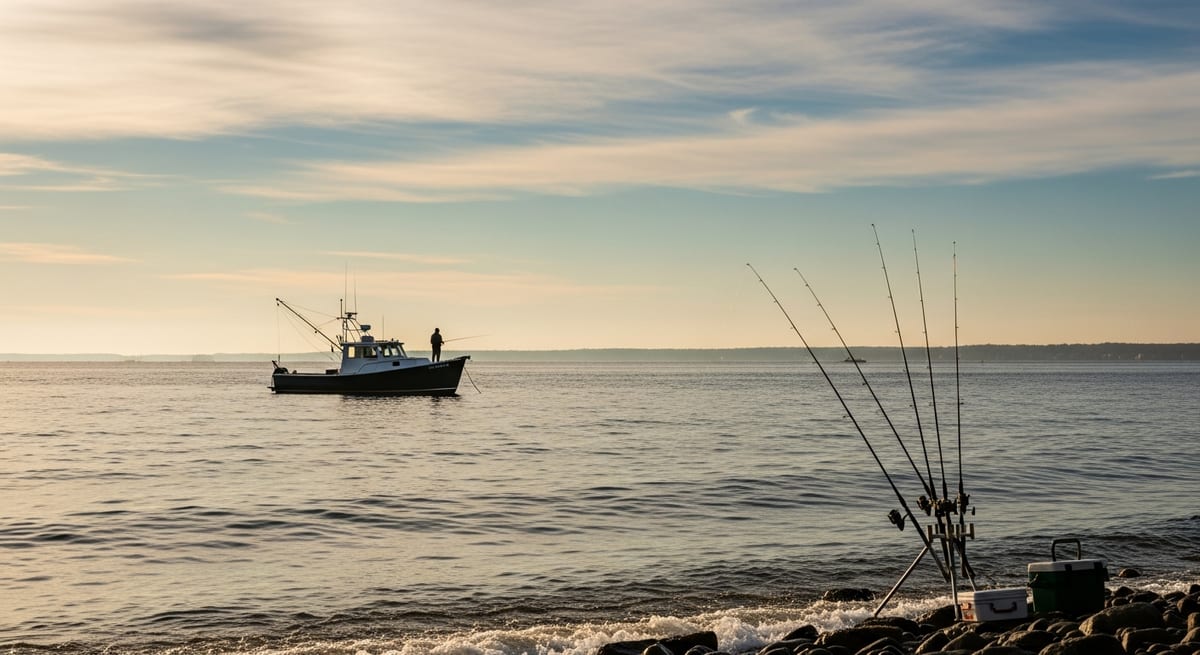
Long Island Sound is one of the most productive estuaries on the East Coast, and the fishery changes dramatically through the year. Knowing what's biting in which month prevents wasted trips and helps you plan around peak windows. Here's a month-by-month breakdown of what you can expect in CT's Sound fishing.
January - March: Winter and Early Spring
Winter is the quiet season in the Sound, but fishing doesn't stop entirely:
January-February: Most open-water species have departed. Tautog remain year-round on deep structure and are catchable by cold-dedicated anglers. Winter flounder are a traditional winter target in harbors, though populations have declined, check current CT DEEP status.
March: Water begins warming by late March. Tautog become more active. First stripers begin appearing in the southern Sound's warmer reaches near the Race. Surfcasters check rocky points for early stripers.
Ice fishing window: Some CT coastal ponds and bays freeze in January-February, perch, pickerel, and bass through the ice when conditions allow.
Boating: Minimal boat traffic. The serious anglers who fish in winter often have productive sessions for tautog in 30-50 feet of water on deep rocky structure.
April - May: Spring Arrival
Spring brings the first major migrations into the Sound:
April: Striped bass migration begins in earnest. Smaller schoolies arrive first, concentrating near tributary river mouths and warm-water discharge areas. Tautog are active and feeding aggressively in pre-spawn mode.
May: The striper season opens fully. Larger fish push north and west into Long Island Sound. Excellent shore-access fishing at CT river mouths and tidal creeks.
Tautog peak: May is one of the two best tautog months (along with October). Fish are feeding actively pre-spawn on green crabs and hermit crabs around jetties and rocky structure.
Bluefish: First bluefish arrive in late May, typically smaller 'snapper' blues followed by larger fish.
Fluke: Summer flounder begin entering the Sound in late May as water temperatures cross 58-60°F.
June - August: Summer Peak
Summer is prime time for most species:
June: Striper fishing is excellent. The fish are established in the Sound and feeding actively. Fluke fishing comes into full swing. Bluefish are throughout the Sound in schools.
July: Peak fluke season, target 15-40 foot flats and channel edges. Blues are blitzing on bait schools throughout the Sound. Stripers push slightly deeper in heat.
August: Summer doldrums for stripers (they push deep), but fluke and bluefish remain active. Scup (porgy) fishing is excellent all summer on rock piles and nearshore structure. An underrated summer target. Bonito begin appearing in the Race area in late August.
Accessibility: Summer sees the heaviest boat traffic. Early morning starts are essential to beat the crowd and fish when stripers are in shallower feeding positions.
September - November: Fall Migration
Fall is the best time to fish the Sound for most serious anglers:
September: False albacore arrive in mid-September, one of the most exciting CT inshore species. Stripers begin the southward migration and feed aggressively to build fat reserves. Bluefish are still present.
October: The peak month. Large stripers (30-50+ inches) are moving through. Bunker schools are dense. Chunking is at its best. False albacore are at peak abundance. Tautog hit their fall peak, excellent tog fishing on jetties and rocky structure.
November: Stripers still present early in the month before departing south. False albacore leave by mid-November as water temperatures drop below 60°F. Tautog fishing remains good into December.
Surf fishing: The fall surf run is the Connecticut surf fishing tradition. Rocky points and beaches from Hammonasset to Watch Hill produce the best shore striper fishing of the year.
December: Late Season
December sees the Sound winding down:
Early December: The last stripers of the year. Some years produce good December fishing when the migration is slow. Late-season tog fishing can be excellent. Fish have moved to deeper water (40-60 feet) but are still catchable.
Mid-to-late December: Most species have departed. Tautog are still present on deep structure for the dedicated cold-weather angler. The stripers are gone until April.
Warm water years: Warmer than average years (increasingly common) extend the striper and albie seasons into November and occasionally December. Keep watching water temps.
Off-season: Use December through March for gear maintenance, fly tying, knot practice, and planning the next season. Study charts, scout new structure on Google Earth, and prepare for a strong spring season.
EVERY SATURDAY MORNING
Weekly fishing intelligence
Nationwide conditions, what's biting, and honest gear deals. One email, no noise.
No spam. Unsubscribe anytime.