
CT Shore Anglers Who Work the Jetty Tips on Moving Tide Are Pulling Stripers and Tautog That Open Beach Anglers Walk Right Past
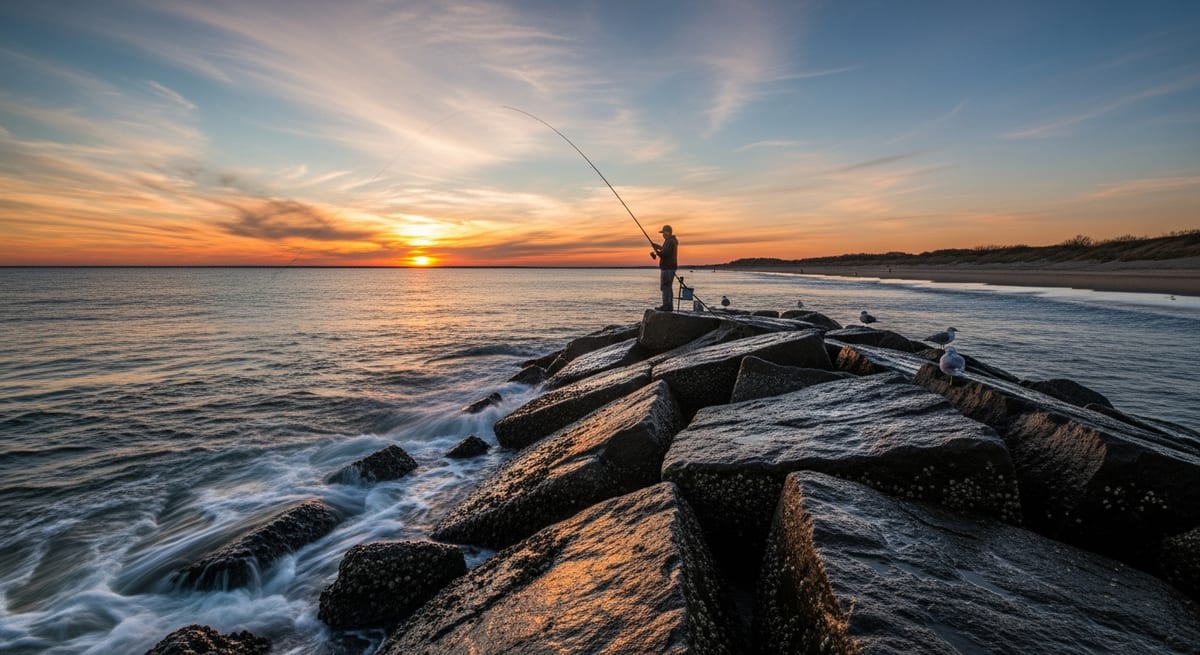
Anglers who make the walk to the tip of the Old Saybrook jetty on a falling tide consistently report keeper stripers holding in the current seam where the Connecticut River pushes into Long Island Sound. Fish that boat anglers covering the same water often motor right past. Connecticut's piers, jetties, and rock breakwaters have built a reputation among the shore-fishing community not as fallback options when the fleet can't launch, but as productive fish-holding structure in their own right. They concentrate bait, create ambush points, and hold tautog and stripers in numbers that open beach rarely matches. The spots, species windows, and techniques below draw from public CT DEEP reports, community accounts from shore anglers on the CT coast, and patterns documented across multiple seasons from Old Saybrook to Stonington. *
What Hard Structure Does for Fish, and Why Jetty Tips Fish Differently Than the Rest
Structure fishing produces differently than open beach because the rock itself does the work. Any jetty or breakwater deflects current, generating seams where bait gets compressed and predators can hold without fighting the flow. Stripers and bluefish station themselves at those seams and intercept passing bait as it sweeps past, one of the most reliable feeding setups on the CT coast, and one that anglers familiar with this fishery describe as more consistent than comparable open beach on the same tide.
The physical structure also functions as a forage shelf. Mussels, barnacles, green crabs, and worms colonize saltwater rock densely, which explains why tautog. A species that feeds almost exclusively on crustaceans, rarely stray from hard structure. You don't find tautog on sandy bottom. The rock is the food source.
Current channeling at the seaward end of a jetty creates a predictable concentration zone. The tip compresses moving water and pushes baitfish into the deeper adjacent column, positioning predators in a way that's consistent enough to plan around. Anglers who fish CT jetty tips regularly describe the final stretch of structure, where current accelerates and bait has nowhere to go, as often outproducing the rest of the rock on an active tide, a pattern that CT fishing community accounts describe across multiple spots on the coast.
Tide stage matters more than time of day at most jetty access points. The two hours bracketing the tide turn, when current is strongest and bait most compressed, tend to produce the most consistent action across species. That pattern holds at Old Saybrook, Stonington, and Niantic alike, based on community fishing reports and publicly documented CT angling accounts.
Six CT Shore Access Points, species, Timing, and What Regulars Know
Old Saybrook Jetties (Connecticut River Mouth) Two parallel rock jetties extending into Long Island Sound at the mouth of the Connecticut River. Widely cited among CT shore anglers as some of the most productive accessible jetty water in the state. Stripers and bluefish concentrate at the jetty tips during falling and incoming tides as river current pushes bait out into the Sound. Walk access from the Old Saybrook town boat launch area, check current seasonal parking restrictions with the town harbormaster before your trip, as rules vary by season and can change year to year. The outer rocks at the tip can be slick in wet conditions; cleated jetty boots matter more here than at most spots.
Best for: Striped bass (May-October), bluefish (June-September), weakfish when present.
Stonington Breakwater (Stonington Borough) A long stone breakwater on the eastern end of Stonington Borough with deep water and significant current. Tautog hold in the rock structure throughout spring and fall. Anglers fishing this spot in recent seasons have documented consistent fall runs pushing into November. Stripers move through on both tidal stages. Accessible from the Stonington Borough waterfront.
Best for: Tautog (April-November), striped bass (May-October), winter flounder (March-April in adjacent harbor).
New Haven Long Wharf Pier A public fishing pier on New Haven Harbor with benches and railings. Produces bluefish, weakfish, and school stripers during summer and fall. One of the more accessible pier setups in western CT, lower railing height, good lighting, easier parking than most rock access points. Less technical than the rock jetties but consistently active when blues are running the western Sound.
Best for: Bluefish (June-September), weakfish, school stripers.
Niantic River Mouth (East Lyme) Rocky causeway and jetty structure at the Niantic River mouth concentrate stripers during tide transitions. May fishing here draws steady reports from the eastern CT shore-fishing community. Anglers who fish this access point regularly describe it as one of the earliest consistent striper spots on the coast, with fish typically showing in the first two weeks of May in most recent seasons.
Best for: Striped bass (May-June, fall run September-October).
Hammonasset Beach State Park Rocky Point (Madison) The western rocky point at Hammonasset holds stripers during the fall run. A hike from the main beach parking area keeps casual visitor pressure low. Most beachgoers don't make the walk. CT shore anglers familiar with the fall run describe good casting distance from the rocky shoreline, with fish documented through November in most recent seasons.
Best for: Striped bass (fall run September-November).
Old Lyme Town Dock and Causeway Area The causeway connecting Old Lyme to Great Island on the Lieutenant River offers solid access to tidal current fishing. Stripers and bluefish move through on tidal flow. Walk-off access without crossing private property makes it a practical option for short-window sessions.
Best for: Striped bass, bluefish, seasonal weakfish.
Jetty Gear: What to Bring and What to Leave in the Truck
Jetty fishing has specific gear demands that open beach and boat fishing don't share. The most common setup mistake is arriving with the same rig used for surf fishing, too light for the abrasion, too short to clear the structure during the cast.
Rod: A medium-heavy spinning rod, 9-10 feet, rated for 1/2-2 oz lures. The extra length helps clear structure during the cast and controls fish when fighting them back up to the jetty surface. Backbone matters more than a light tip here. The priority is stopping fish from running into the rocks, not detecting subtle strikes.
Reel: A 4000-6000 size spinning reel with a smooth, reliable drag. Jetty fish often run laterally along the structure. Anglers fighting stripers from jetty tips describe fish going 30-40 feet sideways before they can be turned. Drag consistency is the priority.
Line and leader: 20-30 lb braid as main line. 24-36 inch fluorocarbon leader, 25-40 lb. Barnacle and rock abrasion is a real concern on any jetty, fluorocarbon's harder coating handles contact better than mono. Check the leader after every fish or hard snag; damage isn't always visible before the next fish runs.
Footwear: The piece of gear most anglers skip. Rubber-soled boots or wading shoes with felt or carbide studs for wet rock. Smooth rubber soles on dry rock are workable; on wet, algae-covered rock they're a serious hazard. Cleated jetty boots are the right call for any spot that gets tidal spray or wash. Don't skip this one.
Working Stripers and Blues Off Structure
Swimming plugs: The most versatile option for jetty stripers. Rapala X-Rap, Bomber Long A, and similar surface/subsurface swimmers cast well and cover different depths depending on retrieve speed. Work the current breaks at the jetty tip, cast uptide and retrieve through the seam. The standard approach among CT jetty regulars is to slow the retrieve as the plug enters the jetty-tip zone; that's the feed window where fish tend to hold.
Metal jigs: When fish are visibly working in the current or busting on bait nearby, a 1-2 oz diamond jig or butterfly jig is the fastest way to connect. Let it flutter on the drop, then work it back with a quick retrieve. Particularly effective for bluefish already keyed in on fast-moving bait.
Soft plastics on jig heads: A paddle-tail swimbait or shad body on a 1/2-2 oz jig head covers the most situations. Go heavier for fast current or deeper structure; lighter for slower water. Work it along the base of the jetty for tautog (though they generally prefer bait); swim it mid-column for stripers and blues.
Bait fishing from piers: Chunk cut bunker (menhaden), sandworm, or squid on a bottom rig fished under the pier. Let the current carry the bait into the shadow line under the structure. Stripers and tautog both take bottom-presented bait near structure. This is the move when artificials go quiet.
Timing: Tidal movement is the controlling variable, more so than time of day. The two hours before and after high tide at most of these spots produce the strongest current, the most concentrated bait, and the most active predators. CT jetty regulars tend to plan sessions around the tide window rather than sunrise. A two-hour falling-tide slot often outperforms a full-day open beach session, a pattern that anglers who fish both consistently report.
Why the April Jetty Bite Is About Tautog, Not Stripers
Tautog are the ultimate structure-fishing species in Connecticut. For anglers who fish CT jetties in April, they're often the primary target. The striper run hasn't reached peak form yet, but tautog are already active on the rock.
They live in, on, and around hard structure, rock jetties, breakwaters, mussel beds, submerged boulders. The species is tightly associated with rock habitat throughout its range, and CT's jetties and breakwaters provide ideal year-round habitat. You rarely find them off structure.
When: April through June (spring run) and September through November (fall run). Tautog go inactive in the warmest summer months and move to deeper water in winter. The spring bite typically kicks off when water temperatures climb into the mid-40s, late March to early April in most years along the CT coast.
Regulations: CT DEEP sets a 16-inch minimum size for tautog. Season dates and bag limits have been adjusted under ASMFC management in recent years, consult the current CT DEEP Saltwater Fishing Guide before heading out, as the tautog season has specific open and closed windows that have shifted across recent management periods. Striped bass slot limits also apply statewide; CT recreational striper regulations follow ASMFC guidelines, which have included slot limits and size restrictions in recent seasons. Check CT DEEP's current recreational regulations before keeping any fish. These limits carry enforcement weight along the CT coast.
Gear: Medium-heavy rod with a sensitive tip. You need to feel the bite. 30-40 lb braided line, because tautog run straight into the rocks and the window to stop them is short. 25-30 lb fluorocarbon leader. Strong hooks, size 1/0-4/0 depending on bait.
Bait: Green crabs are the standout choice among CT tautog anglers, and worth sourcing properly. Fiddler crabs, Asian shore crabs, and sandworms also work. Tautog feed almost exclusively on crustaceans and worms, artificials rarely produce compared to live or fresh bait. The consensus approach among regulars is to crack the claw off the green crab and hook through the body for the most natural presentation.
Technique: Drop straight down into the rock crevices and rubble rather than casting and retrieving. You're fishing inside the structure, not around it. The tap-tap-tap of a tautog mouthing a crab is subtle at first, experienced CT tautog anglers describe waiting for the solid load-up on the rod before setting hard, turning the fish's head away from the rocks before it can dig in. Getting that timing wrong is how fish disappear back into the rubble with the bait.
Worth knowing: Tautog are among the most prized eating fish on the CT coast, dense white meat that holds together well in most preparations. They're a significant reason why October and November on the Stonington breakwater draw focused attention from anglers who know the fall run.
EVERY SATURDAY MORNING
Weekly fishing intelligence
Nationwide conditions, what's biting, and honest gear deals. One email, no noise.
No spam. Unsubscribe anytime.