
Saltwater Fly Fishing for Beginners: Getting Started with Stripers and Bluefish
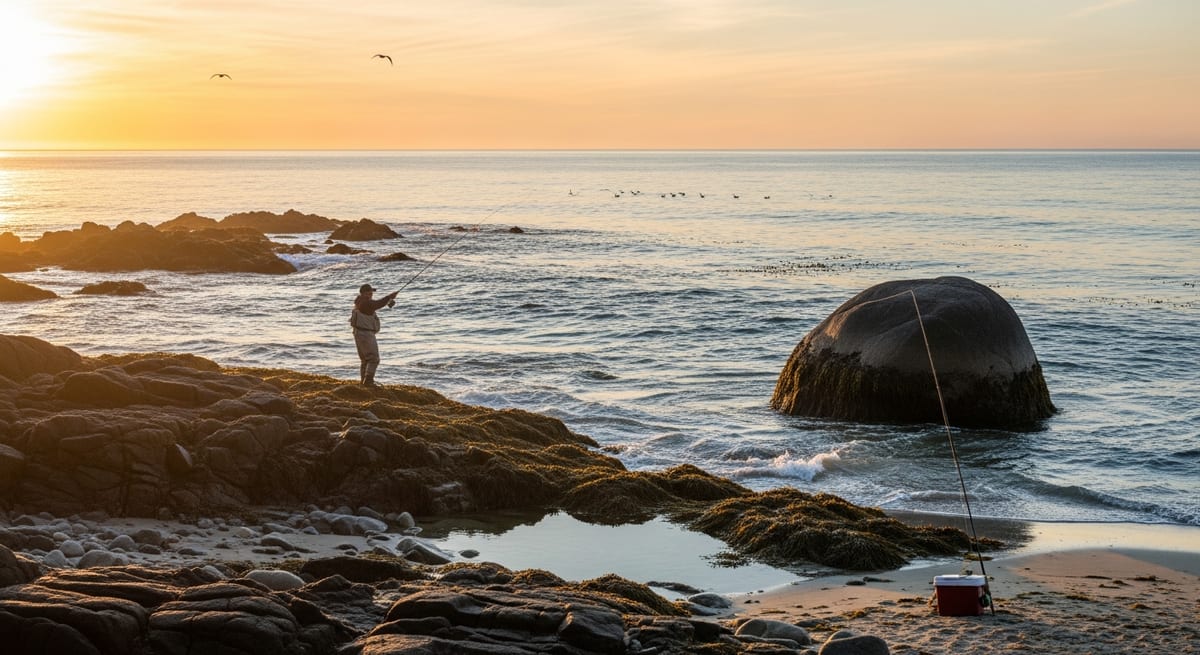
Saltwater fly fishing has a reputation for being technical and gear-intensive. Some of that is warranted. It's more demanding than freshwater fly fishing in several ways. But getting started doesn't require a $1,000 rod and a guide. Here's how to build a functional setup and start chasing stripers and bluefish on the fly in the Northeast.
Why Saltwater Fly Fishing?
The honest answer: it's harder, and that's part of the appeal. Landing a striper on a 9-weight fly rod in a tide rip is an experience that spinning gear doesn't replicate. The cast has to be more precise. The strip retrieve becomes an art. When it works, it's some of the most satisfying fishing there is. Practically speaking, fly gear also shines in situations where conventional tackle struggles, casting small flies in skinny water where fish are spooky, presenting to rising fish in a specific spot, or when fish are keyed on tiny bait that a spinning lure can't imitate.
Gear: What You Actually Need
Rod: 9-foot 8 or 9 weight for stripers and bluefish. An 8-weight handles most inshore saltwater situations; step to a 9-weight if you're fishing big flies in wind. Brands: Orvis Clearwater 8-weight ($200), Redington Crosswater 9-weight ($150), Echo Base 9-weight ($100) are all solid entry-level options. Reel: a saltwater-rated reel with a sealed drag system. Corrosion resistance matters, rinse every time with fresh water. The Redington Behemoth ($130) and Orvis Clearwater Reel ($130) are proven entry-level salt reels. Line: a tropical or saltwater fly line. Standard trout lines are too supple in warm weather and don't carry heavy flies. Rio Bonefish ($80), Scientific Anglers Amplitude Smooth ($90). Running line on top of 200 yards of backing (20 lb Dacron). Leader: 9-foot 20 lb monofilament leader with 12 inches of 20-30 lb fluorocarbon tippet. Flies: you don't need 30 patterns. Carry: Clouser Minnow (#2, white/chartreuse, white/olive: 6 flies), Lefty's Deceiver (#1/0, white, 4 flies), a simple crease fly or foam popper (4 flies). That's it for starting out.
Casting in the Salt
Saltwater fly casting is fundamentally the same as freshwater. It's the conditions that change. Wind is the main challenge. Learning to cast into wind and on both sides (backhand casting, Belgian cast, or hauling) matters more in salt than in any trout stream. Practice the double haul. It's not optional for saltwater fishing. The double haul accelerates the line during both the backcast and forward cast, adding distance and cutting through wind. Learn it before you go: many YouTube tutorials from Orvis, RIO, and Lefty Kreh explain it clearly. Target accuracy matters more than distance. Most productive saltwater fly opportunities are within 50 feet. A clean 40-foot cast to a feeding fish beats a sloppy 70-foot cast every time.
Where to Start: Accessible Shore Spots
You don't need a boat to get into saltwater fly fishing. Shore access to productive water exists throughout the Northeast. CT starting spots: the mouth of the Housatonic River (Stratford), Hammonasset State Park beach (Madison), Meigs Point (Hammonasset), the Niantic River mouth, the Pawcatuck River (CT/RI border). What to look for: moving water (tidal current, river mouths), structure (jetties, points, rocky areas), visible bait or birds working the water. Early morning and evening are prime, midday sun flattens the bite. Tidal timing matters: fish the incoming and outgoing tides at any coastal inlet. Slack tide is generally unproductive.
Presenting the Fly to Stripers and Blues
For stripers: cast across or slightly downstream of the current, let the fly swing into position, and strip retrieve with a medium-paced, irregular strip. Vary the strip speed and pause. Stripers often take on the pause as the fly sinks. White Clouser Minnows on a sinking leader are extremely productive. For bluefish: a fast, aggressive retrieve. Bluefish are opportunistic and will crush a fly that's moving fast. They're also toothy, add a short wire trace (25 lb single-strand stainless) if you're specifically targeting bluefish. Don't be afraid of topwater. A foam popper stripped aggressively across a flat or near a jetty will draw violent surface strikes. It's one of the most exciting things in fly fishing.
Basic Care and Maintenance
Saltwater corrodes everything. After every session: rinse rod and reel thoroughly with fresh water, strip the fly line and rinse it (salt degrades line coatings quickly), wipe down the reel with a rag, check guides for damage. If your reel's drag system isn't sealed, rinse it with fresh water and let it dry before storage. Store fly lines loosely coiled, not in tight loops that develop memory. Clean fly lines regularly with a damp cloth and a drop of dish soap, then dry. A well-maintained saltwater setup will last decades; a poorly-maintained one will fail at the worst possible moment.
EVERY SATURDAY MORNING
Weekly fishing intelligence
Nationwide conditions, what's biting, and honest gear deals. One email, no noise.
No spam. Unsubscribe anytime.