
Shore Casters at Hammonasset, Harkness, and Bluff Point Report the October Bunker Push Is Spot-Specific, Not Shore-Wide. What CT Surf Communities, ASMFC Slot Regulations, and DEEP Coastal Access Points Reveal About Reading the Surf, Timing the Fall Run, and First-Year Setup Choices
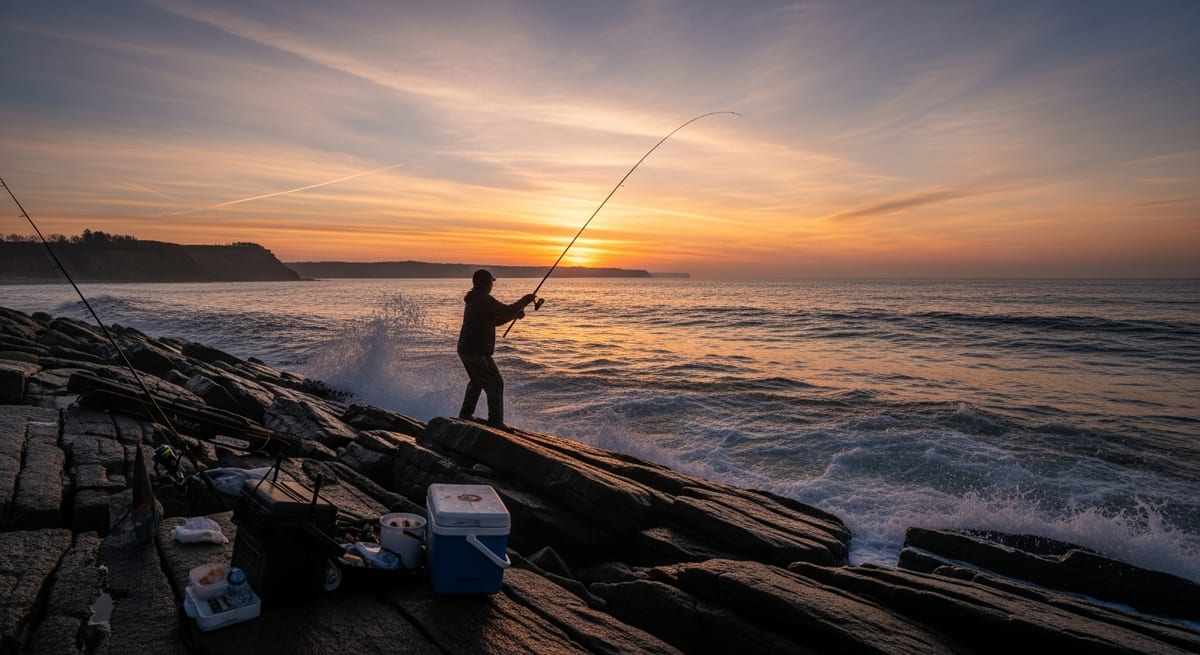
When menhaden schools push south along the CT coast in early October, shore regulars at Hammonasset and Harkness report the striper surf action compresses into a predictable 10-to-14-day window. Fish tight to the beach, stacked in the trough between the inner bar and the shore, concentrated at the tidal cuts that drain the flat on the outgoing tide. That window is not on a fixed date. It follows the bait. Understanding that bunker-driven timing, and knowing how to read the beach structure that holds fish during it, is where CT surf communities say most first-year shore casters underinvest. The setup, the rigs, and the tides are learnable in a season. Reading the water, and knowing the ASMFC slot rules before the first striper lands, takes longer.
What CT Shore Regulars Actually Carry (and What They Leave in the Truck)
The consensus among experienced CT surf casters is that most beginners overbuy on tackle and underbuy on rod length. A 10-foot medium-heavy spinning rod rated 2-6 oz handles the majority of CT surf situations, long enough to throw past the inner trough, stiff enough to drive a circle hook on the strike. A 9-foot rod costs meaningful casting distance; 12-foot rods are workable but fatigue beginners quickly on a two-hour session.
Reel: a 5000-6000 class spinning reel with a sealed drag and saltwater rating. Penn Battle III 6000, Shimano Saragosa 5000, or equivalent. Large spool capacity matters: 200-250 yards of 30-40 lb braid is the CT shore community standard. Braid's thinner diameter makes distance casting from the beach practical in a way heavy mono is not. Spool with 30-40 lb braid and add a 3-4 foot monofilament or fluorocarbon leader (30-40 lb) tied with an Albright or FG knot.
Tackle transport: a surf bag (small canvas shoulder bag) outperforms a tackle box on sand and rock. CT shore regulars keep it lean: pyramid sinkers (1-5 oz), circle hooks (#2/0-4/0), pre-rigged leaders, pliers, knife, headlamp, and leader material. Extra weight on a long beach walk compounds fast.
One item beginners consistently skip: a wading belt if using chest waders in the surf. Shore communities at Hammonasset and Harkness describe wader-related close calls each fall, experienced regulars treat the belt as non-optional, not an add-on.
How to Read CT Beach Structure Before the First Cast
The trough is the most important feature on any CT beach. It runs parallel to shore between the inner sandbar and the beach, and it's where baitfish concentrate when tide pushes water through. At low tide on a sandy CT stretch, hammonasset's eastern section, for example. The trough shows as a darker band of water 20-60 feet from shore. Shore communities consistently report that the productive cast lands in that trough or just past its far edge, not on the flat beyond the bar.
Cuts and rip edges: water draining off the beach after wave action creates visible channels in the sand, seen as discolored, slightly deeper water at low tide. Rip lines where outgoing water meets the trough draw predators. Shore casters at Bluff Point and Harkness describe working the edge of a visible rip as reliably more productive than casting into open flat water on most tides.
Jetties and river mouths: current edges where rock meets sand hold fish throughout the season. The Housatonic mouth and the Connecticut River outlet at Saybrook both create a rip on every tide cycle. Anglers who fish the Housatonic mouth in fall report staging stripers stacking in the eddy on the down-tide side of the outflow. The structure is consistent enough that regulars identify the exact casting angles that reach the holding zone.
Observation time: shore regulars pass one piece of advice to newer casters above most others, watch for five to ten minutes before casting. Swirls, bait jumping, birds diving, or a color change in the water often redirects the first cast to a better spot than any map would suggest.
CT Surf Species and the Regulations Beginners Need Before Landing One
Striped Bass: the primary target for CT surf casters from May through November. CT follows ASMFC striped bass rules, which have operated under a slot limit framework since Amendment 7 adjustments in 2023. Regulations are revised each year, as of spring 2026, anglers should confirm the current CT DEEP coastal striped bass slot, bag limit, and any tag requirements at portal.ct.gov before fishing. Shore communities at Niantic Bay, the Housatonic mouth, and the Race describe the October bunker push as the year's most concentrated surf window, with fish in the 25-35-inch class most common from CT beaches.
Bluefish: aggressive fish that run the CT coast in summer and fall. CT DEEP maintains a daily bag limit on bluefish, verify the current-year limit before keeping fish. Wire leaders or heavy fluorocarbon are standard when specifically targeting blues; they cut through standard monofilament on a fast retrieve. Shore communities at Hammonasset describe bluefish blitzes on June and September mornings, typically concentrated in the first two hours of incoming tide.
Weakfish: populations have declined sharply over the past decade. Shore communities describe catches as cyclical and currently limited. Most CT surf regulars encounter weakfish as an occasional bonus at night in July and August at lower-traffic points like Harkness and Bluff Point, not a species worth a dedicated trip.
Fluke (Summer Flounder): viable from shore in protected coves with sandy bottom. Niantic Bay access points and coves along the lower Connecticut River produce summer flounder on squid fished on a fluke rig. CT DEEP sets an annual size and bag limit; verify the current-year minimum and bag before keeping fish.
False Albacore: September through October, accessible from exposed jetties and points in eastern CT, Rhode Island, and Cape Cod. Shore casters at the Race area and Watch Hill describe albie runs as fast-moving and bait-dependent. A shore angler on the right jetty tip when a school pushes through gets one of the better light-tackle opportunities in Northeast surf fishing.
The Rigs CT Shore Communities Run Through Each Season
High-Low Rig: two hooks, one above the other, pyramid sinker at the bottom. The standard bait rig for fluke, weakfish, and bottom-feeding stripers. Circle hooks (#2/0-4/0) are the CT shore community preference over J-hooks, better hook-up rates with bait, easier release, and required at some CT surf tournaments.
Fishfinder Rig: sliding sinker on the main line above a barrel swivel, with a 24-36 inch leader and hook. CT shore regulars favor this for live or chunk menhaden. The sliding sinker lets a striper pick up bait without instantly feeling resistance. Anglers who work the Housatonic mouth rely on it heavily during the fall bunker run.
Bucktail Jig: 1-2 oz bucktail, often tipped with Gulp! shrimp or a strip of squid. Cast past the trough, allow it to sink, retrieve with a moderate jigging motion. Shore communities describe the bucktail as the most consistently productive CT surf lure across seasons. It catches stripers, blues, fluke, and albies on the same rod.
Surface Plugs: pencil poppers, Danny-style swimmers, and SP Minnow-type plugs are the classic striper surf presentations. Shore communities at Hammonasset and Harkness report topwater plug action concentrated at dawn, dusk, and after 10 PM, when stripers move shallow into the trough under low-light cover. Midday surface fishing is generally unproductive outside of active blitzes.
The Tidal Windows CT Shore Regulars Prioritize, and When the Beach Goes Quiet
Tides drive CT surf fishing more than any other single variable. The two windows CT shore communities report as consistently most productive: the last 90 minutes of the outgoing tide, when water draining through beach cuts concentrates bait, and the first 90 minutes of the incoming tide, when new water pushes bait up onto the flat above the trough. Slack water. The 20-30 minutes around dead low or dead high, is typically unproductive on most CT beaches.
Time of day: dawn and dusk are consistent across seasons. Shore regulars at Hammonasset's eastern beach describe fall striper action concentrated between 10 PM and 3 AM, when larger fish move shallow under low-light cover. Summer midday surf is slow on most days. Fish push deeper in bright, warm conditions. The shore community at Bluff Point describes most regulars off the beach by 9 AM in July.
Seasonal timing: May and early June see fresh-run stripers moving north along the CT coast, fish smaller on average and spread across beach structure. The October window is what CT shore regulars plan around: menhaden moving south push stripers tight to the beach, concentrating fish in predictable spots. Shore communities at the Race and Niantic areas report this window peaks in a 10-to-14-day span that shifts slightly year to year based on baitfish timing. It does not fall on a fixed calendar date, and tracking it from public reports and local conditions is part of what experienced CT surf regulars do each fall.
Surf Safety: What CT Shore Communities Advise at State Park Beaches
CT surf conditions vary more than most beginners expect. The shore community's consistent guidance: never turn your back on the ocean, and treat fall surf as fundamentally different from summer. Post-October, swell height increases and waves can surge without warning on days that look calm from the parking lot.
Rip currents: CT beaches develop persistent rips along Hammonasset's western end and at cut channels near tidal inlets. If caught in a rip, swim parallel to shore until free of the pull, then angle in. This is the response shore communities consistently identify as the piece of safety information most often missing in new anglers. Rip lines also concentrate baitfish and attract stripers; knowing where the rip runs is both a safety matter and a fishing advantage.
Waders in surf: chest waders carry real risk in wave action. Shore regulars at Hammonasset and Harkness describe wader-related close calls each fall season. A wading belt is the single most repeated piece of safety advice from experienced CT surf casters to newcomers. It helps but does not eliminate the risk. Many regulars shift to waterproof hip boots or rubber boots in warmer months, reserving chest waders for cold October water and treating them as equipment that warrants real caution.
Night fishing logistics: the most productive fall surf sessions happen after dark. A headlamp is non-optional, needed to tie knots, unhook fish, and signal presence to other anglers on the same stretch. CT state park lot hours vary by season; Hammonasset's parking gate closes at sunset in fall months, and planning a night session requires checking current park hours at the CT DEEP state parks page before heading out.
EVERY SATURDAY MORNING
Weekly fishing intelligence
Nationwide conditions, what's biting, and honest gear deals. One email, no noise.
No spam. Unsubscribe anytime.