
CT Surf Newcomers Fishing Hammonasset, Rocky Neck, and Bluff Point Consistently Report That Tides and Beach Structure Decide the Outcome Long Before the First Cast. What LIS Shore Communities, DEEP 2025-2026 Marine Regulations, and NOAA Tidal Data Reveal About Reading the Connecticut Shoreline
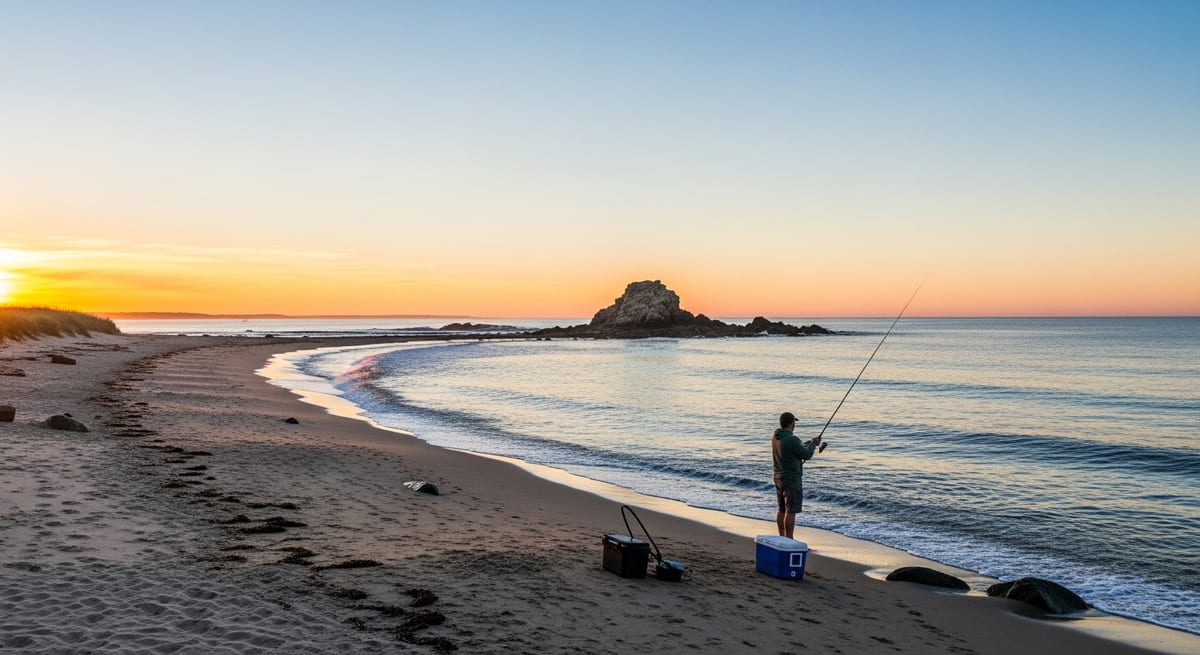
Anglers working the trough at Hammonasset Beach State Park in Madison during the May striper run report fish holding in 3-4 feet of water within easy casting range, well inside where most first-timers aim their opening cast. The Connecticut shoreline, from Rocky Neck State Park in East Lyme to Bluff Point Coastal Reserve in Groton, gives shore anglers consistent access to striped bass and bluefish without a boat, a launch fee, or electronics. The entry barrier on gear is low. The learning curve on reading LIS tides and beach structure is steeper than most tackle lists suggest, and the consensus among CT surf communities is that tides, not casting distance, separate productive sessions from fishless ones.
Where CT Shore Casters Start: Hammonasset, Rocky Neck, and Bluff Point
CT surf regulars consistently point to three state-managed access points as the most beginner-friendly on the shoreline. Hammonasset Beach State Park (Madison) offers nearly 2 miles of sandy beach with a defined bar-trough system. Shore casters report the western end near the boat launch concentrates striped bass at first light during outgoing tides in May and June. Fish stage in the trough before the beach crowds arrive. Seasonal parking fees apply; arrive before 6 AM during striper season for the best access. Rocky Neck State Park (East Lyme) has a rocky point at the cove entrance where shore casters pick up bluefish and schoolie stripers through summer. The mix of sand and rock holds baitfish in the wash and creates a current break that fish stage behind on both incoming and outgoing tides. Bluff Point Coastal Reserve (Groton) requires a 1.5-mile walk from the parking area but delivers access to a sandy point with deeper water close to shore. Shore casters at Bluff Point report occasional weakfish alongside stripers in May and early June. A species that doesn't consistently show at the sandier beaches farther west. A CT Marine Fisheries License covers shore access at all three sites; no boat registration or additional fee applies.
Why Tides Run the CT Surf, not the Clock
The consensus among LIS shore casters is consistent: tides dictate the outcome more than any other single factor. Long Island Sound experiences tidal swings of 3-6 feet depending on location along the CT coast, and that water movement controls where fish hold and whether they're feeding. Moving water is the operative concept. Fish are most active during the 2-3 hours on either side of tide changes rather than at slack high or slack low. Incoming tide pushes water over sandbars and into estuaries, carrying baitfish along with it. Shore anglers fishing Hammonasset during incoming tides report stripers moving into the trough as water height rises, with the final 90 minutes of the flood consistently cited as the most productive window. Outgoing tide sweeps baitfish out of creek mouths and estuaries in a natural concentration event. The creek mouths at Rocky Neck and the inlet at Niantic Bay are productive outgoing-tide spots because bait stacks up at the current break where the flow slows. Use the NOAA Tides and Currents tool (tidesandcurrents.noaa.gov) for your specific beach, tide times shift by 30-60 minutes across just 15 miles of CT coastline, and using the wrong reference station will put you on the water at the wrong moment.
What the Shore Community Carries on a First CT Surf Session
Shore anglers across CT surf communities report a narrower starting tackle list than most guides suggest. The most common first-season setup converges on a few specific choices. Rod: A 9-11 foot surf rod rated for 2-6 oz is the standard. This length keeps your line above breaking waves and generates enough leverage to reach the trough from dry sand. Penn, Ugly Stik, and Shakespeare all make entry-level surf rods in the $50-100 range that hold up to LIS conditions. Reel: A spinning reel in the 5000-6000 size class holds 200+ yards of 20-30 lb braid. CT surf communities frequently cite the Penn Battle III and Daiwa BG for saltwater corrosion resistance at this price point. Rinse the reel with fresh water after every session, salt crystallizes in the drag system within 48 hours if skipped. Line: 20-30 lb braid with a 20-30 lb fluorocarbon leader of 3-5 feet. Braid casts farther and telegraphs contact with the bottom and structure, useful when you're still learning what a trough feels like underfoot. Terminal tackle: Snap swivels (barrel and coastlock styles), 4/0-8/0 circle hooks for bait fishing, and a few bucktail jigs in the 1-2 oz range to start. Shore casters consistently recommend keeping a few metal spoons in the bag as a second lure option when fish are visibly surface-feeding on bunker schools.
Reading Troughs, Cuts, and Current Breaks on a CT Beach
The most transferable skill from a first surf season is learning to read beach structure before the first cast. Most productive CT shore spots share the same physical signatures. The trough: A darker band of water running parallel to shore, inside a line of breaking waves, marks deeper water between the bar and the beach. This trough is a travel corridor for fish moving along the coast. Shore casters who fish Hammonasset regularly report that most first-timers overthrow the trough on their opening casts, landing bait past the productive zone entirely. Cuts and channels: Where the shoreline dips, a channel runs perpendicular to the beach and baitfish concentrate in the current. Hammonasset's western end has a pronounced cut that regular shore casters target specifically on incoming tide. Rocky points and jetties: Any structure that breaks current flow concentrates fish on the downcurrent side. The point at Rocky Neck and the jetties flanking the Niantic inlet are consistent producers because they create eddies where baitfish stall. Rip currents: Churned, discolored water at a rip edge is among the most productive surf-fishing targets because baitfish are swept through and gamefish line up to intercept. Rips are hazardous for swimming, for fishing, they are a prime indicator on CT beaches when baitfish are present.
CT Striper Slot, Bluefish Limits, and 2025-2026 DEEP Marine Regulations
Verify current CT saltwater regulations in the DEEP 2025-2026 Marine Fisheries Regulations at ct.gov/deep before fishing, slot sizes and bag limits change annually based on ASMFC stock assessments, and relying on outdated information carries real legal exposure. Striped bass: Under the 2025-2026 CT marine regulations, the recreational slot limit is 28-35 inches with a one-fish-per-day possession limit. Fish outside the slot, under 28 or over 35 inches, must be immediately released. The striped bass population remains under active ASMFC management pressure; CT regulations track the coastal framework. Bluefish: The 2025-2026 federal recreational bag limit is three fish per day with no minimum size, verify CT state regs at ct.gov/deep for any additional restrictions. Wire leaders or heavy mono (40+ lb) are necessary when blues are running in numbers; their teeth cut through standard fluorocarbon quickly. Fluke (summer flounder): Shore-caught fluke from CT's LIS beaches occurs but is far less consistent than boat fishing. CT surf anglers occasionally pick up fluke by drifting bucktail jigs along sandy bottom in the trough, but community reports treat it as an incidental catch rather than a primary target. The 2025-2026 minimum size is 17.5 inches with a 3-fish bag limit; verify at ct.gov/deep. Weakfish: Present in CT estuaries in May-June and again in September, but ASMFC stock assessments reflect historically depressed population levels. A bonus catch if encountered, not a target species. License: A CT Marine Fisheries License is required for shore saltwater fishing, available at ct.gov/deep and most bait shops along the coast.
Two Rigs That Cover Most CT Shore Situations
Shore casters fishing LIS beaches report two rigs covering the majority of bait-fishing scenarios, with a simple lure setup rounding out the standard kit. The fish-finder rig is standard for sandy beach fishing: an egg sinker (2-4 oz, heavier in stronger current) slides freely on the main line above a barrel swivel, then a 24-36 inch fluorocarbon leader runs to a 4/0-6/0 circle hook. Bait, bunker chunk, surf clam, or sandworm, sits on the bottom while the sinker holds position. The sliding design lets a fish take the bait without feeling the weight; circle hooks require no sharp hookset, just a steady lift when weight is felt. The three-way rig performs better in current along jetties and creek mouths: a three-way swivel connects the main line, a dropper to the sinker, and a leader to the hook. The bait floats above the bottom and swings in the current rather than lying flat. Shore casters at the Niantic inlet report this rig outperforms the fish-finder when outgoing tide is running hard through the channel. For lure fishing: Tie direct to the fluorocarbon leader and use a snap swivel at the lure for fast changes. A white 1-oz bucktail jig with a curly-tail trailer is the most-cited starting lure among LIS shore communities, worked slowly along the bottom through the trough, it covers both striper and opportunistic fluke scenarios without adding lure-specific rigs to the learning curve.
EVERY SATURDAY MORNING
Weekly fishing intelligence
Nationwide conditions, what's biting, and honest gear deals. One email, no noise.
No spam. Unsubscribe anytime.