
CT Bass Anglers Track Water Temperature, Not the Calendar, what Bantam Lake, Lake Lillinonah, and Gardner Lake Community Reports Reveal About the Pre-Spawn Window
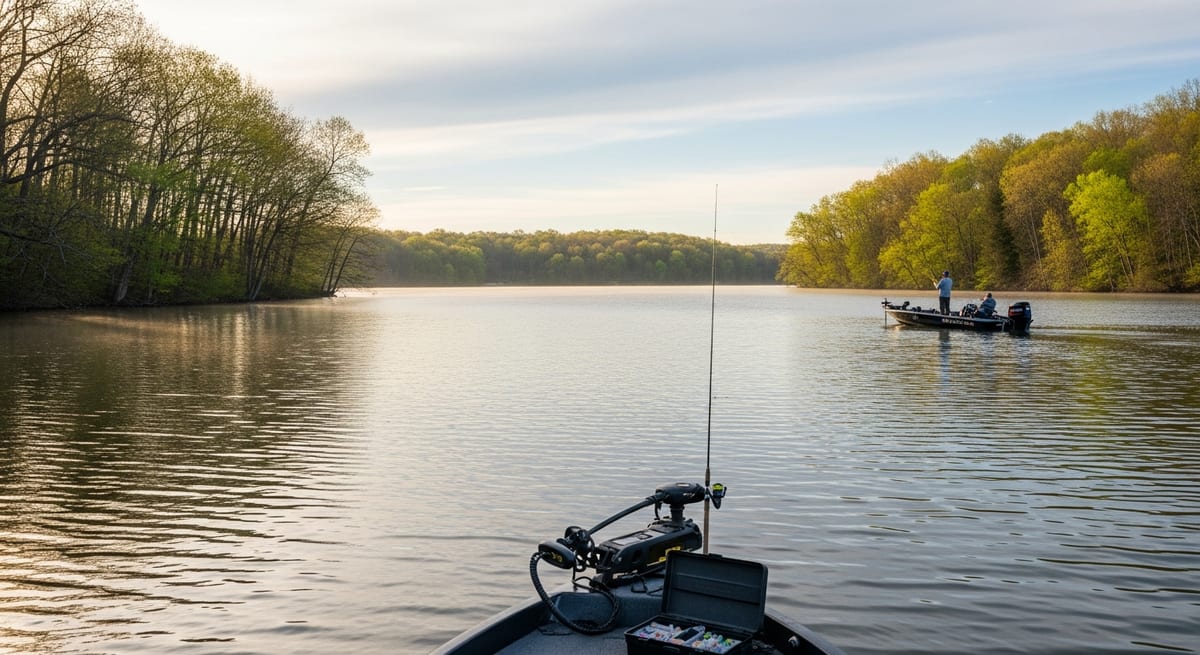
Anglers fishing the northwest coves of Bantam Lake in Litchfield County report the first pre-spawn largemouth action each spring, sometimes weeks before comparable CT water bodies show signs of staging fish. The pattern repeats annually in community logs: south-facing back coves running 5-8°F above the main lake body, holding active bass that anglers on other CT lakes won't locate for another 10 to 14 days. CT DEEP 2025-2026 freshwater regulations allow bass fishing year-round statewide, with a 12-inch minimum size and five-fish daily bag limit applying to both largemouth and smallmouth. The regulatory framework doesn't define spring bass season, water temperature does, and the CT bass fishing community's understanding of that thermal sequence is what separates consistent spring anglers from frustrated ones.
The Cove Warming Gap: Why CT Lakes Don't All Wake Up Together
CT bass anglers who fish multiple water bodies in the same week describe a consistent pattern: south-facing and back-of-cove sections can register water temperatures 5-10°F above the main lake body on sunny April and May afternoons. This thermal differential drives early-season bass movement ahead of the calendar, not in sync with it.
The consensus among Housatonic Valley bass anglers is that checking cove-specific temperatures before committing to a spot saves unproductive trips. A thermometer dropped in the protected northwest arm of Bantam Lake in late April often reads mid-50s when the main lake is still in the upper 40s. The difference between active staging fish and fish locked to deep winter structure.
Key CT temperature thresholds, as community observations align with published bass biology:
- Below 50°F: Bass behavior is reported as largely inactive. Slow vertical presentations near deep structure are the only consistent producers.
- 50-55°F: Pre-spawn movement begins in the warmest shoreline sections. Anglers fishing cove entries on Lake Lillinonah report the first consistent reaction-bait strikes in this range.
- 55-65°F: The primary pre-spawn window. Feeding activity is typically most concentrated here.
- 65-72°F: Spawning activity begins. Sight-fishing opportunities emerge, along with ethical considerations the CT bass community actively debates.
- Above 72°F: Post-spawn scatter; fish transition toward summer holding structure.
CT DEEP lake survey data for Bantam Lake and Candlewood Lake corroborates that spawning activity in western Connecticut typically peaks in late May, though anglers report meaningful variation year to year depending on spring temperatures.
Pre-Spawn Staging on Lillinonah, Bantam, and Gardner: What Community Reports Describe
Anglers who fish the pre-spawn bite on Lake Lillinonah (Southbury/Brookfield) describe staging bass stacked on transition structure, channel edges, submerged timber points, and rock piles, between deep wintering areas and the shallow coves where spawning will follow. Community reports from spring 2025 identified the mid-lake channel arms feeding into the northern coves as consistent producers when cove temps were in the 57-63°F range.
What CT pre-spawn anglers report works during this window:
- Football jigs (3/4 oz on hard bottom, 1/2 oz on softer substrate) dragged slowly along bottom transitions. Anglers fishing Lillinonah's main channel edge describe five-second pauses between drags as critical. Fish that follow without committing frequently strike on the pause.
- Large swimbaits (4-6 inch paddle tails in shad or bluegill patterns) pick up the largest staging females. The community consensus on these presentations: one committed strike per hour is a reasonable expectation.
- Jerkbaits with 10-15 second pauses between twitches produce on cold-front days when fish are pushed back toward the inactive end of staging behavior.
Gardner Lake (Bozrah) anglers describe a shorter but concentrated pre-spawn window. The lake's smaller surface area means it warms faster and bass move through staging quickly. Public boat access is available at the state launch off Gardner Lake Road. Community reports note that early-to-mid May is typically the core window before the main spawning push compresses the pre-spawn bite.
Bantam Lake's northwest coves are the most-cited early-season CT largemouth location in regional fishing discussions. Weed edges adjacent to the public boat launch off Bantam Lake Road produce early staging fish when comparable waters in the region are still inactive.
The Spawn Window on CT Waters: DEEP Regulations and What Sight Fishers Report
When water temperatures climb into the 65-75°F range, which CT lake anglers report typically occurs from late May through early June in most years, largemouth bass move to shallow beds in 1-4 feet of water over gravel, sand, and light vegetation in protected coves.
CT DEEP 2025-2026 freshwater regulations set a 12-inch minimum size for both largemouth and smallmouth bass with no closed season. Anglers may fish during the spawn window legally. Anglers should verify current regulations at the DEEP website (portal.ct.gov/DEEP), as site-specific restrictions can apply to MDC and municipal water supply reservoirs.
What the CT bass fishing community describes as the ethical standard for spawn fishing goes beyond the regulatory baseline. Forum discussions show a range of practice, but the common ground among experienced CT anglers: single barbless hooks, minimal handling, and quick releases are the community norm when targeting bedding bass. Prolonged targeting during active spawning carries measurable nest-abandonment risk that anglers continue to weigh publicly.
Reading beds on CT waters: Anglers fishing the back coves of Candlewood Lake (New Milford/Sherman section) and the shallow arms of Lake Saltonstall describe spotting active beds as one of the most demanding freshwater skills in CT. Light-colored circular depressions on dark bottom, visible from 15-20 feet with quality polarized sunglasses on calm, sunny days, mark active nests in 2-4 feet of water.
Lake Saltonstall (Branford/East Haven) access requires a free annual MDC permit. The lake draws lower fishing pressure than comparable public-access largemouth waters, and community reports describe quality spring action in the back coves near the north end using finesse presentations. Gas motors are prohibited.
Post-Spawn Bass: What CT Anglers Describe as the Hardest Stretch of the Spring Calendar
Post-spawn bass in Connecticut are widely reported in fishing community discussions as the most difficult seasonal pattern to fish consistently. Males remain shallow guarding fry for several weeks after eggs hatch; females scatter immediately after spawning and appear at variable depths near spawning structure.
Anglers who fish CT lakes in late May and June describe the post-spawn period as one where power fishing, running reaction baits across cover quickly, produces fewer fish than slower, more targeted presentations near confirmed spawning structure.
What CT post-spawn anglers report works:
- Wacky-rigged Senko worms (4- or 5-inch in natural green pumpkin or watermelon red) near dock edges and laydowns within 100 yards of confirmed spawning coves. Anglers on Lillinonah and Bantam Lake report post-spawn bass in mid-recovery will take a slowly falling wacky worm when they refuse most other presentations.
- Slow-rolled spinnerbaits (3/8 oz, white or chartreuse blades) along the outside edge of emergent weed growth, targeting recovering females that have moved slightly deeper than spawning depth.
- Ned rigs on 1/10 oz heads near transition points between cove flats and adjacent channel structure for fish that won't commit to anything larger.
Activity timing: CT lake anglers fishing June consistently report post-spawn bass are most active in the first two hours after sunrise and the final 90 minutes before dark. Midday heat in late May and June pushes fish tight to shaded dock structure or slightly deeper.
A pattern that appears repeatedly in CT bass fishing community logs: anglers who track spring results note that post-spawn catch rates recover sharply once water temperatures push above 75°F and fish shift to summer holding positions. The difficult stretch ends when summer patterns establish, which in CT typically means sometime in late June.
CT Lake Access and Community Notes: Lillinonah, Bantam, Candlewood, Saltonstall, and Gardner
CT's spring largemouth and smallmouth fishery is concentrated in a cluster of warmwater lakes in the western and central regions of the state. Water bodies most frequently discussed in CT bass fishing communities for spring action:
Lake Lillinonah (Southbury/Brookfield): The Housatonic River reservoir offers extensive cove structure, submerged timber, and rocky transition points. Multiple state boat launch ramps provide access. Community reports from spring 2025 describe the upper reservoir coves warming earliest and holding pre-spawn fish a week or more ahead of the lower sections. Anglers note the submerged timber in the mid-lake channel arms as a consistent pre-spawn staging area.
Bantam Lake (Morris): The largest natural lake in Connecticut at 946 acres, with extensive weed structure in the northwest arm. Public launch off Bantam Lake Road. Community reports distinguish two bass populations by season: largemouth concentrated in the weed coves and dock structure, with smaller but willing smallmouth reported on the deeper, rockier south shoreline.
Candlewood Lake (New Milford/Sherman): CT's largest lake by surface area, with bass populations distributed across rocky points and cove transitions. State launch at Lattins Cove in New Milford. CT anglers consistently report the southern New Milford coves warming 1-2 weeks earlier than the northern Sherman section, creating an early-season staging advantage.
Lake Saltonstall (Branford/East Haven): MDC reservoir requiring a free annual access permit through the Metropolitan District Commission. Lower fishing pressure than comparable CT largemouth waters; community reports describe quality spring bass from the back coves on finesse presentations. No gas motors permitted.
Gardner Lake (Bozrah): Accessible largemouth fishery with state boat launch off Gardner Lake Road. The compact surface area means the lake warms quickly; the community consensus is that bass move through pre-spawn into spawning faster than on larger CT lakes, concentrating the best window into a shorter stretch in early-to-mid May.
CT DEEP 2025-2026 bass regulations apply uniformly across these waters: 12-inch minimum size, year-round season, five-fish daily bag limit. Anglers should confirm current regulations and any site-specific MDC or water authority restrictions at portal.ct.gov/DEEP before each trip.
EVERY SATURDAY MORNING
Weekly fishing intelligence
Nationwide conditions, what's biting, and honest gear deals. One email, no noise.
No spam. Unsubscribe anytime.