
At Old Saybrook and The Race, CT Trophy Striper Anglers Report That Live Eels and Bunker on Night Tides Reach Fish That Plugs Don't, rigging, Sourcing, and the Current DEEP Regulations on Each Bait
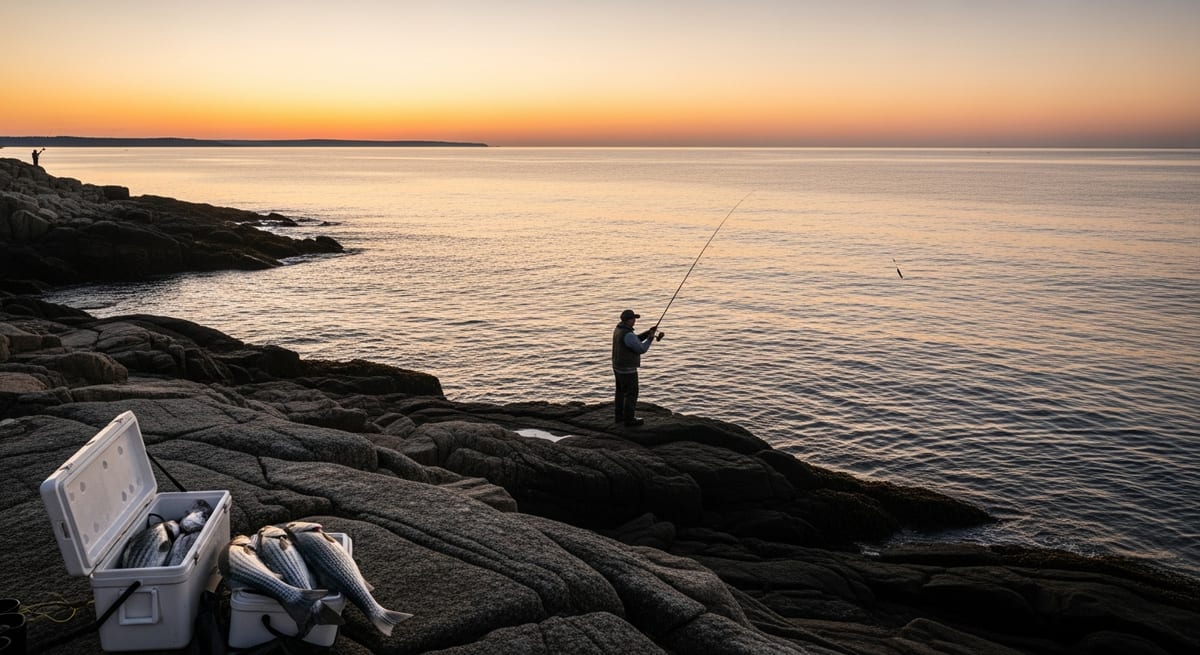
The north jetty area at Old Saybrook, where the Connecticut River meets Long Island Sound, accounts for a disproportionate share of CT's self-reported trophy striper catches each spring, and the pattern that shows up repeatedly in those accounts is consistent: the biggest fish of the night came on live bait. CT DEEP creel survey data on angler-reported large stripers shows similar patterns across Long Island Sound access points, with live bait methods overrepresented among catches of fish over 30 inches, particularly on night tides from May through October. That does not mean live bait produces more stripers overall. The community consensus among CT anglers who fish both methods is narrower than that: live bait typically outperforms artificials when the specific target is a trophy-class striper holding in deep current at structure, after dark, and not actively chasing bait on the surface. Under those conditions, accounts from regulars at Old Saybrook, New London, and Niantic consistently describe the same result: the plug rod stays quiet, and the live-bait rod gets touched.
Live Eels After Dark: What Old Saybrook and Thames River Trophy Reports Consistently Show
American eels are the benchmark live bait for Connecticut trophy striper fishing, and the accounts behind that reputation come from specific locations and conditions rather than general angling lore. Anglers who fish the Connecticut River mouth jetties at Old Saybrook and the Thames River estuary at New London on outgoing tides after dark report that large eels presented naturally against structure produce trophy-class stripers at a rate that other presentations don't match under the same tidal conditions.
The practical reasons are well-established among Long Island Sound regulars: eels are natural prey throughout the striper's range, they generate movement and vibration in current that attracts fish from distance, and they are considerably more durable than bunker or herring. A properly aerated bucket keeps American eels alive and active for a full night session with minimal attention.
Sourcing eels in Connecticut: Live American eels are not stocked at every CT bait shop, and availability is seasonal. Anglers who rely on them report calling ahead to shops in Old Saybrook, Niantic, Waterford, and New London before planning a session. Eels can also be trapped from freshwater streams in fall, subject to CT DEEP freshwater bait regulations.
Rigging: A single 6/0-8/0 circle hook through the lower jaw (entering below, exiting through one nostril) allows the eel to swim without restriction. Standard leader is 30-40 lb fluorocarbon or monofilament. Most LIS trophy anglers fishing eels work without added weight, letting current carry the eel to the strike zone along channel edges and bottom structure.
Bunker at the Race and River Mouths: Menhaden as Live Bait and the ASMFC Rules That Apply
Atlantic menhaden (bunker, pogies) are the primary forage for large stripers in Long Island Sound through summer and fall. When heavy fish are visibly pushing bunker schools off points and at river mouths, CT anglers who fish both methods report that a live menhaden presented in the same water tends to produce contact with the biggest fish in the area that plugs fished through that bait school typically do not.
Menhaden are subject to federal ASMFC stock management and CT DEEP state regulations governing recreational harvest for bait use. Rules on how many bunker can be legally taken for personal bait use, and under what conditions, have changed in recent seasons. CT anglers should verify current possession limits and season rules directly through CT DEEP Marine Fisheries (ct.gov/deep) before each season, not from prior-year guidance.
Finding and capturing bunker: Schools of surface-rolling menhaden are visible from distance, their flash and churning motion distinctive. Diving birds reliably mark them offshore. The Connecticut River mouth concentrates bunker in fall, pushed out on the outgoing tide. Capture with a cast net or weighted snag hook thrown into surface schools; snag hooks are heavy and require open casting lanes.
Rigging live bunker: Single circle hook placed behind the dorsal fin, above the spine, on 40-50 lb fluorocarbon leader with minimal or no added weight. CT anglers fishing the Race (the tidal passage between Fishers Island and the mainland) note that depth matters in that fast-moving water: a bunker swimming in the upper column often misses fish holding lower in the current, and a small split shot to position the bait deeper produces better contact at that location.
River Herring in the CT River Estuary: A Spring-Window Bait With Active DEEP Regulations
Alewife and blueback herring return to Connecticut rivers in spring on the same anadromous schedule as American shad, typically appearing in the Connecticut River estuary and at tributary mouths including the Salmon River confluence near Colchester through April and May. Stripers stage at these mouths during the herring run to intercept migrating bait, and CT anglers who target this intersection report that live herring in the right current produce aggressive takes from fish in the 20-to-35-pound range.
Critical regulatory note: River herring in Connecticut are regulated under both state and federal anadromous fish management, and rules governing harvest and use as personal bait have been subject to change in recent seasons. Possession and harvest limits are specific to the species and the water body. Verify current CT DEEP rules before harvesting herring for bait use at ct.gov/deep. This is not a bait category where prior-year assumptions carry.
Keeping herring alive: Herring are considerably more fragile than eels or bunker. CT anglers who use them report that continuous aeration and periodic fresh seawater exchange are necessary to keep them viable. Commercial round bait containers with built-in high-flow aeration (such as the Frabill Flow-Troll models common on Long Island Sound) or a boat livewell are what experienced CT live-bait anglers typically run for herring sessions.
Rigging: Single circle hook through the back behind the dorsal fin, 20-30 lb fluorocarbon leader, minimal weight. Herring swim naturally near the surface, and presentations in the upper water column match their behavior.
What CT Live Bait Anglers Actually Run for Gear
Aeration by bait type: The equipment gap between keeping eels alive and keeping bunker or herring alive is significant. Eels tolerate a 5-gallon bucket with a small battery aerator for an entire night session. Bunker and herring die quickly under the same conditions. CT anglers who fish bunker and herring for live bait consistently run round commercial bait containers with high-flow aeration (the Frabill Flow-Troll is the model cited most often in LIS live-bait discussions) or dedicated boat livewells.
Rod and reel: Medium-heavy conventional or spinning, 7-9 feet. The casting load for live bait is light, but fighting a 35-pound striper in the Race current or off the Thames River mouth jetty is not. CT live-bait anglers who target trophy fish consistently use conventional gear in the 20-30 lb class for the backbone and line capacity those fights require.
Terminal setup: 30-50 lb braided mainline, 8-15 feet of 30-40 lb fluorocarbon or monofilament leader, single circle hook sized to the bait. CT anglers who have fished both treble hooks and circle hooks on live bait report that circles, used on a drop-back with no forceful hookset, land a higher percentage of fish and cause less stress on the live bait in the process.
Presentation approach: Drifting live bait through striper water at the speed of the current works well for bunker fished over active schools. Anchored presentations that hold an eel in position against a current-facing jetty or rock pile are the preferred approach for the targeted, structure-specific trophy fishing that regulars at Old Saybrook and Niantic describe in trophy accounts.
CT Access Points Where Live Bait Shows Up in Trophy Reports
Connecticut River mouth, Old Saybrook: The north jetty and channel edge off Old Saybrook Town Beach on the outgoing tide in May and September are the most consistently cited live-bait location in CT trophy striper accounts. Public shore access along the jetty allows anglers on foot to fish this structure; boat anglers anchor off the channel break.
Thames River mouth, New London: Tidal exchange at New London Harbor pushes bait through a defined channel, and stripers stage at the transition between river current and Sound water. Night-tide live-eel accounts from this area track closely with the Old Saybrook pattern, particularly in May and June.
The Race (Fishers Island Sound): The tidal passage between Fishers Island and the mainland is a boat-only trophy striper location. Deep water, heavy current, and bait concentration on each tide change draw large fish. CT trophy accounts from the Race describing fish over 40 pounds show a disproportionate representation of live bait, particularly large eels and live bunker fished at depth in the current.
Niantic Bay and river mouth: The Niantic River mouth on the outgoing tide after dark, from June through September, is cited regularly in CT live-bait accounts. Shore access at Niantic Bay and the municipal boat launch provides options for both wade and boat anglers.
Westbrook and Hammonasset shore access: Rocky structure and current lines along the central CT coastline produce night-fishing results with live eels for shore-based anglers working jetties and exposed points from late spring through fall.
EVERY SATURDAY MORNING
Weekly fishing intelligence
Nationwide conditions, what's biting, and honest gear deals. One email, no noise.
No spam. Unsubscribe anytime.