
Trout Fishing in Connecticut: Spring Stocking Season Guide
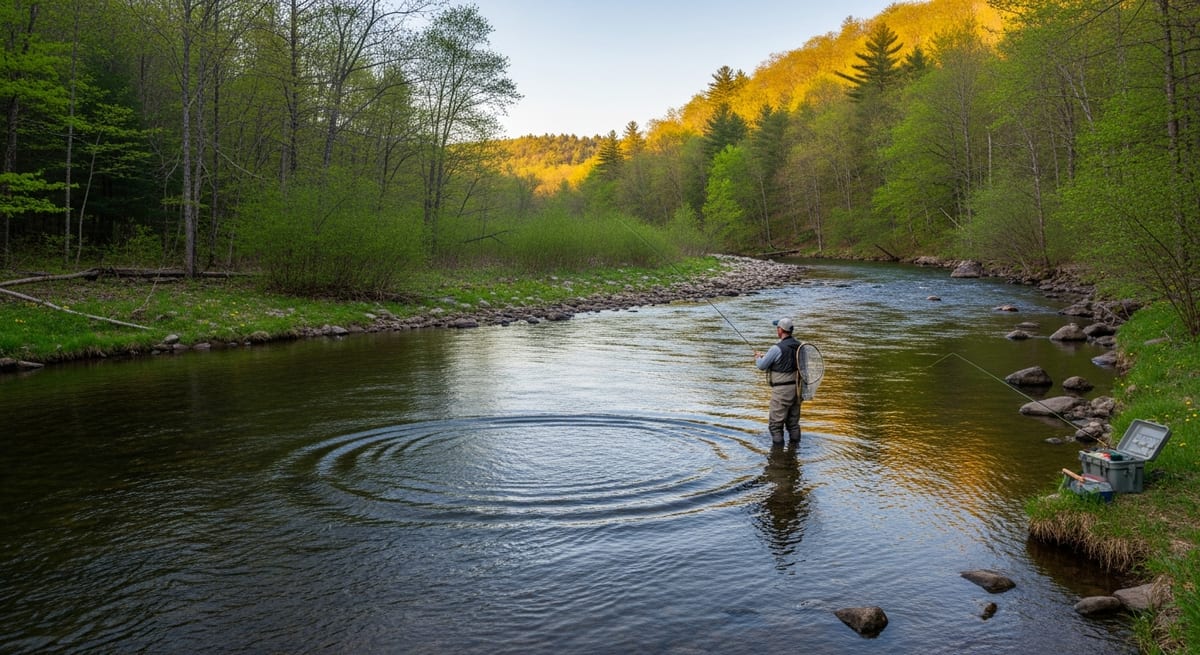
The stretch of Farmington River between Barkhamsted and New Hartford is stocked heavily enough each spring that you can pull a limit before 9 AM, and if you miss the first 48 hours, someone else likely already did. CT DEEP puts fish into rivers and lakes statewide each spring, typically running late March through mid-May. Check the stocking report on the DEEP site (updated regularly during the active spring season), pick a freshly-stocked stretch. The Farmington near New Hartford or the Willimantic near Eastford are solid starting points, and be there by first light the Saturday that follows. You don't need much to make it work.
The CT Stocking Program: How It Works
CT DEEP operates one of the more active stocking programs in the region, putting fish into waters across all eight counties each spring. The program covers three species, though the mix varies by water body, check the stocking report for what's going where before you drive.
Species typically stocked:
- Rainbow trout: the bulk of stocking. Active fighters, willing biters.
- Brown trout: fewer stocked, but larger average size. More cautious, more rewarding.
- Brook trout: the native. Stocked in higher-elevation streams and cold headwaters. Smaller than rainbows or browns, but brilliantly colored, worth the extra hike to find them.
When stocking happens: The spring stocking wave typically runs from late March through mid-May, with timing varying by water body. A second fall wave runs late September through October. The spring program is the bigger event.
Where to find stocking schedules: CT DEEP publishes stocking reports on their official site during the active season. Check back regularly, updates come out on a rolling basis through spring. The 48-72 hours after a fresh drop is usually the best window to be on the water.
What gets stocked: Carry-over trout from previous seasons (often 12-16 inches) and periodic "trophy" stocking events (18-22 inch fish, limited locations). Watch the DEEP reports. They'll flag when the big fish are going in.
Top Trout Waters in CT
Connecticut has quality trout water in every county. Some reliable options:
Rivers: Farmington River (Barkhamsted to New Hartford): Consistently one of the top trout rivers in the Northeast. The wild trout section (catch-and-release only, artificial lures only) holds wild brown trout year-round. The stockable trout section below is accessible and productive in spring. Look for pullouts near Greenwoods Road in New Hartford, verify access is open before you make the drive, as conditions change seasonally. The Route 44 pullout near Barkhamsted Dam is a more reliable backup.
Willimantic River (Windham County): Less crowded than the Farmington, with solid brown trout habitat in the upper stretches. The primary access is off Route 44 near Eastford, where the road meets the river and you'll find gravel pullouts with room for a few vehicles. Walk upstream 15-20 minutes from any access point and pressure drops off significantly. This river rewards anglers willing to cover ground. Good wading conditions through most of the spring season.
Housatonic River (Cornwall to Kent): The wild trout section is world-class by Northeast standards. Bigger water that requires confident wading, but it produces fish. The Lower Housatonic stockable section is more accessible, route 7 parallels the river with multiple pullouts between Cornwall Bridge and Kent.
Lakes and Ponds: Mashapaug Lake (Union): A quality lake fishery that holds fish over from previous seasons. Sees lighter pressure than most stocked ponds due to its remote location in Nipmuck State Forest.
Crystal Lake (Stafford): Strong stocking history, clear water, good shore access off Crystal Lake Road. Popular but consistently productive.
General rule: look for rivers with cold, well-oxygenated water, dEEP's "Quality Trout Management Areas" list is a useful starting point, and ponds with deep sections that stay cold through summer.
Rigs and Tactics That Actually Work
The PowerBait setup (freshly-stocked fish): The first few days after a stocking, trout are disoriented and will eat almost anything, including PowerBait, which closely resembles hatchery pellets. A simple setup: 6 lb monofilament, small barrel swivel, 18 inches of 4 lb fluorocarbon leader, size 10 treble hook, small ball of PowerBait floating off the bottom. Dead simple, and it works well right after a stocking.
Spinners (anywhere, anytime): A 1/8 oz Rooster Tail (white or yellow) or Mepps Aglia #1 is a classic CT trout producer. Cast upstream and across, retrieve with the current just fast enough to keep the blade spinning. Cover as much water as you can, stocked trout often stack in runs and pools, and finding the school makes all the difference. Vary your retrieve speed until you get strikes.
Live bait: Nightcrawlers on a floating rig (same setup as PowerBait but with a whole worm). Works especially well on brown trout in rivers with good current.
For wild trout on the Farmington: The wild section rewards fly fishing or finesse spin fishing. Small Woolly Buggers, Hare's Ear nymphs, and size 14-16 dry flies are reliable producers. Or try a 1/16 oz inline spinner in low, clear water. This is proper catch-and-release water, wet hands, no treble hooks, keep the fish in the water.
Timing: Overcast days and the hour before dark are the best windows for wild fish. Freshly stocked fish bite any time, with the 48-72 hour post-stocking window consistently the most productive.
CT Trout Regulations (Know Before You Go)
Regulations vary by water, read the CT DEEP Fishing Guide before heading out.
General season: The general trout season opens the third Saturday in April and runs through the last day of February (year-round in some waters).
Extended season: Many waters have a year-round extended season, check DEEP designations by water body.
Catch limits (general): 5 trout per day, minimum 9 inches. Some waters have stricter limits (catch-and-release only, artificial lures only). Read the specific water regs before you fish.
Wild trout sections (Farmington, others): These are catch-and-release only with artificials, no bait, no trebles. Strictly enforced.
Licenses: Required for anyone 16+. Available online through CT DEEP eLicense portal or at most bait shops.
CT DEEP fines for regulation violations are real and regularly issued, especially on the Farmington during stocking season. Know the rules for your specific water before you park the truck.
EVERY SATURDAY MORNING
Weekly fishing intelligence
Nationwide conditions, what's biting, and honest gear deals. One email, no noise.
No spam. Unsubscribe anytime.