
The Best CT Trout Fishing Happens Days After the Stocking Truck Leaves, Not When It Arrives, what the Farmington, Willimantic, and Salmon River Reports Show
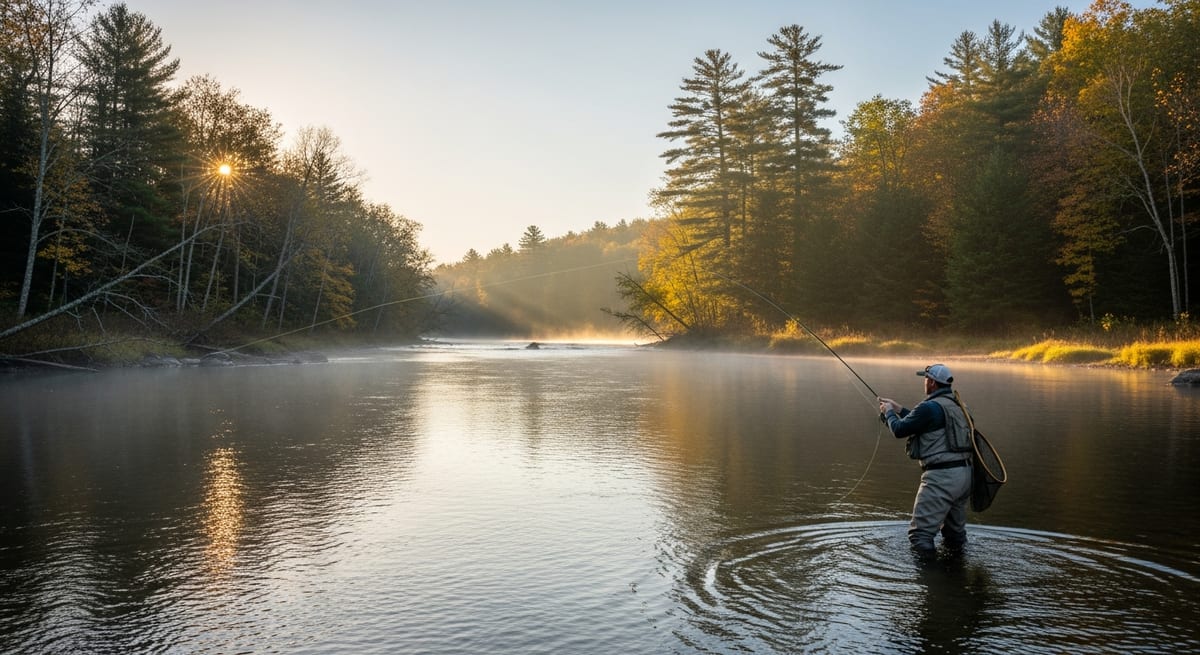
Stop Chasing the Stocking Truck
The Willimantic River lot off Route 32 can fill to six or more vehicles within an hour of a CT DEEP spring stocking. A scene that repeats up and down the state wherever a fresh truck has visited. Anglers who've compared notes on both scenarios, stocking-day visits and returns to the same stretch seven to ten days later, consistently report the same finding: day one produces fish, but the week after produces better fish with a fraction of the competition.
That timing gap has shifted how a lot of CT regulars read the stocking schedule. It's not a race to be first. It's a map showing where trout will eventually hold once the hatchery crowds clear and the fish distribute into real holding water.
CT DEEP operates one of the more active stocking programs in southern New England, releasing large numbers of trout annually, rainbow, brown, and brook, across dozens of designated trout management areas throughout the state, as documented in the program's annual fisheries reports at DEEP.ct.gov. The program is funded through license fees and Federal Sport Fish Restoration funds. The weekly report at DEEP.ct.gov/fishing is genuinely useful, but most anglers misread what it's actually telling them.
How CT DEEP's Stocking Program Actually Works
Stocking happens in two main pushes. Spring (roughly March through May) is the primary event. The bulk of trout go in April through mid-May, with most waters receiving multiple truck visits. Fall (October-November) is a secondary push, typically targeting designated quality waters and heritage streams with larger fish. Not every water gets stocked in fall; check the DEEP stocking history for your target water before making the drive.
Some CT streams also hold wild, naturally reproducing trout populations year-round, separate from stocked fish and usually found in cooler, higher-gradient headwater reaches. DEEP maintains a wild trout stream designation list, and anglers who target these waters regularly note they're more selective and harder to access than hatchery runs. The Farmington tributaries, parts of the Willimantic watershed, and several northwestern CT streams are commonly cited in this category, verify current wild trout designations at DEEP.ct.gov before planning a trip specifically around wild fish. CT anglers who pursue them widely regard wild brookies and browns as better eating than hatchery fish, though that's community consensus rather than any official measure.
On specific numbers: CT DEEP publishes annual stocking totals in their fisheries reports at DEEP.ct.gov. The figures shift year to year based on funding and hatchery capacity, if you want hard numbers, pull the current season's report rather than relying on anything you read in a blog post, including this one.
Reading the Weekly Report Without Getting Fooled by It
The stocking report at DEEP.ct.gov/fishing updates multiple times per week during active season. A few things worth understanding before you use it to plan a trip:
Stocking date vs. your trip date matters more than anything. CT anglers who track their outings against the stocking calendar report a consistent pattern across multiple rivers and seasons. In the first few days after a fresh stocking, bait, worms, PowerBait, salmon eggs, dominates, catch rates run high, and pressure is at its peak; fish are still congregated near release areas and reacting more than actively feeding. The consensus among regulars on the Farmington, Willimantic, and Salmon River is that the productive window for lures and spinners opens around day four or five, once fish have spread into current seams and structure. Forum reports from CT Trout Unlimited chapters and Northeast fishing communities, as documented through the 2024 and 2025 spring seasons, continue to show the same pattern: two-plus weeks post-stocking, surviving fish grow increasingly selective and fly fishing or light-spin rigs start separating skilled anglers from the weekend-only crowd.
Water name and section: Some rivers have multiple stocking sections that fish very differently. The Farmington has distinct designated sections from Burlington up through New Hartford. A stocking in one section doesn't mean the next section upstream got fish. Read the location line carefully before loading the truck.
Species and size class: Routine spring stockings are typically 9-12 inch rainbows and browns. Waters designated as Quality Fishing Areas (QFAs) may receive larger fish, check DEEP's current QFA documentation and the annual fisheries report for size class details before you drive an hour.
Waters Worth the Drive, and How to Actually Get On Them
Farmington River (Burlington to New Hartford): Connecticut's most well-known trout river, and the reputation is earned. Wild brown trout supplement the stocking throughout, especially in the upper reaches near Riverton. The Trout Management Area between Collinsville and New Hartford is artificial-only and catch-and-release. The best place on public water in CT to target large fish with flies or small spinners. Access: People's State Forest parking lot off East River Road in Barkhamsted, or any of the pull-offs along Route 44 near Canton. Expect company on spring weekends.
Housatonic River (Bulls Bridge area up through Housatonic Meadows): Bigger water than the Farmington, and it fishes bigger in April and May. The catch-and-release TMA in Kent draws consistent praise from CT fly anglers, may hatches thicken considerably and the section holds fish well into the season. Among CT fly fishers who've fished both, the consensus puts the Farmington TMA slightly ahead for consistent dry fly conditions, but the Housatonic's spring hatch timing draws its own dedicated following and the comparison is close. Parking at Housatonic Meadows State Park on Route 7 in Cornwall, or the pull-off near Bulls Bridge just off Route 7. The parking area by the covered bridge fills fast on opening weekend.
Salmon River (Colchester/East Haddam): Consistently stocked, clear water, and better-than-average wild fish presence for a CT river. The Salmon River State Forest provides solid public access. The main parking area off Route 149 puts you near good water. Less pressure than either river above on a typical Saturday morning.
Willimantic River (Windham County): Underrated and often overlooked by anglers who drove past it on the way to the Farmington. Good stocking numbers, some wild browns in the upper reaches, and multiple pull-offs along Route 32. The truck sometimes hits the Willimantic a day or two after working the western rivers, worth checking the report timeline if you're planning a mid-week trip east.
Stillwater options (Bantam Lake, Coventry Lake, Moodus Reservoir, Highland Lake): Stocked lake trout scatter more than river fish after stocking, so timing is less surgical. Aim for the first two weeks after a stocking event and focus near inflow points or anywhere a cool tributary enters. These four are among the more productive stocked lake fisheries in CT and worth a look if you prefer fishing from a boat or kayak.
Regulations: Verify Before You Wade In
CT trout regulations vary by water and are updated each season. What follows reflects the general framework as it has applied in recent seasons, always verify current rules at DEEP.ct.gov/fishing or in the current CT Fishing Guide before you go. Regulations are easy to check and the fines aren't.
General stocked trout waters: Most rivers and lakes operate under a minimum size limit and a daily creel limit, with all methods allowed. CT DEEP announces the inland trout season opening date each year. It has shifted by a week or more between recent seasons, so check DEEP.ct.gov directly rather than assuming the same date as last year.
Trout Management Areas: TMAs carry more restrictive rules, which is the whole point. They're designed to hold quality fish through the season. Some are catch-and-release only. Some restrict anglers to artificial lures and flies with tighter size minimums. The Farmington and Housatonic TMAs are well-signed on the water, but read the regulations booklet for the specific section you plan to fish rather than relying on signage alone.
Heritage streams: These are wild trout waters with slot limits or special protections listed by name in the CT Fishing Guide. The rules exist because these fish reproduce naturally and populations are fragile. Treat them like the resource they are.
Anyone 16 or older needs a valid CT freshwater fishing license. Available at DEEP.ct.gov or through most license agents statewide. If you're new to CT trout fishing, budget 20 minutes to read the current regs booklet front to back. The TMA boundary rules and seasonal designations have caught anglers off guard more than once, and a conversation with an officer on the bank isn't the place to discover them.
EVERY SATURDAY MORNING
Weekly fishing intelligence
Nationwide conditions, what's biting, and honest gear deals. One email, no noise.
No spam. Unsubscribe anytime.