
CT Trout Regulars Report the Fish That Survive the Opening-Week Crowd on the Farmington and Willimantic Are Not the Same Fish to Target With PowerBait. What Held-Over Trout Behavior, DEEP Stocking Timing, and Community Reports From Smaller Ponds Reveal About the Two-Phase Tactical Split in Connecticut Spring Fishing
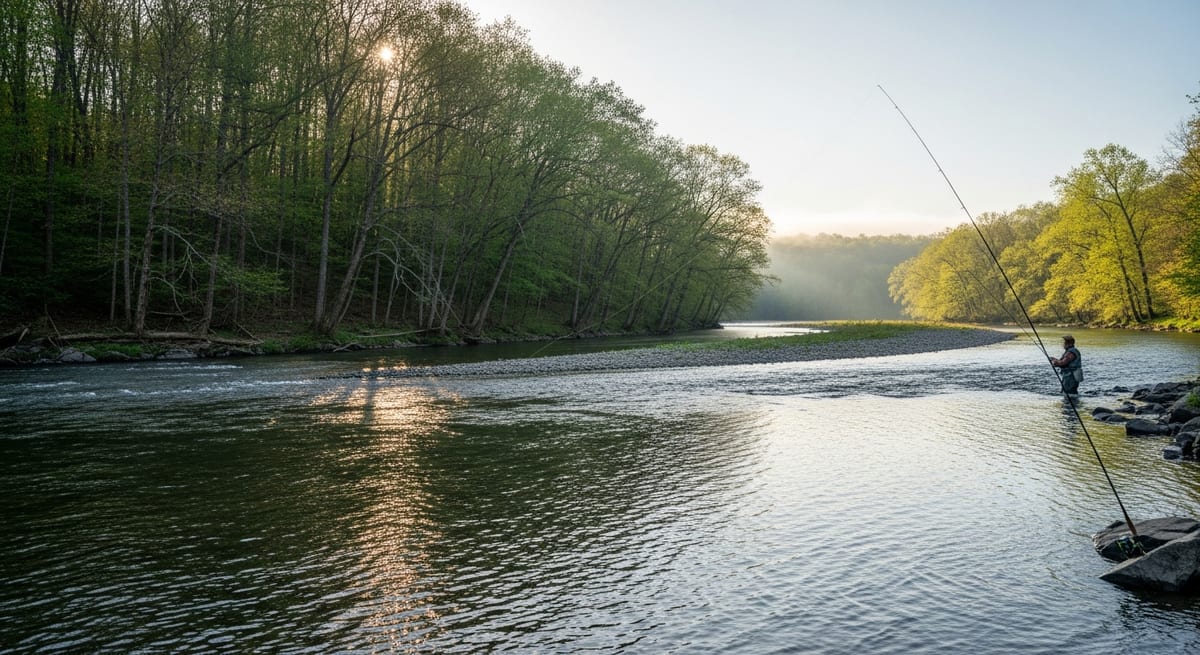
Anglers who return to the Farmington or Willimantic two weeks after opening weekend, expecting to fish the same pools in the same way, consistently report it doesn't work. The fish have moved, the presentations that produced on day one draw nothing by week two, and the anglers who already adjusted tactics have productive stretches to themselves. CT DEEP stocks hundreds of thousands of trout each spring, including rainbow, brown, and brook trout distributed unevenly across water types and stocking runs, across rivers, streams, reservoirs, and town ponds from the Farmington Valley to the Quiet Corner. Community reports from Farmington regulars, Salmon River drift anglers, and town-pond kayak fishers across spring 2025 describe the same pattern: understanding which phase the fish are in before the trip starts is the variable most anglers overlook.
How Regulars Actually Use the DEEP Stocking Reports
CT DEEP publishes the stocking schedule at ct.gov/deep under Inland Fisheries. The primary spring run begins in late March or early April, with multiple stocking waves continuing through May. Many waters are stocked more than once across the season. The DEEP Fisheries Division maintains a stocking report page showing activity within the past seven days at ct.gov/deep, then Fisheries, then Freshwater, then Trout Stocking Reports.
The pattern CT trout regulars describe is to check both the DEEP schedule and local bait shop intelligence together. Shops near high-traffic waters, including those near the Farmington Valley corridor and the Willimantic River stretch around Windham, often have same-day information because anglers call in from the water. The DEEP page may lag the truck by a day or two. Checking both sources narrows the timing window and gives a clearer read on whether the fish you're targeting are fresh or have been in the water long enough to warrant a different approach.
The First 48 Hours: What Fresh-Stocked Trout Behavior Looks Like
Trout raised in DEEP hatchery raceways are conditioned to surface feeding at consistent intervals. In the first 24 to 72 hours after stocking, they have not yet learned to associate bank presence with danger. CT trout communities consistently describe this as the most productive window for fish counts, with the Farmington between New Hartford and Canton and the Salmon River below the East Hampton bridge seeing the heaviest opening-period activity.
Anglers who fish this phase report that proximity to the stocking access point is the primary variable. DEEP trucks use established road-accessible points that regulars identify quickly, and the fish do not travel far in the first 24 hours. Floating bait, particularly Berkley PowerBait in chartreuse, yellow, or pink, produces reliably because it resembles the hatchery pellet profile the fish are still conditioned to respond to.
Small inline spinners, Mepps size 0 or 1 and Panther Martin equivalents, also draw consistent strikes in the first two days. Crowds at popular Farmington and Salmon River access points peak in the first 48 hours and thin significantly by day three or four.
Two Weeks In: How Held-Over Fish Behave Differently on CT Rivers
Trout that remain in river systems for two to four weeks develop avoidance patterns that parallel wild fish behavior. Per community reports from Farmington TMA boundary anglers and Willimantic River regulars as of spring 2025, held-over fish redistribute away from the original stocking pool, move to edge structure including cut banks, boulders, and deeper current seams, and transition to feeding on whatever natural food the water offers.
The tactical shift that CT river regulars describe consistently: PowerBait draws few strikes after the first week. Small nightcrawlers fished under a lightweight bobber or drifted naturally on a size 8 or 10 baitholder hook become the reliable option. Minnow-style soft plastics, including Zoom Trout Trick and light-colored Roboworms, produce on fish that have shifted to targeting smaller forage.
Anglers who fly fish the Farmington below New Hartford report that held-over fish respond to nymph presentations, particularly during the March Brown and caddis hatches in late April and early May. Inline spinners remain effective but, per the same community reports, work better downsized to size 0 and fished slower in water below 50 degrees.
Farmington, Salmon River, Willimantic, and the Waters CT Communities Return To
The Farmington River corridor between New Hartford and Collinsville draws the highest stocking-season attention in the state. Regulars describe the stretch below the Canton line as the most consistent producer, with stocking typically covering multiple access points across the spring season. The Salmon River below the Salmon Creek confluence in East Hampton produces reliable brown and rainbow action through May. The Willimantic River sees considerably less pressure than the Farmington, gets regular stocking, and offers better odds of finding less-pressured fish deeper into April.
On the Housatonic, lower sections receive stocking and differ significantly from the Trout Management Area water upstream, which is managed as wild-fish water under artificial-only, catch-and-release regulations. Anglers new to the Housatonic have reported regulatory confusion at the TMA boundary, which is marked but easy to misread from the bank. EnCon enforcement concentrates at TMA boundary access points during the spring season, a pattern described in Housatonic-area fishing community threads.
On still water, Mashapaug Lake in Union, Gardner Lake in Salem, Lake Zoar, and Crystal Lake receive spring stocking and, per DEEP stocking history, can hold trout into early summer as temperatures allow. Smaller ponds on the full DEEP stocking list often receive comparable fish counts with a fraction of the river pressure and are worth identifying before the season starts.
Terminal Tackle Across Both Phases: What CT Communities Run
The setup that works across both the fresh-stocked and held-over phases is an ultralight to light spinning rod in the 5.5 to 7 foot range paired with a small spinning reel, Shimano Sienna, Pflueger Trion, or equivalent, spooled with 4 to 6 pound monofilament. Anglers fishing rivers with structure also run 6 to 8 pound braid to a 4 to 6 pound fluorocarbon leader for better sensitivity in current.
For PowerBait rigs in the fresh-stocked phase: a size 14 or 16 treble hook with a small split shot and no additional weight. PowerBait floats, and suspending it 12 to 18 inches below a bobber or on a sliding sinker rig that lets the bait rise off bottom is the standard setup. For nightcrawlers in current during the held-over phase: size 8 to 10 baitholder hook, one to two small split shot, natural drift without added tension. For spinners across both windows: size 0 to 2 Mepps, Panther Martin, or Rooster Tail, kept moving throughout the retrieve.
DEEP 2025-2026 Regulations: Creel Limits, Heritage Waters, and the Rules CT Anglers Most Often Miss
Standard CT trout regulations for most stocked waters: 8-inch minimum size, 5-fish daily creel limit during the regular trout season. Heritage Trout Waters carry stricter rules, typically artificial-only and catch-and-release. The Farmington TMA section operates under regulations that differ from stocked water upstream and downstream. Farmington regulars consistently note seeing anglers fish bait inside the TMA boundary during the spring season, a common source of enforcement contact.
The regular CT trout season runs from the first Saturday in April through February, with some waters designated year-round. Opening weekend draws significant pressure at the Farmington and Salmon River access points, with crowds thinning noticeably by the second week of April. A Connecticut fishing license is required for all anglers 16 and older.
The current CT Fishing Guide, available from DEEP, is the authoritative source for water-specific regulations, as rules vary by stretch and change between seasons. Checking the guide before fishing a new water is the step most opening-week anglers skip.
EVERY SATURDAY MORNING
Weekly fishing intelligence
Nationwide conditions, what's biting, and honest gear deals. One email, no noise.
No spam. Unsubscribe anytime.