
Atlantic Bonito in Connecticut: The Fall Run Species Most Anglers Miss
Atlantic bonito are one of the best-eating fish on the Northeast coast, firmer and cleaner than bluefish, closer to tuna, yet most anglers who catch them off Connecticut toss them back thinking they've hooked an inedible false albacore. The two species run together in the same fall blitzes from roughly late August through October, fight with comparable speed and power, and take many of the same lures. Bonito are generally more willing to hit natural bait and a wider range of presentations than albies, and unlike false albacore, they're worth keeping for the table. If you're already fishing the CT fall run, you're almost certainly fishing around bonito. You just may not know it yet.
Bonito vs False Albacore: How to Tell Them Apart
From a distance, in the heat of a blitz, bonito and false albacore look nearly identical. Up close, the differences are clear:
Atlantic Bonito:
- Belly is silver-white with no markings
- Dark diagonal stripes run obliquely from the back toward the belly, not horizontally
- Noticeably toothier jaw, run your thumb along the lip and you'll feel the difference
- More streamlined, torpedo-shaped body
- Excellent eating, firm, dark red meat similar to skipjack tuna
False Albacore:
- Belly typically shows dark wavy markings, fingerprint-like spots behind the pectoral fin
- Stripes on the back tend to run more horizontally than the bonito's diagonal pattern
- Smoother jaw, finer teeth
- Generally considered poor table fare, very oily, strong flavor. Most anglers release them
Why it matters: False albacore are notoriously finicky. Bonito are more willing to eat a wider range of presentations, including natural bait. If fish are blowing up on a chunk bait or sand eel but refusing your lure, there's a good chance you're looking at bonito rather than albies.
When and Where to Find Bonito in Connecticut
Timing: Atlantic bonito typically arrive in CT waters in late August and peak through September into early October. They follow the same baitfish corridors as false albacore, sand eels, silversides, juvenile menhaden, and bay anchovies are the primary forage. Water temps in the upper 60s to low 70s°F tend to hold them in the Sound; they generally push offshore as October cools and the bait thins out.
Where: The same locations that produce false albacore often produce bonito. The two species commonly run together in mixed blitzes.
- Montauk to the Race (eastern Sound): The current-swept Race and the rips off Fishers Island concentrate bait at the funnel where the Sound meets the Atlantic. Both bonito and albies stack up here on the stronger tidal flows.
- Eastern CT coast: Watch Point, Stonington, Mystic, and the Niantic Bay area. Rocky points and rips on an outgoing tide are the classic setup.
- Watch Hill Passage: The stretch around Watch Hill RI and Napatree Point on the CT/RI border produces bonito and albies consistently through the fall run.
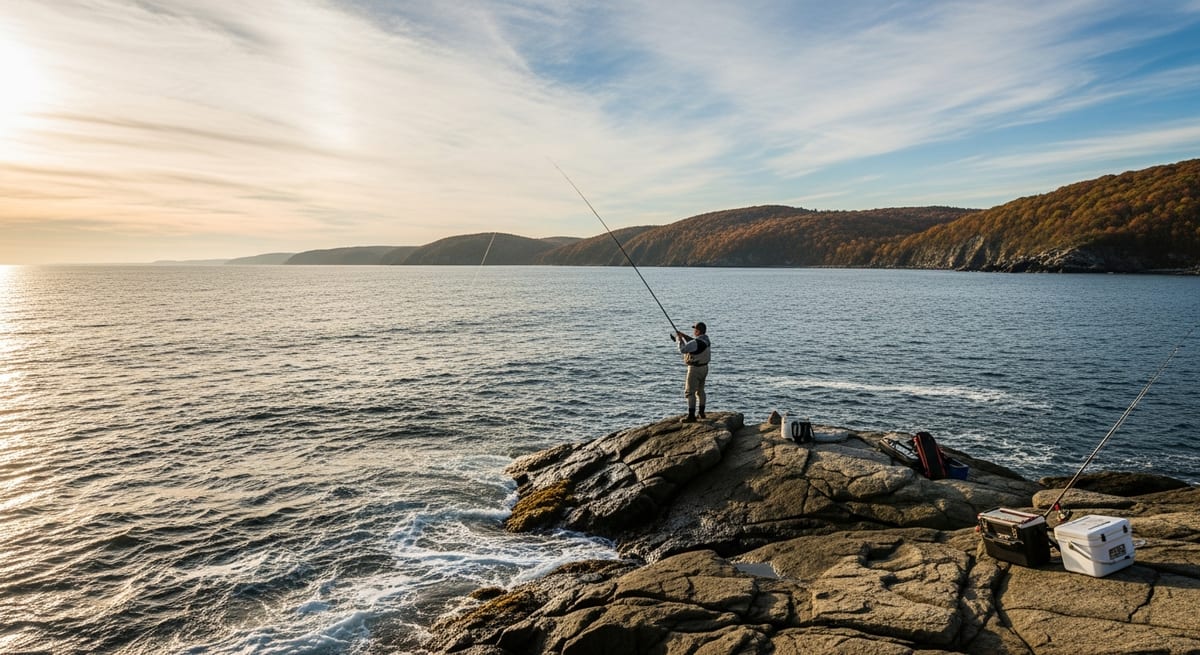
- From shore: Lighthouse points, rocky headlands, and jetties along the eastern CT coast are reachable on foot. Bonito will come within casting range when actively feeding close to the surface.
How to Catch Bonito
Casting to surface activity: When bonito are blitzing, which is how you'll usually find them. The approach mirrors false albacore: small metal jigs, soft plastic swimbaits, or epoxy jigs sized to match the local baitfish. Many CT anglers find jigs in the 1-2 oz range and soft plastics around 3-4 inches on a 1/2-3/4 oz jig head cover most situations, though matching the size of the forage matters more than hitting exact specs. Cast ahead of the moving fish, let the jig sink 2-3 seconds, and retrieve fast. Bonito are generally less finicky about retrieve speed than false albacore. A moderately fast straight retrieve often produces when albies are demanding something more precise.
Bait fishing (bonito advantage): Unlike false albacore, bonito will eat natural bait. A live or freshly dead sand eel, silverside, or small squid strip on a size 1-1/0 hook, lightly weighted, cast into the edge of a blitz is very effective. Bonito will also take a whole squid chunk jigged vertically below the boat when fish are present but not actively feeding on the surface.
Trolling: Small diving plugs. The Yo-Zuri Crystal Minnow and Rapala X-Rap are consistent producers, and daisy chain rigs trolled at 6-8 mph through bait marks will raise bonito even when there's no visible surface activity.
Tackle: A light to medium spinning setup works well. Many CT bonito anglers run a 7-foot medium rod paired with a 3000-4000 reel, 20 lb braid, and a 25-30 lb fluorocarbon leader. Bonito can push past 10 pounds and make blistering first runs, so a smooth drag matters. They're not as leader-shy as false albacore, but heavy monofilament will cost you strikes.
Eating Atlantic Bonito
Atlantic bonito are one of the better-eating pelagic fish available to CT boat and shore anglers. Most of the fish that get released as "albies" during the fall run are actually bonito, and bonito are genuinely worth keeping.
Field care matters: Bleed bonito immediately if you plan to keep them, cut to the gills and drop them straight into cold water. Bonito deteriorate fast without proper handling. Ice them down right away and keep them cold until you're ready to cook.
Preparation: Bonito meat is dark red and firm, closer to tuna than a typical "white fish." Eat it fresh:
- Seared: Slice into 1-inch medallions, season with salt and pepper, sear hard in a cast iron skillet with butter and garlic for about 90 seconds per side. Serve medium-rare. It's genuinely excellent.
- Raw (sashimi/poke): Very fresh bonito is outstanding raw, comparable to skipjack tuna in a good sushi preparation.
- Grilled fillets: Marinated in olive oil, lemon, and herbs and grilled over high heat. Pull it at medium-rare, don't overcook.
Regulations: Check current CT DEEP and ASMFC regulations for Atlantic bonito bag limits before keeping fish, rules can change from season to season.
Atlantic bonito don't get the credit they deserve on the Connecticut coast. Learn the ID, bleed them quick, and keep a few. They're as good as anything else running through the Sound in fall.
EVERY SATURDAY MORNING
Weekly fishing intelligence
Nationwide conditions, what's biting, and honest gear deals. One email, no noise.
No spam. Unsubscribe anytime.