
Weakfish in Connecticut: The Comeback Story and How to Catch Them
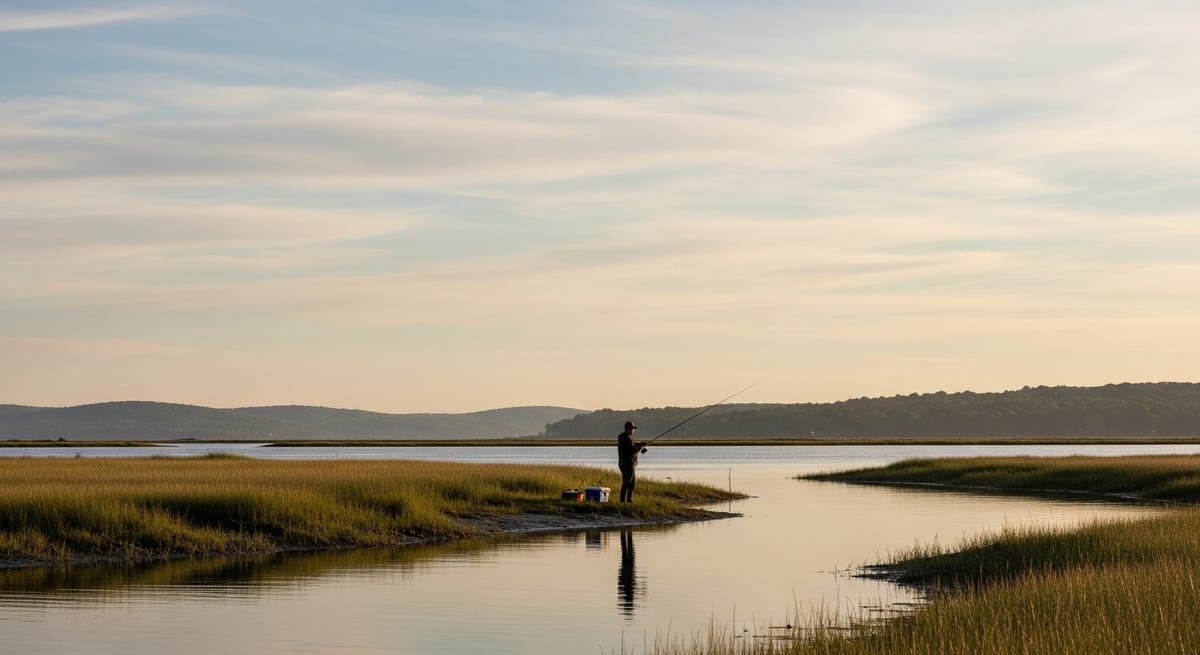
A dock light in Niantic Bay used to produce a dozen weakfish in a single summer night. The kind of fishing that made CT anglers forget striped bass existed. Then the bottom fell out. Weakfish, also called sea trout, grey trout, or tiderunners, were a cornerstone of Connecticut's saltwater fishery through the 1980s and early 1990s, with 8-12 pound fish caught regularly throughout Long Island Sound. They were largely gone from CT waters for two decades. Now they're showing up again, cautiously, in small numbers, and anglers who know what to look for are catching them.
Weakfish Status in Connecticut
The weakfish collapse was severe. The ASMFC documented a population decline of more than 80% from peak levels, one of the steeper collapses in recent Atlantic coast history. Nobody agrees on the exact cause: overfishing, spiny dogfish predation on juveniles, and changes in menhaden availability have all been cited. Whatever the combination, management has been tight for years.
Current situation (2026): Weakfish populations remain well below historical levels, but the ASMFC has documented modest signs of recovery in recent stock assessments. Anglers in CT are reporting weakfish in bycatch and targeted catches more often than in the 2010s. Catching one is still noteworthy, but dedicated anglers are finding fish.
Best bets for CT: The eastern Sound has always been more productive weakfish territory. The Niantic River mouth and Niantic Bay are the most consistent spots in the state, tidal creek access, good depth nearby, and a history of fish. The Thames River from Norwich down through New London is worth running in June and July. On the western end, the lower Housatonic around Devon and Stratford holds weakfish in estuarine conditions when fish push into the Sound. The Mystic and Stonington areas round out the short list.
Habitat and Behavior
Weakfish work the edges, river mouths, tidal creek drop-offs, current seams near deeper channels. They're not open-water fish. Think about where a predator would ambush shrimp on a falling tide and you're thinking like a weakfish.
Water temperature: Weakfish favor water in approximately the 60-75°F range. They typically arrive in CT in late May or early June as the Sound warms, later than striped bass, and most fish are gone before October as temperatures drop.
Feeding: They eat shrimp, crabs, squid, and small baitfish. In estuaries, grass shrimp and sand shrimp are the staple. Out in the Sound, they mix with striper schools and nail baitfish at night, bunker, silversides, whatever's running.
Night fishing: This is how you find them in CT right now. Under lights at docks and bridges, weakfish gather to feed on baitfish drawn to the glow. It concentrates fish in predictable spots, which matters when numbers are low.
How to Catch Weakfish in CT
Under lights at night: The most reliable technique in CT currently. The Niantic River bridge area, lit docks along the Thames in New London, and the marina lights at the Mystic River mouth have all produced fish after dark. Work a lightly weighted jig: 1/4 oz, white or chartreuse, with a soft plastic shrimp or paddle tail body, slowly through the boundary where light meets dark. Many CT anglers find this the most consistent approach when fish numbers are low.
Flounder, bass, and blues will also show up, so you might not catch what you came for, but you'll usually catch something.
Soft plastic jigs on sandy/muddy bottom: A 3-inch shrimp-pattern soft plastic on a 1/4-3/8 oz jig head, worked slowly along the bottom in tidal creeks and estuaries. The lower Niantic River, the Housatonic flats near Devon, and the creek mouths around Stonington are all worth a slow drift. Dead-slow retrieves, long pauses, occasional hops. Weakfish often just sip the lure. The bite is subtle and easy to miss on heavier gear.
Shrimp bait fishing: Fresh or live grass shrimp on a size 2 bait hook, lightly weighted or fished under a float in tidal creeks. This is the most traditional weakfish method and still produces in the lower Niantic River and the tidal sections of the Mystic River when fish are present.
Bucktail jig: A 1/4-1/2 oz white or yellow bucktail fished slowly near the bottom in tidal channels. One of the oldest weakfish presentations and still effective.
Tackle: Light spinning gear: 7-foot medium-light rod, 2500-3000 reel, 10 lb braid with a 15 lb fluorocarbon leader. Weakfish have soft mouths (hence the name), set the hook firmly but don't horse them. They'll tear off if you apply too much pressure.
Regulations
Connecticut weakfish regulations reflect the conservation status of the species. As of 2026:
- Minimum size: Check current CT DEEP Marine Fisheries regulations before heading out, size limits have typically run 13-16 inches minimum in recent years
- Bag limit: Historically very restrictive, often 1 fish per day or fewer, verify current limits before fishing
- Season: Check for any seasonal closures before your trip
Given where the stock stands, catch-and-release is strongly encouraged for any weakfish caught in CT. These fish are part of a rebuilding population and releasing them matters. The ASMFC updates weakfish management annually. Current CT regulations are available at ct.gov/deep under marine fisheries, verify before you go, because the rules change.
EVERY SATURDAY MORNING
Weekly fishing intelligence
Nationwide conditions, what's biting, and honest gear deals. One email, no noise.
No spam. Unsubscribe anytime.