
Most CT Bass Anglers Treat the Connecticut River Like One Fishery. It's Actually Three.
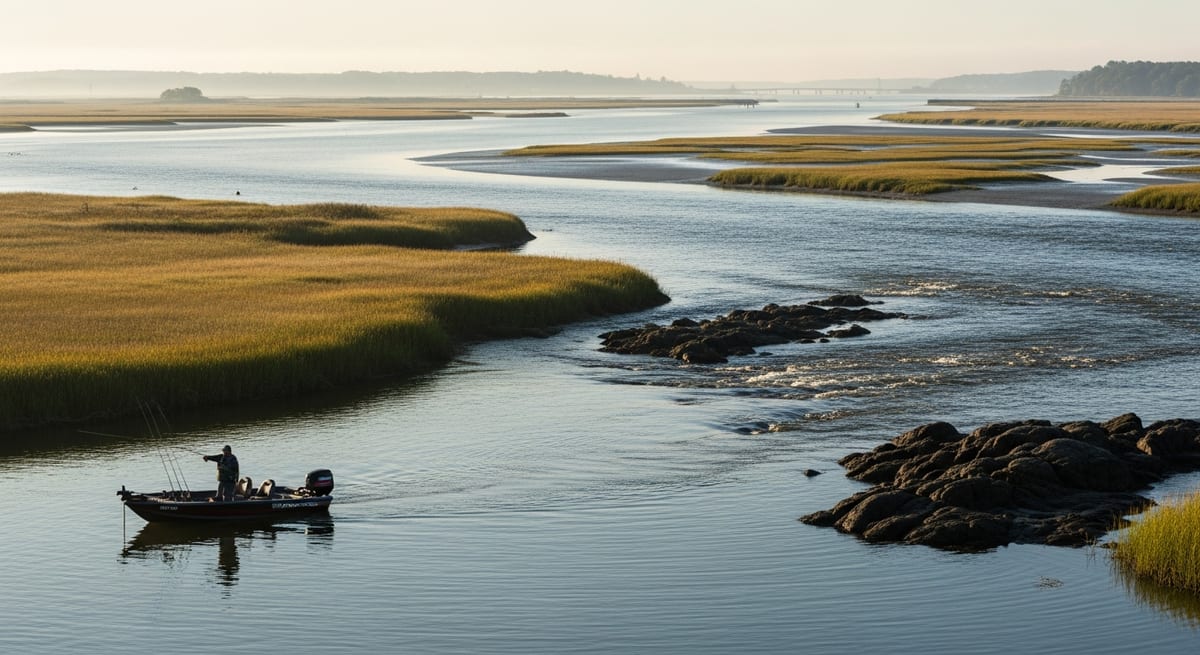
A common first mistake on the Connecticut River is throwing smallmouth rigs into slow backwater that holds largemouth, on the assumption that the whole river fishes the same. That approach can burn a full morning and send you home with nothing to show for it. The Connecticut is essentially three rivers layered on top of each other. The upper stretch above Hartford is classic rocky-run smallmouth water, current, boulders, eddy lines. The middle reach from Hartford down to Middletown slows and spreads into oxbow lakes and backwater coves that hold some of the better largemouth fishing in the state. Below East Haddam, the river goes tidal and the whole game changes again: marshes, current-dependent feeding windows, stripers pushing in come fall. The river runs approximately 60-plus miles through Connecticut, from the Massachusetts border near Suffield to Long Island Sound at Old Saybrook. The options range from wading the rocky tailwater below Enfield to kayaking the lily pad coves around Wethersfield and drifting the tidal marshes near Essex. Fish one section expecting another and you'll come home empty. Fish the right stretch with the right approach and the Connecticut River is one of the most productive bass fisheries in southern New England, and still surprisingly underfished.
Upper River: Rocky Runs, Hard Current, and Smallmouth That Punish Bad Presentations
The reach from the Enfield Dam downstream through Windsor and Hartford is the place to start for Connecticut River smallmouth. It's the section most CT bass anglers know exists but few fish seriously, which is your advantage.
What you're looking for: Rocky runs, gravel bars, mid-river boulders, and the eddy lines that form behind bridge piers. Unlike the slow middle river, this section has moving water. The kind of current smallmouth actively prefer. When water temps climb into the mid-60s in May, fish push from the main channel into these shallower runs and hold there through August.
Spots worth hitting:
- Enfield Dam tailwater: Concentrated fish below the dam structure, especially early season. On a good morning the downstream side of the spillway edges can produce fish on nearly every cast, best before the boat traffic picks up.
- Windsor Locks and Windsor area: Rocky shallows and mid-river gravel bars hold fish all warm season. Windsor Locks Canal area gives you bank options if you don't have a boat.
- Hartford riverfront: Don't overlook this stretch. Bridge abutments, concrete bulkheads, and rip-rap edges through the urban Hartford reach hold solid smallmouth that see less pressure than you'd expect. Riverside Park has accessible bank water.
What works: Tube jigs and Ned rigs worked slowly on and around rock are the go-to presentations. A 3-inch Berkley MaxScent Flat Worm on a 3/16 oz Ned head in green pumpkin has been reliable in clear conditions. Small crankbaits along current seams produce well; Strike King KVD 1.5 and Rapala DT-4 in crawdad patterns are worth having. In-line spinners (1/4-3/8 oz) let you cover water quickly when you're searching a new stretch.
What to expect on size: Upper CT River smallmouth tend to run in the 10-14 inch range, consistent numbers, and you'll occasionally connect with a fish pushing 17 inches or better, but this stretch rewards anglers who like catching fish rather than waiting on a trophy.
The Backwater Stretch: Where the Largemouth Are Actually Hiding (Hartford to Middletown)
From Hartford south to Middletown, the river slows and spreads. This is where the Connecticut River develops the oxbow lakes and backwater areas that hold largemouth fishing that would impress anglers from anywhere in New England, and most CT bass anglers either don't know it's there or haven't figured out how to access it properly.
Wethersfield Cove: A large backwater off the main channel with extensive weed beds, lily pad fields, and shallow cove structure. Largemouth hold here from late May through September. The pad-field edges in the cove can have fish stacked by mid-July. Many anglers motor straight past the cove entrance on their way to somewhere else. Kayak or canoe is ideal for the shallow pad fields. You'll spook fish with a big motor in here.
Portland and Middlesex area: The river widens through this section and the backwater channels along the east bank carry largemouth in lily pad fields and emergent vegetation. Underfished, partly because it's less obvious from a ramp map and partly because the best water takes some scouting. Portland Boat Launch puts you close.
Salmon Cove (East Haddam): Around the Salmon River confluence, you get protected cove fishing with deep water just adjacent. The combination that holds fish in multiple conditions. The cove can produce largemouth on overcast mornings when the main river is dirty from rain, because it clears faster.
What works here: Frog fishing over thick vegetation is the most productive and most fun way to fish this stretch. A Spro Bronzeye Pop 60 worked through the pads in low light is hard to beat in July and August. Flipping a 1 oz Texas rig (Zoom Speed Craw, 4/0 hook) to mat edges covers the midday period when fish push under cover. For the deeper structure along the main channel, swim jigs and swimbait rigs worked along wood and dock edges round out the approach.
Tidal Section: A Completely Different Game Below the Goodspeed
Below the Goodspeed Opera House in East Haddam the Connecticut River becomes tidal, and the fishery changes in ways that catch anglers off guard. It's easy to overlook this section, but it can be one of the best stretches on the river from late summer into fall.
Largemouth in tidal marshes: The lower river's extensive tidal marshes, roughly the bottom 15 miles, protected under the CT River Gateway, hold largemouth in the side channels and marsh grass edges. These fish respond to tidal movement in ways that upriver fish don't. Incoming tide is generally the more productive feeding window: baitfish push in with the current, ambush points activate, and largemouth that were sitting in deeper channels move up to feed.
Essex and Deep River area: A broad tidal section where deep channels run alongside shallow marsh grass edges. Kayak or small boat fishing along the grass edges with soft plastic frogs or buzzbaits produces largemouth from June through September. Late-summer mornings are a good time to work the grass line by kayak before the wind comes up.
Stripers in the lower river: The tidal section sees striped bass pushing into the freshwater zone during the fall migration, in most years late September through October, though timing shifts with water temperature and year-to-year conditions. Boat or kayak access anywhere in the lower 15 miles can put you on stripers on river lures when the run is on. It catches anglers off guard the first time they land a 28-inch striper on a bass jig.
Regulation note, read this before you go: The lower CT River's tidal portion is covered by saltwater fishing regulations, not freshwater. The CT DEEP website specifies the tidal demarcation points, check before fishing the lower stretch, especially if you're targeting the transition zone where the boundary isn't obvious from shore.
Getting On the Water: Launches, Bank Access, and Kayak Notes
Boat launches (north to south):
- King Street launch near Enfield Dam, upper river smallmouth access
- Windsor Locks Canal area, multiple access points on the upper stretch
- Glastonbury Boat Launch, mid-river largemouth territory
- Portland Boat Launch, backwater access to east-bank channels
- Middletown Boat Launch, central river access
- Essex boat ramp, tidal section entry point
Bank fishing:
- Enfield Dam Park, rocky tailwater access, most productive in early season
- Riverside Park, Hartford, urban bank water with decent mid-river reach
- Haddam Meadows State Park, one of the better bank fishing setups on the whole river, with launch facilities alongside
- Salmon Cove area (East Haddam), small launch and fishable bank
Kayak notes: The Connecticut River is genuinely one of the better kayak-bass rivers in the state. The middle reach from Wethersfield through Portland is ideal, relatively flat, multiple launch options, and the backwater coves you most want to fish are best approached quietly by paddle anyway. The tidal lower section requires awareness of boat traffic and current direction; check the tide window before you put in below Goodspeed.
Licenses: Standard CT freshwater license covers the non-tidal portion. Below the tidal demarcation you need a CT marine (saltwater) license, or a combination license. Confirm the exact demarcation for your specific access point on the CT DEEP site. It's not always where you'd guess looking at a map.
EVERY SATURDAY MORNING
Weekly fishing intelligence
Nationwide conditions, what's biting, and honest gear deals. One email, no noise.
No spam. Unsubscribe anytime.