
After Dark Is When CT Summer Largemouth Actually Feed. Night Sessions on Candlewood and Bantam Produce What Midday Trips Don't.
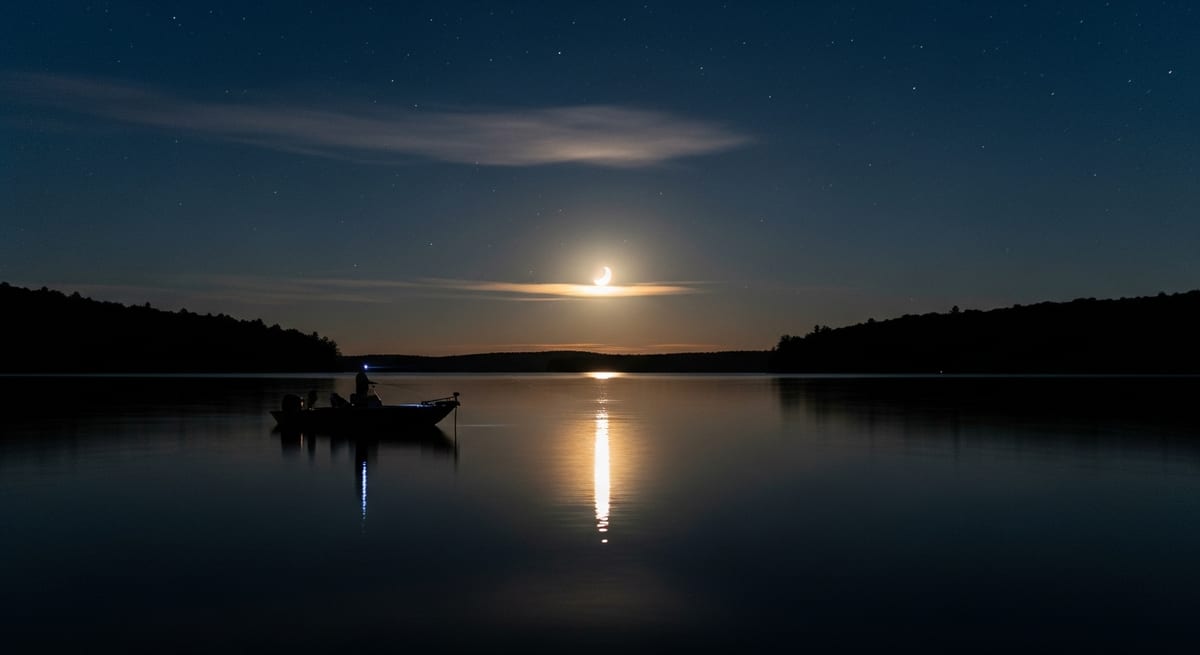
Anglers running summer bass sessions on Lake Candlewood and Bantam Lake have noted the same pattern for years: the shallow coves that go nearly dead by 10 AM in July come alive again after 9 PM. Bass that spent the day suspended in deeper water or tucked tight under dock floats move back into feeding range after sunset, and the fish that were frustratingly absent or short-striking during afternoon hours are often the same fish showing up aggressively on topwater after dark. This isn't a fringe tactic. The CT bass angling community has been running night sessions on Lillinonah's northeastern coves and along the weed edges on Bantam Lake's western bank for decades. The daytime dead period in peak summer heat is real. So is the nighttime window, and the shift happens on a schedule worth knowing.
The Temperature Shift That Moves CT Bass Shallow
Summer bass behavior follows water temperature closely. Once surface temps push into the upper 70s, which happens routinely on shallower Connecticut lakes like Coventry Lake and Winchester Lake through July and August. Bass tend to pull off shallow feeding areas during peak heat hours and suspend in deeper water or hold tight to shade cover.
After dark, surface temperatures on these bodies of water often drop, though the degree varies by lake, wind exposure, and overnight air temps. The cooling alone may not be the primary trigger: anglers fishing CT lakes during summer night sessions report that action picks up well before any measurable temperature change. The reduction in light appears to be the key factor. Bass use low-light conditions to move shallow and feed with less exposure.
Prey behavior matters equally. Bluegill, frogs, and crayfish shift into the shallows after dark to feed on insects and aquatic life. Bass follow the food into water that was too exposed during daylight, and on CT lakes where boat traffic and recreational pressure peak through the afternoon, the absence of that pressure after dark appears to be an additional factor in the evening bite.
The Short Lure List CT Night Anglers Have Settled On
Night fishing lure selection prioritizes sound, vibration, and silhouette over color, in darkness, color is largely irrelevant. The lures CT bass anglers fishing after-dark sessions consistently return to:
Buzzbait: On a slow, steady retrieve along shoreline structure, the buzzbait gives bass an acoustic target they can track and intercept. Anglers fishing the dock lines on Candlewood's north arm report that single-blade Colorado models in black or dark brown, which cast a larger silhouette against ambient moonlight, outperform flashier finishes on calm nights. Work it steadily, parallel to banks. Resist setting the hook until you feel the fish, surface strikes look explosive, but many are misses until the bass turns down.
Spinnerbait: A 3/8-1/2 oz slow-rolled spinnerbait with Colorado blades produces vibration that bass can detect with their lateral lines in complete darkness. CT anglers who fish structure-heavy water, submerged timber on Lillinonah, dock pilings on Candlewood, favor this presentation retrieved just above the bottom at a deliberate pace.
Black plastic worm (Texas rig): A 10-inch black ribbon-tail worm on a 3/0 hook with a 1/4 oz bullet weight, worked slowly along the bottom near laydowns and dock pilings. Black seems counterintuitive in darkness, but it produces the darkest silhouette against any sky glow or moonlight, and the worm's wriggling tail displaces water that bass can detect.
Large swimbaits (4-6 inch): Dark-colored paddle tails on a slow, steady retrieve. The consistent thump is detectable in darkness and has accounted for some of the larger bass reported out of CT night sessions in recent seasons.
Fish Water You Already Know in the Dark
The biggest barrier for anglers new to night fishing isn't lure selection. It's navigating water they don't know well enough to fish confidently once the light is gone. The consistent advice from CT bass anglers who've made night sessions a regular part of their summer rotation: fish water you've already run in daylight first.
The structure that holds bass during dawn and dusk applies at night on Connecticut lakes, but you need to know where it is before dark. Shoreline points, dock lines, laydowns within casting distance of the bank, weed edges along the shore. These are all high-percentage night targets on Bantam Lake, Lake Pocotopaug, and the coves along Lillinonah. Kayak anglers who fish Coventry Lake at night recommend a full daylight scouting run on new water, noting obstructions and shallow hazards before the first night session.
Light sources: Dim red or green headlamps preserve night vision better than white light and reduce surface disturbance near the boat. Many CT anglers who fish night sessions regularly use no artificial light at all after their eyes adjust, relying on ambient moonlight and familiarity with the water.
Moon phase: Full moon nights provide enough ambient light for navigation and can increase topwater surface activity. New moon nights are darker. The consensus among CT night bass anglers is that this produces more aggressive feeding behavior on average, though the pattern varies by lake and conditions.
What USCG and CT DEEP Require After Sunset
Night fishing safety on a boat or from shore requires attention to both regulation and basic preparation.
Navigation lights: Under USCG federal regulations (33 CFR Part 83), powered watercraft are required to display navigation lights from sunset to sunrise. Connecticut follows these federal standards under state boating law, cT DEEP's boating regulations page (ct.gov/deep/boating) has current requirements by vessel type, including what applies to smaller powered craft and non-motorized vessels. Verify current rules for your specific vessel before your first night trip, as requirements vary by boat class.
Know your exit: Anglers who regularly run Candlewood and Lillinonah after dark recommend pre-running the launch ramp route during daylight whenever it's a new body of water. Know the hazards on your route and carry a charged phone with GPS navigation. Being on unfamiliar water at 2 AM is a materially different situation than noon on the same lake.
Wear your PFD: Nighttime falls overboard are more dangerous than daytime, response time is slower and visibility is limited for anyone on board. CT DEEP recommends wearing a life jacket after dark, particularly for solo anglers from shore or kayak where there is no one immediately present to assist.
Let someone know your plan: Before any night session, tell someone your planned location and expected return time, whether you're launching at a public ramp on Bantam Lake or wading a familiar shoreline. Response to an unreported overdue angler takes longer at night than during daylight hours.
EVERY SATURDAY MORNING
Weekly fishing intelligence
Nationwide conditions, what's biting, and honest gear deals. One email, no noise.
No spam. Unsubscribe anytime.