
CT Bass Anglers on Bantam and Candlewood Report the Pre-Spawn Window Outproduces Bed Season for Weight. What Impoundment Communities, DEEP Regulation Schedules, and Spring Water Temperature Data Reveal About Largemouth Through All Three Phases
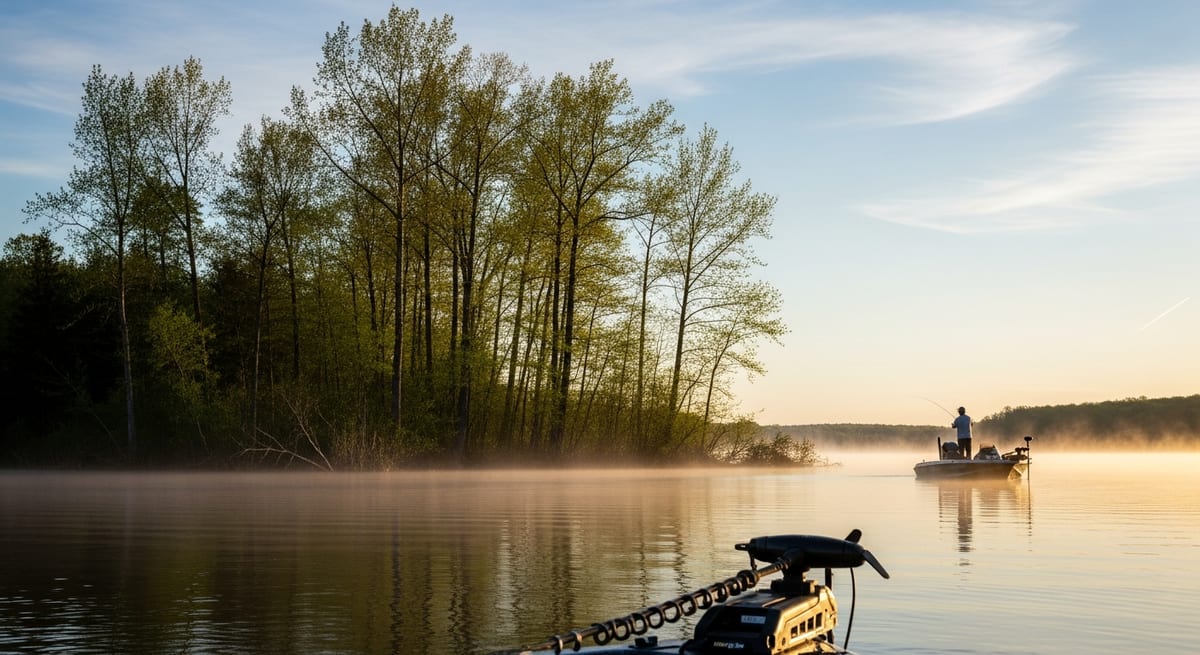
Anglers who fish Connecticut impoundments in late April consistently report the same thing: the pre-spawn window closes faster on shallow town ponds than on deeper impoundments like Candlewood or Bantam Lake, and missing that timing gap explains a lot of slow May days. The spring bass season moves through three distinct phases, and CT communities who track water temperatures closely are generally targeting very different structure and presentations at each one.
How CT Impoundment Bass Stage Before the Spawn: What Bantam and Candlewood Regulars Report
Pre-spawn activity typically begins when water temperatures reach 48-55°F, often late March to mid-April on shallow southern CT ponds and a week or two later on deeper bodies like Candlewood Lake or Bantam Lake. Anglers who fish these impoundments regularly note that staging behavior is consistent across water types: bass move from deep winter structure toward shallow flats but hold near the first significant depth change, staging on main lake points with access to both deep water and nearby spawning bays.
The consensus among CT impoundment communities is that staging fish at this phase are feeding aggressively, building condition before the spawn. Presentations that produce during this window, based on what Bantam and Candlewood regulars report: jerkbaits fished slowly with long pauses when water is below 52°F, paddle tails or swimbaits on jig heads as temperatures approach 55°F, and squarebill crankbaits once the water clears 52-55°F. Finesse presentations cover slow-bite days, with a shaky head and straight-tail worm worked along depth-change transitions.
The 52-60°F range is consistently described as the most productive pre-spawn period on CT impoundments. Anglers who track their seasonal logs note that trophy largemouth are more reliably caught during pre-spawn staging than at any other point in the spring cycle, a pattern consistent with multiple seasons of CT bass tournament weigh-in reports.
Bed Fishing CT Waters: DEEP Regulations, Gravel Points, and When to Leave a Nest Alone
Spawning on CT waters typically kicks off when surface temperatures stabilize in the 60-72°F range, generally late April on shallow dark-bottomed ponds and late May on deeper impoundments in a typical year. Bass build beds on hard bottom in 1-6 feet of water, favoring gravel and sand flats near cover like dock pilings, submerged timber, or laydowns. Glasgo Pond, Pachaug Pond, and the shallower coves of Bantam Lake are among the first waters where CT anglers report visible bed activity each spring.
Sight fishing tactics are consistent across CT communities, though patience separates productive days from frustrating ones. Polarized sunglasses are essential: beds appear as light-colored circles on the bottom where bass have fanned away silt, and in clear water they are often visible from 3-5 feet under the right light angle. The standard approach described by CT sight-fishing communities is to cast past the bed, drag a creature bait, tube jig, or ned rig onto it, and leave it. Buck bass typically react faster; hens often require 20-30 presentations before committing.
CT DEEP sets a 12-inch minimum size limit for largemouth bass on most impoundments statewide. Candlewood Lake carries additional special regulations, so checking DEEP's current Connecticut Anglers' Guide before fishing there is the standard recommendation from anglers familiar with those rules. CT bass forum communities consistently note that quickly releasing spawning fish reduces nest abandonment and egg predation compared to prolonged handling.
The Post-Spawn Window CT Anglers Underrate: Female Recovery and Male Fry-Guard Fishing
Post-spawn is routinely described by CT bass communities as the most underrated window of the spring season. Females recover in slightly deeper water adjacent to spawning areas, typically moving to the first major depth change off the spawning flat. At this stage they respond best to slower presentations: Carolina rigs, drop shots worked along depth transitions, and swimbaits on a slow straight retrieve are what CT impoundment anglers typically describe reaching for when targeting recovering fish.
Male bass tell a different story. Bucks guard fry for roughly one to three weeks after the spawn, remaining shallow and actively aggressive toward anything that approaches the nest. CT kayak anglers who work shallow coves in late May report that topwater and reaction baits regularly draw explosive strikes from males in this phase, even when the rest of the lake is quiet.
Within two to three weeks after the spawn concludes, the consensus among CT impoundment anglers is that both sexes are feeding heavily to recover condition. This summer-transition period is when topwater fishing at dawn and dusk becomes reliable on CT impoundments, a pattern anglers on Candlewood and Lake Lillinonah describe as the first consistent morning-bite window of the year.
Why Shallow Town Ponds Spawn Two Weeks Before Candlewood: CT Water Temperature Windows
Water temperature determines where Connecticut bass are staging and what they will eat. What experienced CT anglers do differently, according to community reports, is carry a thermometer and check surface temps at each location. That practice explains a lot of variability when different water bodies behave completely differently on the same morning.
Community-reported temperature windows for CT largemouth, based on multi-season angler accounts:
42-50°F: Deep, sluggish bite. Slow finesse presentations, jigging spoons, or blade baits for fish that are not chasing. 50-58°F: Pre-spawn staging with increasing aggression. Jerkbaits and swimbaits begin to draw regular strikes. 58-65°F: Peak pre-spawn window. Anglers who fish Bantam and the Gardner Lake area describe this range as producing the most consistent largemouth over 4 pounds of the year. 65-72°F: Active spawning. Sight fishing opportunities on visible beds in shallow gravel and sand areas. 72-80°F: Post-spawn recovery and early summer patterns. Topwater begins producing reliably at dawn and dusk.
Shallow, dark-bottomed ponds and small town lakes in southern CT can run several degrees warmer than deeper impoundments on the same day. CT anglers who follow multiple water bodies often describe a predictable gap of 10-14 days between spawn activity on small southern CT ponds and what they see on Candlewood or Bantam.
What CT Bass Communities Typically Run: Spring Setups Across All Three Phases
These setups reflect what CT bass communities describe as their most-used configurations for spring largemouth. Conditions vary by water and year, so these are community-consensus starting points rather than fixed prescriptions.
For jerkbaits (pre-spawn staging): Most CT anglers describe a 6.5-7 foot medium spinning setup. Fluorocarbon in the 10-12 lb range is the common choice: its density helps keep suspending baits in the strike zone longer than braid, a point CT lake communities consistently raise when discussing cold-water presentations.
For flipping and pitching beds: Community consensus tends toward a 7-7.5 foot heavy baitcasting rod with 50 lb braid. CT sight-fishing anglers consistently give the same reasoning: bed fish are often near cover, and extracting a fish quickly from a dock or fallen tree matters more than finesse at this stage.
For crankbaits (pre-spawn transition): A 7 foot medium-heavy composite baitcasting rod is what many Candlewood and Bantam boat anglers describe using. Glass or glass-composite rods absorb head shakes and reduce pulled hooks during the treble-hook fight, a property CT crankbait communities return to repeatedly.
For drop shot and finesse work (post-spawn recovery): A 6.5-7 foot medium spinning rod with light braid and a 6-8 lb fluorocarbon leader covers the slow-retrieve presentations female bass typically respond to during recovery.
CT-Specific Spawn Timing: What Glasgo Pond, Bantam, and Candlewood Communities Report
On a typical Connecticut spring, largemouth spawn activity runs from roughly late April through late May, though year-to-year variation is significant. Anglers who fish both southern CT town ponds and northern CT impoundments commonly describe a gap of 10-14 days in spawn activity between them, with shallow southern waters like Glasgo Pond and Pachaug Pond typically leading.
Late cold snaps, not unusual in CT in April, can stall or disrupt staging activity across all water types. CT bass communities consistently advise watching a thermometer rather than a calendar. A week of cold nights after an early warm spell can push fish back to pre-spawn staging behavior even after visible beds have appeared.
Reservoirs with more thermal mass, including Candlewood Lake, typically show spawn activity one to two weeks after shallow ponds of comparable surface area, based on community timing reports. Bantam Lake anglers describe the bass spawn there as concentrated and fast when it arrives, often a narrower window compared to the slower, more drawn-out spawn on a larger impoundment.
CT DEEP updates the Connecticut Anglers' Guide annually with any regulation changes, including lake-specific size rules. Candlewood Lake has historically carried specialized largemouth regulations, and confirming the current rules at the DEEP website before the spring season is the consistent recommendation from anglers who fish that water regularly.
EVERY SATURDAY MORNING
Weekly fishing intelligence
Nationwide conditions, what's biting, and honest gear deals. One email, no noise.
No spam. Unsubscribe anytime.