
The Topwater Bite on CT Bass Lakes Closes Before Most Anglers Are Even Rigged. What the Tournament Community Knows About the Window.
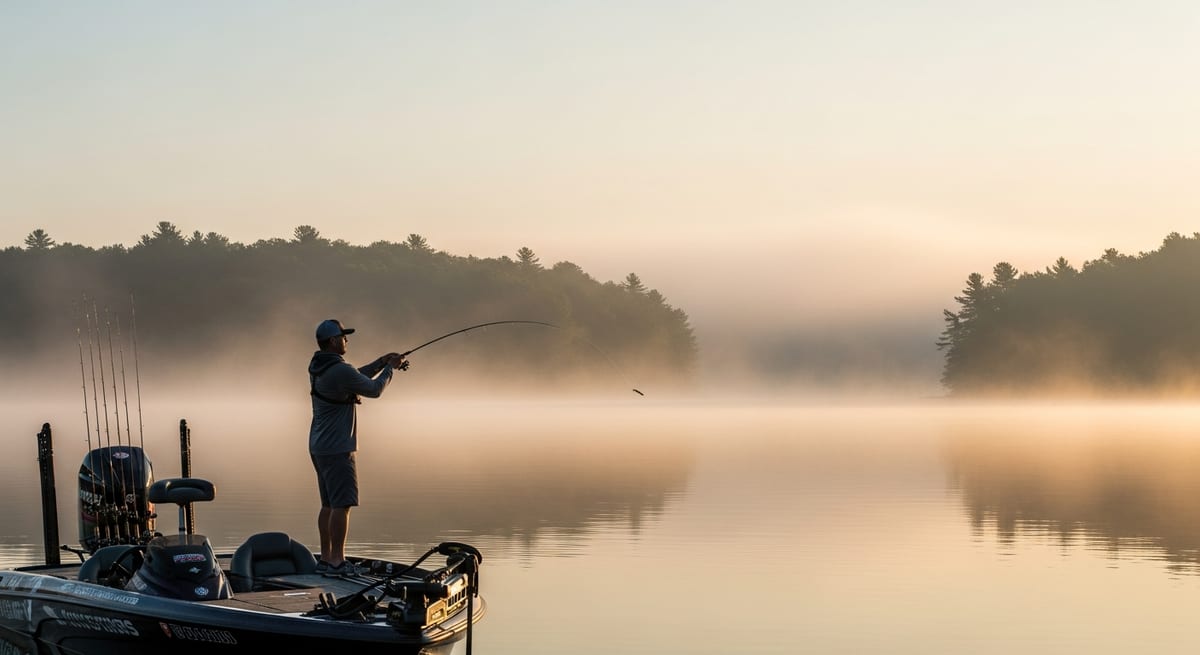
Anglers who track their topwater bites on CT bass lakes consistently report the same pattern: the productive window runs about 90 minutes from first light in midsummer, with a second window in the last hour before dark. Arrive after the sun clears the treeline on a calm July morning and the bite that was happening 45 minutes earlier is already over. The CT bass tournament community has largely converged on this finding, surface fishing success depends less on lure selection than on being in position during a narrow window before fish move off shallow structure and the bite shuts down. When conditions line up, the strikes are as explosive as freshwater fishing gets. When they don't, no lure fixes it.
The Topwater Window (and Why It's Shorter Than Most Guides Say)
Topwater is a low-light, calm-water, warm-weather technique. Miss any of these and the bite drops off sharply.
Time of day: Dawn through roughly 90 minutes after sunrise, then again for the last 60-90 minutes before dark. CT bass anglers who log their bites report that surface action falls off sharply once light intensifies. Fish move off shallow structure, and a lure drawing strikes at 6:00 a.m. draws nothing by 8:00 a.m. on the same flat. Midday topwater in summer works only when sustained cloud cover keeps light low. A flat-calm, full-sun afternoon in July is not topwater water regardless of what's tied on.
Water temperature: Surface-active largemouth on CT lakes typically appear once water temps clear 60°F, usually mid-May in most years. The optimal range, consistent with DEEP seasonal catch patterns and angler reports, runs from 65-80°F: late May through September on most CT inland waters. Below 60°F, bass are too lethargic to commit to a surface chase. In extreme summer heat, when shallow coves push past 85°F by mid-morning, the dawn window still produces, but fish move to deeper structure early.
Wind: A light ripple tends to outperform dead calm. Flat-calm mornings allow bass to track the entire presentation from a distance, and anglers fishing pressured CT lakes report more follows and refusals on still water than on mornings with a slight chop. The chop masks line and leader enough to reduce fish wariness. Sustained wind kills surface fishing. Fish can't orient on a moving lure and anglers lose control of the presentation.
Cover: Bass using lily pads, dock shadows, woody shoreline structure, and grass edges at dawn and dusk are the primary targets. Rocky points adjacent to weed beds or fallen timber are reliable secondary structure. CT highland lake anglers note that largemouth push into 1-3 feet of water along vegetated shorelines specifically during the low-light window, then move off to deeper structure as light increases, making late arrival to a productive flat one of the most common reasons for a slow topwater session.
What CT Anglers Reach For When the Window Opens
Poppers: The Rebel Pop-R and Rapala Skitter Pop are fixtures in CT bass tackle boxes and remain go-to choices on open water and around structure. The retrieve is pop-pause-pop-pause, with strikes occurring predominantly on the pause. Anglers fishing clear-water CT highland lakes, east Twin, Wononscopomuc, report that longer pauses (3-5 seconds) outperform aggressive rhythms on pressured fish, particularly in calm conditions where bass have more time to inspect.
Walking baits (Spooks): The Heddon Zara Spook is the standard walking bait, worked with a rod-tip-down retrieve that makes the lure dart side-to-side. CT bass tournament anglers on Candlewood Lake and Lake Lillinonah favor walking baits along dock lines and on open points where frogs would be wasted. The rod tip stays pointed at the water throughout the retrieve, raising it breaks the lure's action, a consistent early-season error that anglers report correcting only after losing several fish. Strike King's KVD Sexy Dawg is the most commonly cited alternative when a smaller profile is needed.
Buzzbaits: A search bait, not a precision lure. The retrieve stays steady enough to keep the blade churning at the surface, no pausing. Buzzbaits work best along weed edges, dock lines, and shallow flats. CT anglers working lakes with extensive shallow grass structure, rogers Lake, Pachaug Pond, use buzzbaits to cover long shoreline runs efficiently, then switch to a frog when they find the densest cover.
Frogs: Hollow-body soft plastic frogs are built for lily pads, grass mats, and flooded vegetation that fouls any other lure. The cast lands on the mat, the retrieve hops the frog across gaps, and strikes are explosive. Bass push through vegetation from below to engulf the lure. CT frog anglers typically run 40-65 lb braid depending on cover density, with heavier line for matted grass where a fish has to be stopped immediately. A heavy-power baitcasting rod is standard; spinning gear generally lacks the authority to drive a hook through thick cover. The cardinal rule on the water: wait until the fish's weight loads the rod before setting, setting on the visual strike pulls the frog away before the bass has it.
Prop baits: The finesse topwater option. Subtle sputtering surface disturbance works on pressured, clear-water fish that refuse a popper or walker. Anglers fishing Litchfield County's clear-water lakes in midsummer report more success with prop baits than aggressive-action lures on post-frontal calm days when wary fish want a slower presentation.
Setting the Hook on Surface Strikes (Where Most Anglers Leave Fish in the Water)
Setting on the visual explosion, not the feel of the fish, is the most common topwater mistake. The CT bass community discusses this repeatedly in club forums and tournament debriefs because it costs fish at every experience level.
A bass that slashes at a walking bait and misses creates a dramatic boil. A fish that engulfs a popper on the pause makes an impressive strike. In both cases, the instinct is to set immediately, and in both cases, that instinct pulls the lure away before the fish has it.
Correct timing: Wait until you feel resistance before sweeping the hook set. On a walker or popper, this is a half-second pause after the visual strike, long enough to feel weight. On a frog over pads, the standard CT frog-fishing advice is to wait until the lure disappears and the line tightens before driving the hook, giving the bass time to turn down with the frog and commit.
Hook quality: Replace factory hooks on topwater lures with Owner or Gamakatsu equivalents at purchase. Dull factory hooks contribute to missed fish, particularly on poppers and walkers where the bait is moving away from the angler at the moment of the strike. Anglers who make the switch typically report fewer pull-off short strikes on the same water.
Line choice: Monofilament or fluorocarbon for open-water topwater presentations, poppers, walkers, prop baits. Braid has no stretch and transfers force too immediately, contributing to pulled hooks when the set comes a fraction early. Frog fishing reverses this logic: 40-65 lb braid is necessary for the power required to haul largemouth through thick vegetation before the hook pinches on matted cover.
Connecticut Public Access Water Where Topwater Produces
Connecticut's DEEP public access program lists nearly 200 inland water bodies with confirmed public boat launches or shore fishing access. The lakes below have DEEP-confirmed public access and the shallow-structure, cover-rich habitat that topwater presentations require. Access details should be verified against current DEEP public access maps at ct.gov/deep before your trip, as launch conditions change seasonally.
Bantam Lake (Litchfield): CT's largest natural lake and one of the more reliable topwater bass destinations in the western part of the state. Lily pad fields on the northwest end support frog fishing through the summer; rocky shorelines and dock lines on the developed east shore produce on poppers and walkers during the dawn window. DEEP maintains a public boat launch with trailer access on North Shore Road. Anglers who fish the lake regularly note that the northwest pad fields are most productive in the first 90 minutes of daylight, before boat traffic builds.
Candlewood Lake (New Fairfield/Sherman/Brookfield/New Milford/Danbury): CT's largest lake with the kind of varied shoreline, rocky points, dock-lined coves, submerged structure. That holds topwater-active largemouth and occasional smallmouth through summer. DEEP public access at Squantz Pond State Park (cartop launch; trailer anglers use other access points). Anglers running topwater for tournament preparation report that walking bait work along dock lines at dawn is as consistent a pattern as exists on any CT lake.
Lake Lillinonah (Brookfield/New Milford): Formed by the Shepaug Dam on the Housatonic, Lillinonah has rocky shorelines, woody-cover coves, and irregular bottom that holds largemouth through summer. The CT bass tournament community includes Lillinonah among the reliable topwater lakes from June through September. DEEP maintains public access with cartop launch areas available along the shoreline; manageable for both kayak and shallow-draft boat anglers.
Rogers Lake (Old Lyme): Shallow, weedy coves with lily pads make Rogers a consistent frog and buzzbait lake in southeastern CT. DEEP boat launch on Route 156; the launch is better suited to cartop boats and small trailers, shallow-draft kayaks and canoes are practical here. Anglers fishing Rogers in summer report that the north cove lily pad fields during dawn sessions consistently outperform other sections of the lake on surface lures.
Pachaug Pond (Griswold): Part of Pachaug State Forest and a reliable frog-fishing destination in eastern CT. Weedy shallow structure dominates the southern basin. DEEP provides public access through Pachaug State Forest with a boat launch available. Northern pike share the weedy structure. Anglers running large frog presentations in summer report occasional pike alongside largemouth bass from the same morning sessions.
Coventry Lake / Lake Wangumbaug (Coventry): Consistent largemouth production from the weedy coves on the north and east ends. DEEP public boat launch available. Buzzbait and frog fishing along weed edges from late May through August is a reliable dawn pattern, per anglers who fish the lake regularly. Dock-lined sections on the south end produce on poppers and walkers during the early window.
Note on Saugatuck Reservoir (Redding): This is a drinking water supply. Public fishing access on supply reservoirs in CT is managed separately from standard DEEP inland access and may require permits or carry restrictions. Confirm current public access status directly at ct.gov/deep before planning a trip, do not assume access based on third-party references.
CT DEEP Largemouth Bass Regulations, what to Know Before You Go
Largemouth bass regulations in Connecticut apply statewide on most inland waters, with a number of lakes carrying special rules, trophy bass designations, slot limits, catch-and-release requirements, or modified size thresholds. Check the current DEEP Inland Fisheries Regulations summary at ct.gov/deep before fishing any water you haven't verified recently, as limits and special designations do change.
General statewide framework (verify current season at ct.gov/deep):
- Minimum size limit: 12 inches for largemouth bass on most CT waters
- Daily bag limit: 5 fish per angler per day (largemouth and smallmouth combined on most waters)
- Season: Largemouth bass is generally open year-round on most CT inland waters
- Special regulations: A number of CT lakes carry modified rules; the DEEP regulation table lists these by specific water body
The two most common compliance issues on CT bass water, per DEEP enforcement summaries, are retaining fish below the minimum size and misreading waters with special slot limits. Borderline fish should be measured carefully or released. As noted elsewhere on this site, good anglers get cited every season. The slot limit exists for a reason on the waters that carry it.
For regulation questions specific to a water body: DEEP Inland Fisheries Division at (860) 424-3474 or ct.gov/deep/fishing.
EVERY SATURDAY MORNING
Weekly fishing intelligence
Nationwide conditions, what's biting, and honest gear deals. One email, no noise.
No spam. Unsubscribe anytime.