
There's a Two-Week Window in CT When a Bladed Jig Outperforms Almost Everything Else. What Candlewood, Bantam, and Lillinonah Regulars Report About Spring Grass Timing, Trailer Matching, and Northeast Weight Selection
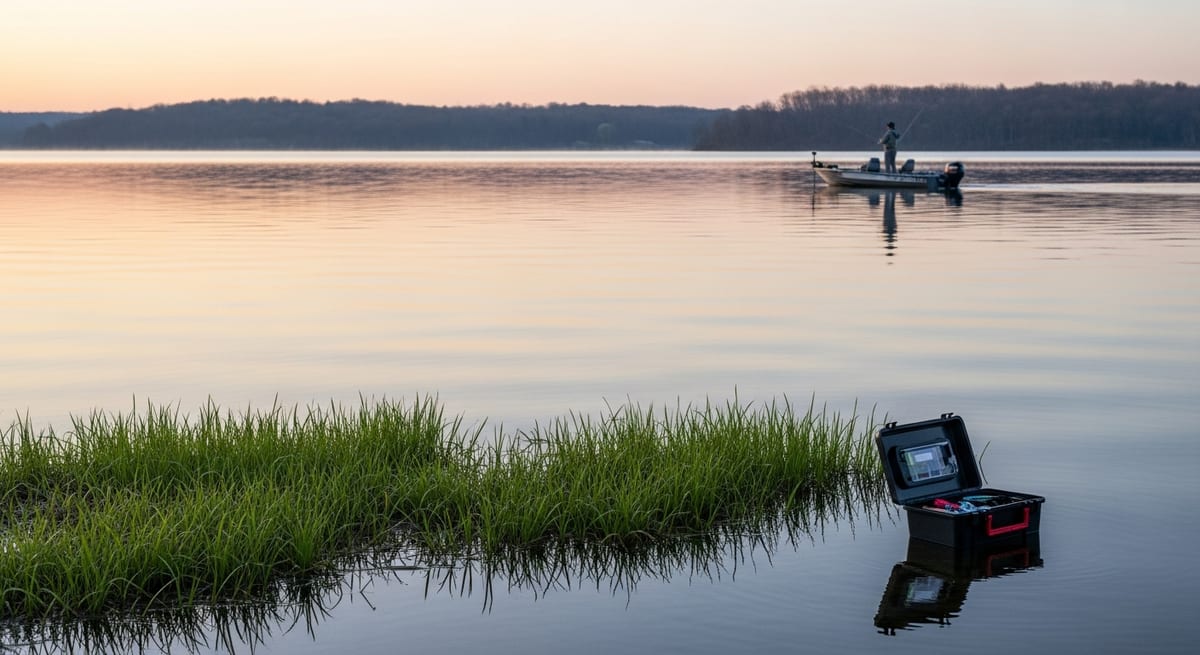
On Candlewood Lake in late April, bass anglers who fish the main-lake coves report switching from spinnerbaits to bladed jigs as coontail and milfoil first push toward the surface. A pattern community members on CT bass forums have described consistently across multiple seasons. The shift is mechanical: the hexagonal blade creates high-frequency vibration that cuts through stained post-runoff water, and the bait's faster sink rate lets it track through the water column rather than riding above sparse new growth the way a spinnerbait tends to. The ChatterBait, now used as a generic term for the bladed jig style, combines a jig skirt and soft-plastic trailer with blade-driven vibration that neither a standard jig nor a spinnerbait replicates on its own. CT DEEP regulates largemouth and smallmouth bass with a statewide minimum size and daily creel limit, current figures are in the annual CT Angler's Guide at ct.gov/deep, and many Candlewood and Bantam regulars follow a voluntary 14-inch release practice as a community norm regardless of the legal threshold.
What the Blade Does That a Spinnerbait Doesn't
The mechanics distinguish it. The hexagonal or V-shaped blade at the jig head wobbles on a straight retrieve, transmitting vibration through the water column that bass detect with their lateral line. Anglers who fish both lures on Bantam and Lillinonah report the practical difference most clearly in two conditions: stained water after rain, and sparse emergent grass in spring.
Faster descent: A bladed jig sinks more quickly than a spinnerbait, reaching mid-column fish on Candlewood's deeper coves without the retrieve modification or countdown pause a spinnerbait requires.
Different vibration profile: The chatter is a high-frequency, tight vibration, distinct from the thump of a Colorado blade or the flash of a willow. Bantam regulars who fish heavily pressured water report that bass which have seen a lot of spinnerbaits often respond to the bladed jig's different signature, particularly as summer progresses.
Sparse grass clearance: The head design often allows the bait to deflect off individual grass stalks in sparse emergent vegetation rather than fouling on the blade. CT community reports note this holds in early spring coontail and milfoil; in thick mats or heavy surface cover, most anglers switch to a Texas-rigged soft plastic.
Trailer flexibility: Like a jig, you can add a soft plastic of any style, swimbait, craw, grub, changing both profile and fall rate in ways a spinnerbait does not allow.
CT Timing: What Bantam, Candlewood, and Lillinonah Regulars Report
Spring grass window (late April through late May): The community consensus among CT bass anglers points to the two to three weeks after vegetation first becomes visible at the surface as the bladed jig's strongest window. On Bantam Lake, anglers report the shallower northern bays show vegetation first, often a week ahead of Candlewood's deeper main-lake coves. Bladed jigs fished along the outer edge of emerging growth draw the most consistent community reports from this period.
Post-spawn (late May into June): Bass recovering from the spawn and holding in adjacent vegetation remain aggressive toward fast-moving presentations. Anglers fishing the Lillinonah backwater arms report bladed jigs working well along submerged wood and newly formed weed edges during this window, particularly during afternoon feeding periods.
Stained water: When Housatonic tributary mouths and backwater arms run off into the main lakes, visibility drops and the bladed jig's vibration-to-movement ratio produces more consistent results than a primarily visual bait. White and chartreuse blades draw the most community reports from post-rain conditions on both Candlewood and Bantam.
Summer mid-depth flats: Anglers fishing the 8 to 15-foot grass edges on Candlewood in July report bladed jigs on a slow roll as a reliable mid-morning technique after topwater activity slows. This application requires mobile, feeding fish, on tough days following cold fronts, most CT bass communities report dropping to a drop shot or Ned rig rather than trying to power-fish through lock-down conditions.
Retrieves, Trailers, and Weight Selection for Northeast Depths
Steady retrieve: The baseline approach. Reel at moderate pace, vary speed until fish respond. Anglers on Bantam's north coves report that slowing the retrieve as the bait approaches weed edges draws more follower strikes than maintaining a constant speed throughout the cast.
Slow roll near bottom: Reel just fast enough to keep the blade ticking while the bait grazes bottom, producing a mud trail and sound signature. CT bass anglers fishing the deeper flats on Candlewood (12 to 18 feet) report this as a reliable early spring tactic when bass hold tight to bottom structure in cold water.
Burning: A fast retrieve just under the surface works on aggressive, surface-oriented summer fish. Most CT reports of this technique come from the weedy shallows on Lillinonah's upper arms in July and August, when bass push bait against the bank.
Trailers:
- Paddle-tail swimbait (3.5 to 4.5 inch): The most widely reported choice among CT bass anglers for open water and weed-edge work. Adds a swimming tail action that complements blade vibration on a steady retrieve.
- Craw trailer: Adds bulk and claw action on slow rolls. Community reports from Bantam and Housatonic backwater anglers favor this in cold water, below 55°F, and in early spring before bass move up.
- Chunk or grub trailer: Compact profile for heavier fishing pressure or when fish are keying on smaller forage.
Weight selection for CT water depths:
- Bantam and Housatonic backwater grass (4 to 8 feet): 3/8 oz is the most widely reported starting weight among local anglers.
- Candlewood mid-depth coves (10 to 18 feet): 1/2 oz gets the bait into the zone on a moderate retrieve without requiring an impractically slow crawl.
- Shallow Lillinonah backwater arms (under 4 feet): 1/4 oz slows the fall and keeps the blade from diving below sparse spring grass.
These are community-reported starting points. Anglers on each water adjust based on current, wind, and vegetation density, what works in Bantam's sheltered north bay may need a half-ounce bump in Candlewood's open-water chop.
EVERY SATURDAY MORNING
Weekly fishing intelligence
Nationwide conditions, what's biting, and honest gear deals. One email, no noise.
No spam. Unsubscribe anytime.