
Long Island Sound Sea Bass Stage on Nearshore Reefs Weeks Before Most CT Anglers Target Them. What Regulars at Race Rock, Bartlett Reef, and the Norwalk Islands Report About Timing, Bottom Rigs, and the Season's Two Best Windows
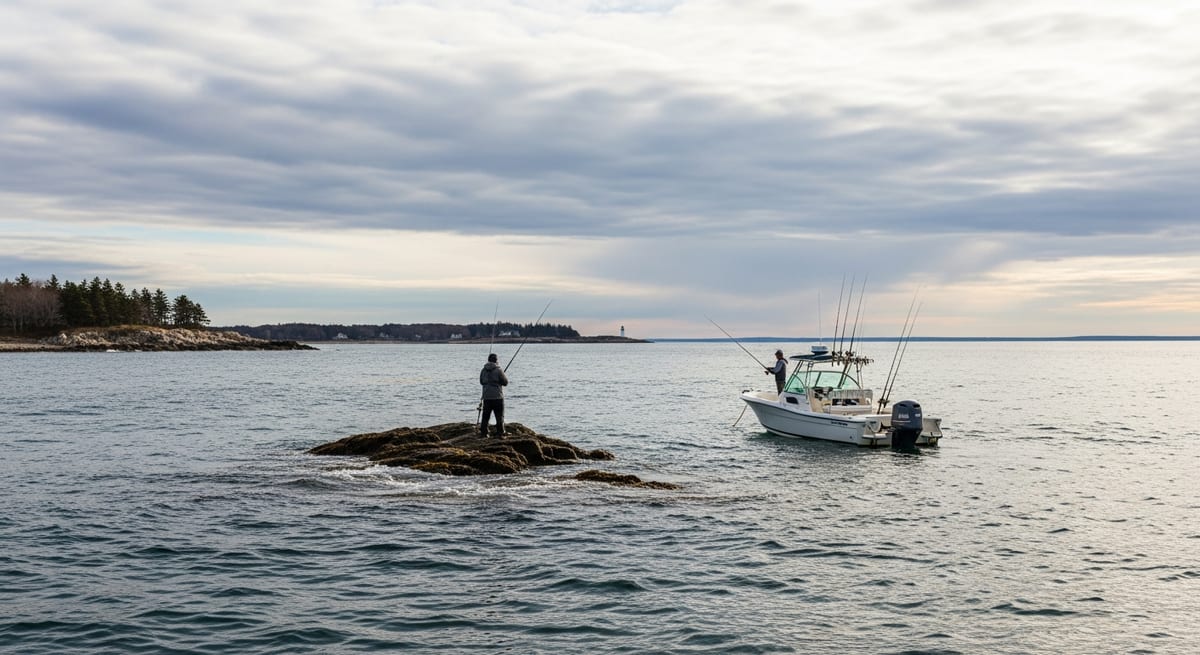
Anglers who work the nearshore reefs off Stonington and the Norwalk Island chain report that black sea bass begin appearing on rocky structure roughly a week after water temperatures clear 58°F, which in most recent seasons has fallen in the third or fourth week of May. By late June, fish are stacked in 20 to 50 feet of water across Long Island Sound, and bottom anglers anchored over spots like Race Rock Reef, Bartlett Reef off Waterford, and the Southwest Ledge off New Haven typically report steady action on squid-baited high-low rigs through early September. The fall window from October into early November draws less pressure but consistent action as sea bass feed aggressively ahead of their offshore migration, and the consensus among Long Island Sound regulars is that fish average noticeably larger in fall than at midsummer.
When CT Sea Bass Show Up, and Which Reefs Hold Them Longest
Sea bass don't arrive on CT inshore structure all at once. Anglers who track the bite at Fishers Island Sound and along the Stonington reef complex report a predictable staging sequence that follows water temperature more than the calendar.
Water temperature trigger: Fish typically appear on nearshore structure when bottom temps reach the mid-to-upper 50s, usually mid-to-late May. Shallower reefs in 20-35 feet warm first. Deeper structure, including Race Rock at the western entrance to The Race and the ledges along the Niantic Bay approaches, holds fish later into fall as surface temps drop.
Peak summer window: July through September produces the highest volume of fish on nearshore structure. Spots like Bartlett Reef off Waterford, the Norwalk Islands reef complex, Cockenoe Reef, and the Twotree Island Channel hold concentrations in 20-60 feet of water. Charter regulars and private boat anglers working these areas report consistent action from midsummer through early September.
Fall feeding push: October and early November regulars along the Stonington and Mystic coastline report heavier, more aggressive fish than at midsummer. The consensus is that this window closes fast. Once a sustained northwest wind drops water temps below 50°F in November, fish move offshore and the season winds down quickly.
Structure types: Rocky reefs, hard sand-rubble transition zones, jetty bases, and wrecks all concentrate sea bass. CT regulars note that sea bass are more forgiving of structure type than tautog, holding on gravel and shell bottom where tautog prefer tight boulder fields.
What CT Sea Bass Regulars Run on Nearshore Structure: Rigs, Bait, and Softbaits
The tackle consensus among CT bottom anglers has converged around a few reliable setups that differ from tautog gear mainly in weight and hook size.
Rod and reel: A 6'6" to 7' medium or medium-heavy rod with a moderate-fast tip, paired with a conventional or spinning reel spooled with 20-30 lb braid. Sea bass hit harder and more often than tautog, so a slightly softer tip helps absorb aggressive short-shank hook sets.
Standard bottom rig: 1-2 oz bank sinker on a 3-way swivel, 12-18 inch fluorocarbon leader (15-20 lb test), and a size 1/0 to 2/0 short-shank or circle hook. Most Norwalk Islands and Bartlett Reef boat anglers run a high-low rig with two hooks at different heights above the sinker. Double hookups on active fish are common on this setup.
Bait: Squid strips are the go-to across the board. Sea clams and sandworms also work. Unlike tautog, sea bass readily eat baitfish: cut menhaden and mackerel chunks produce well, especially in fall when fish are keying on larger prey.
Softbaits: Berkley Gulp 3-inch shrimp and swimming mullet on a 1/4 to 3/8 oz jig head are widely used by Long Island Sound sea bass regulars, and many boat anglers fishing the Norwalk Island complex fish softbaits exclusively when the bite is active. The scent dispersion from Gulp tends to outperform unscented artificials on days when fish are less aggressive.
Working the Drop: How Bottom Anglers Approach Rocky CT Structure
Sea bass respond to active presentation differently than tautog, and CT regulars who target both species adjust their approach accordingly.
Vertical jigging: From a boat anchored or drifting over structure, drop a Gulp or jig to the bottom, lift 6-12 inches, and let it fall on a semi-slack line. Anglers fishing Race Rock and Bartlett Reef consistently report that sea bass hit on the fall rather than the lift, so maintaining line contact through the descent is critical to detecting the strike.
Anchor placement: Position over the upcurrent side of the target structure so the anchor line or chum slick runs across the reef. Sea bass don't roam far from their chosen holding spot, and position matters more than presentation on most days.
Bait fishing: Set bait to the bottom with slight upward tension on the rod tip. Sea bass bites are typically more aggressive and easier to detect than tautog. Most anglers report a sharp tap-tap rather than a subtle line movement, and setting the hook immediately on the first solid hit works better than waiting for a sustained load.
Chum: Mashed menhaden, crushed clams, or commercial chum blocks help concentrate fish under the boat on slower days. Regulars on the Norwalk Island reef complex often run a slow chum drip when anchoring to draw fish from surrounding structure before switching to softbait jigging once the bite develops.
CT Sea Bass Regulations Change Annually, verify With CT DEEP Before You Fish
Black sea bass are federally managed under the ASMFC/MAFMC Summer Flounder, Scup, and Black Sea Bass Fishery Management Plan, and Connecticut's season dates, minimum size, and possession limits are adjusted each year based on stock assessments. Specifics shift enough year to year that any fixed number in a fishing guide may be out of date by the time you read it.
What to verify: Minimum size, daily bag limit, and open/closed season windows are all year-dependent. CT DEEP Marine Fisheries publishes the current-year rules before the season opens at portal.ct.gov/DEEP/Fishing/Marine-Fisheries. Check the regulations for the specific season you're fishing rather than relying on a prior-year number.
Federal vs. state rules: Regulations may differ between state waters (within 3 miles of shore) and federal waters further out. NOAA's Greater Atlantic Regional Fisheries Office publishes federal rules separately from CT state rules, and the two sets don't always align.
Stock recovery: Anglers who have fished Long Island Sound for sea bass across multiple decades report that the population has improved meaningfully compared to the low points of the early 2000s. The management framework is credited with much of that recovery, and regulars generally consider honoring the seasonal closures important to keeping the fishery productive long-term.
Bycatch and release: Sea bass are commonly taken incidentally while targeting tautog or fluke on rocky structure. Sublegal fish should be returned quickly with minimal air exposure. Sea bass survive catch-and-release well when handled briefly at depth.
EVERY SATURDAY MORNING
Weekly fishing intelligence
Nationwide conditions, what's biting, and honest gear deals. One email, no noise.
No spam. Unsubscribe anytime.