
Long Island Sound Black Sea Bass Run Bigger and Less Pressured in October Than in June. Most CT Anglers Have Already Put Their Bottom Rigs Away.
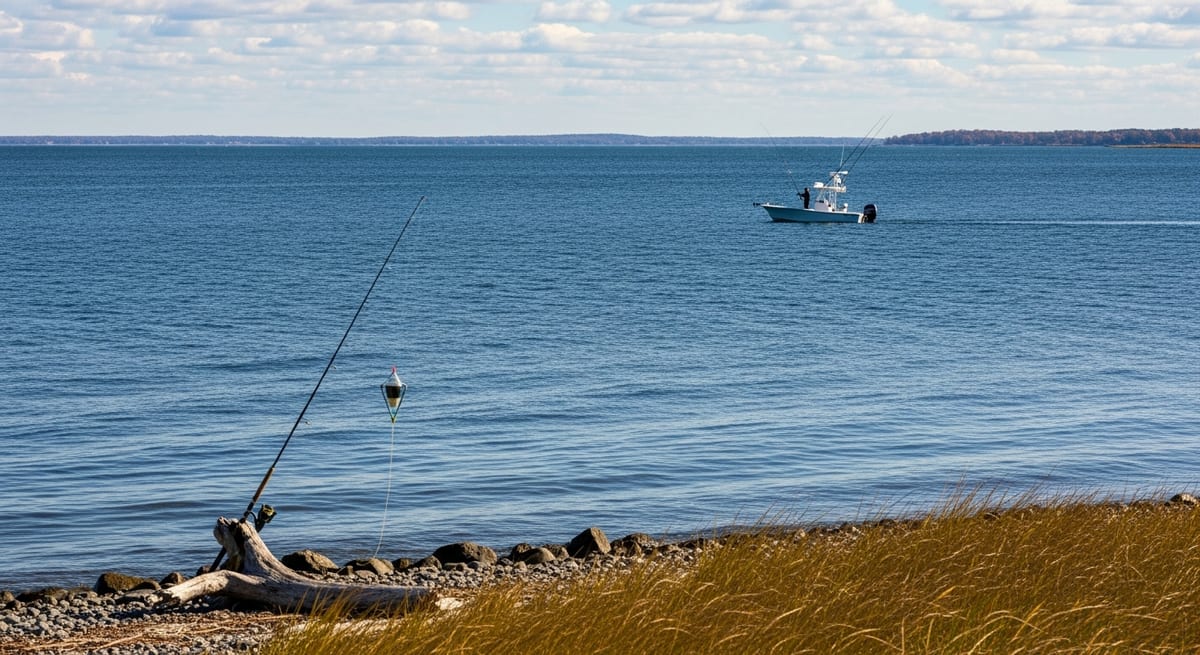
The Fall Staging Window CT Bottom Fishers Know
Anglers running CT party boats into late September and October consistently report the same pattern: bigger average fish, tighter concentrations on structure, and far less boat traffic than anything the June and July push produced. The fall sea bass window in Long Island Sound is one of the most productive and least crowded bites of the year, and most CT anglers have already cleaned their rods before it peaks.
Black sea bass are one of the best bottom-fishing targets in Long Island Sound, aggressive, predictable on structure, and a prized table species among Northeast bottom fishers. They're a warm-season species that push inshore from offshore wintering grounds when water temps hit the upper 50s, typically around mid-May in Connecticut. Most anglers fish them hard through July, then shift to stripers or close out the season entirely, missing what happens in September and October when fish are feeding heavily ahead of the offshore migration.
One pattern noted consistently by party boat captains and experienced Sound regulars: the largest fish in a school are almost always dominant males. Black sea bass shift sex as they grow, starting life as females and transitioning to males over time. The largest specimens carry a distinctive blue hump on the dorsal and tend to hold prime structure. If fish coming over the rail are all running 12 inches, experienced anglers advise re-anchoring, working the fringe of a school rather than its heart is a common positional mistake.
Two Windows Worth Planning Around
The June arrival: Water temps climbing through the low-to-mid 60s trigger the inshore push. Fish spread across nearshore reefs and rocky bottom in the 20-40 foot range. This is when most CT anglers show up, and pressure is high on any well-known spot. The fishing is good, but so is the crowd.
The fall staging run: September into early October is the window that party boat regulars and season-long Sound anglers consistently prioritize. Fish that spent the summer scattered across the Sound concentrate on the best structure and feed aggressively before the offshore push. Numbers are good, average size is up, and boat pressure is a fraction of what it was in June. In the 2024 fall season, CT party boat reports and angler accounts on Northeast fishing forums consistently pointed to the first two weeks of October as a high point for sea bass size and concentration. The kind of fishing that prompts regulars to question why the June crowds bother.
Regulations, always verify before you go: CT sea bass is federally managed through NOAA/ASMFC, and the rules shift year to year. In recent seasons, minimum sizes have typically run around 15 inches with bag limits in the range of 3 to 5 fish per person, though the specific limit changes with each management cycle. There is typically a summer closure period with a fall reopening window. The exact dates vary by season and have caught anglers off guard in past years. Check CT DEEP's current Marine Recreational Fisheries page for the specific dates and bag limit before heading out. Rules from prior seasons are not reliable.
Reading CT Reefs: Where Sea Bass Actually Hold
Sea bass don't suspend. They hold on hard bottom, rocky ledges, reefs, wrecks, and artificial structure. If the sounder is showing flat sand, it's the wrong location.
CT DEEP artificial reefs are consistent producers because the habitat is documented and fish show up reliably. New Haven Reef concentrates fish predictably through the season. The reef complex around the Norwalk Islands produces consistently for boaters working western Sound. CT DEEP maintains publicly downloadable reef site maps on their website with coordinates for all maintained artificial reef sites. The most reliable starting point for identifying productive structure.
Eastern Sound structure: the rocky outcroppings around Fishers Island Sound and the Watch Hill area, holds some of the larger sea bass in CT waters. Anglers launching from Mystic or Stonington report the eastern reefs are worth the run, particularly in fall when fish stage on the best structure ahead of the offshore migration.
The Cornfield Point area along the Old Saybrook coastline is a commonly cited mid-Sound structure zone; anglers should cross-reference CT DEEP's reef site maps for precise coordinates rather than relying on passed-along GPS numbers, which can be imprecise.
Wrecks: Documented wreck sites throughout the Sound hold sea bass seasonally. CT DEEP's reef site maps and party boat fishing reports are the two most reliable sources for productive coordinates. Local bait shops along the shore often have current intel on which sites are actively producing. Their relationships with party boat captains translate directly into knowing where fish have recently been concentrating.
Depth: Most productive CT sea bass structure runs 25-70 feet. The deeper end of that range: 60-90 feet, tends to hold larger fish, especially mid-season when nearshore spots are pressured.
Launch Points and Access by Region
Many sea bass resources focus on technique and leave out the logistics. A breakdown of commonly used access points by region:
Western Sound: The Norwalk ramp at Calf Pasture Beach gives reasonable access to nearshore reefs without a long run. Parking fills fast on summer weekends, arrive before 6 AM or expect a wait. The Westport area has a launch on the Saugatuck River; confirm current public access hours with the Town of Westport before the trip, as ramp availability can vary seasonally.
Central Sound: The New Haven public launch at City Point puts you close to New Haven Reef and is the most convenient option for central Sound structure. It's a busy ramp with long waits on weekends; the Branford Pine Orchard launch is a solid alternative with less congestion.
Eastern Sound: Mystic and Stonington both have launch access for eastern reef and Fishers Island Sound fishing. The Stonington Town Ramp is reliable and generally less crowded than the Mystic options on peak weekends.
No boat: Party boats and half-day charters run sea bass trips throughout the season from Bridgeport, New Haven, Niantic, and points east. CT party boat captains who work the Sound year-round know the current concentrations with a precision that's difficult to match on unfamiliar water, sea bass is one of the species where local knowledge translates most directly into fish on the rail.
How CT Sea Bass Anglers Rig Up
Rod and reel: The most common setup among CT bottom fishers is a medium-heavy conventional rod in the 6.5-7 foot range paired with 40 lb braid. Spinning works fine, but experienced Sound anglers note that conventional gear typically gives better bottom-contact feel in current. A relevant factor on many of the deeper reef marks.
Standard bottom rig:
- 3-way swivel with a dropper for the sinker (3-6 oz bank sinker; go heavier in current) and a 12-18 inch fluorocarbon leader to a 2/0-4/0 circle hook
- Bait: squid strips cut to 3-4 inches are the everyday standard. Fresh clam, soft shell or hard shell, often outperforms squid when the bite slows. CT regulars frequently carry both, defaulting to clam on slow days and using squid as a reliable backup.
Slow-pitch jigs: A 2-3 oz slow-pitch jig in white or pink, worked with a slow lift-drop cadence, will regularly outfish bait when fish are stacked on structure. This is especially true in fall when fish are feeding aggressively before the offshore migration.
Gulp! baits: Gulp! Shrimp and Gulp! Crawfish on a small jig head are a consistent addition to the bag. In high-pressure areas where fish have seen a lot of squid strips, these often draw strikes when natural bait slows, drop to bottom, short hops, let the scent work.
A common mistake among new sea bass anglers is fishing too light on the sinker. Bottom contact is the baseline, without it, the presentation isn't reaching the fish. Experienced Sound anglers consistently advise going heavier than feels natural, particularly in current.
Working Position and the Bite
Sea bass fishing on structure rewards patience and position, anchoring uptide of a mark and working the downstream edge of the reef consistently outperforms drifting across unfamiliar bottom hoping to locate fish.
Anchor position matters more than the GPS mark: The reliable approach among experienced Sound anglers is to anchor uptide of the structure and let the boat fall back onto the reef. Dropping the hook directly on a mark often means sitting on the fish and pushing them off. Setting up to present bait at the downstream edge of the structure is where consistently productive CT bottom fishers report working their rigs.
Working the rig: Once on the bottom, take up 6 inches of slack and wait. Sea bass hit hard. Short lifts off the bottom every 30 seconds keep the bait moving and trigger reaction strikes on fish that aren't actively feeding.
Watch the tide: Among CT Sound regulars and party boat captains, the consensus is that the last two hours of the outgoing tide often produces better than slack or incoming on most Sound reefs. Some spots fish better on the flood, but outgoing is a reliable default on an unfamiliar mark.
Handle shorts with care: Sea bass come in numbers and many will be undersized. They develop barotrauma quickly when pulled from 40-plus feet. The telltale bloating and bulging eyes are a sign the fish needs help getting back down. A venting tool or descending device gets fish to depth quickly and improves survival significantly. The SeaQualizer is a commonly cited option among CT bottom fishers; verify current retail pricing before purchasing.
EVERY SATURDAY MORNING
Weekly fishing intelligence
Nationwide conditions, what's biting, and honest gear deals. One email, no noise.
No spam. Unsubscribe anytime.