
Connecticut's Tidal Rivers Hold Blue Crabs Every July Through September. Most CT Anglers Who Fish Them Have Never Dropped a Trap.
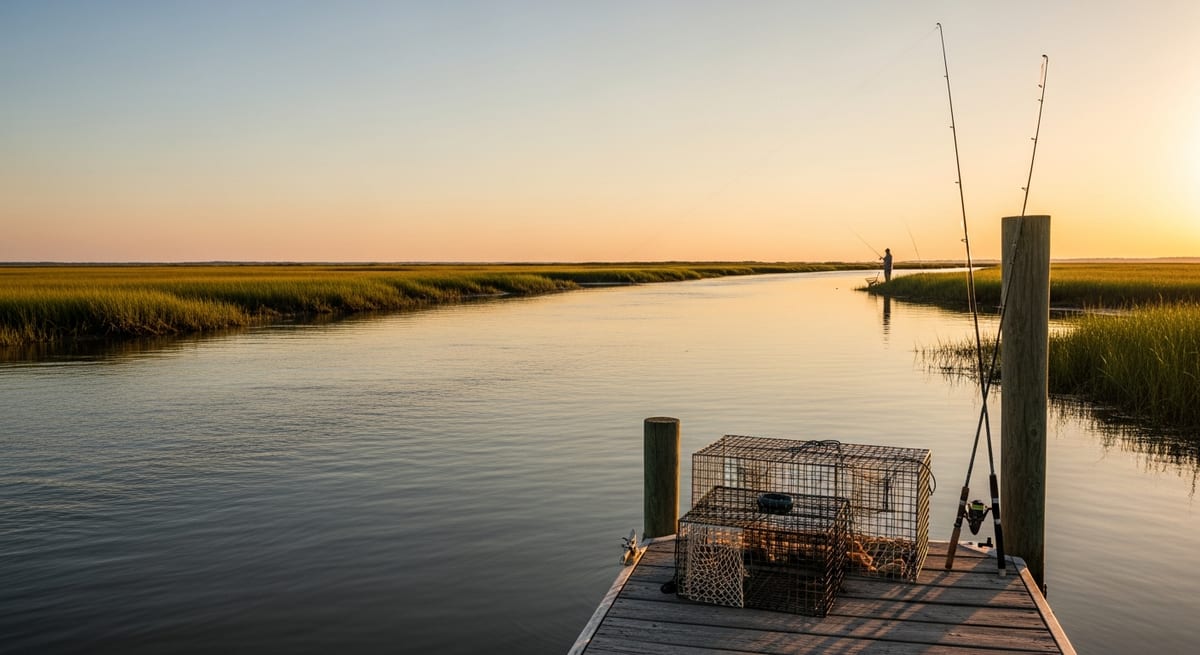
The lower Niantic River holds blue crabs from July through September. A pattern CT DEEP records and consistent angler reports confirm, in waters where most Connecticut anglers are targeting stripers or flounder without realizing crabs are working the same eelgrass edges. The range expansion is well documented: NOAA Long Island Sound temperature records and northeast fisheries surveys link the species' northward movement to sustained surface warming since the late 1990s, bringing blue crabs into regular summer presence in tidal rivers well north of their traditional Chesapeake Bay strongholds. Connecticut numbers are modest compared to the Chesapeake. This isn't trotline country, and showing up with that expectation leads to disappointment. But the lower Connecticut River from Essex to Old Saybrook, the West River inlet in New Haven, and the tidal creeks along the southwestern shoreline hold crabs reliably in summer. Pressure on all of them is low. The regulars who work these spots with hand lines and pots found the fishery years ago and haven't widely advertised it.
Where CT Crabs Actually Show Up, and Why the Window Closes Fast
Blue crabs are present in CT waters from late June and catchable through early October, but July through September is the core window when water temperatures peak and crabs are most active. Once fall sets in and Sound temperatures drop, crabs slow down and push toward deeper water, by late October most years, catch reports from across the state have dropped to near zero.
Niantic River: The most consistently cited blue crab location in CT angler reports and northeast fishing forums. The lower river, below Niantic Bay Meadows, draws the most crabbing activity. Regulars who fish the stretch describe crabs working the eelgrass edges in the first hour of low tide, particularly in July and August. Wading the shallows at low water or dropping traps from accessible banks are the two most commonly reported approaches.
Connecticut River (lower tidal section): From Essex south to Old Saybrook, the tidal Connecticut River holds crabs reliably in summer. Rocky Neck State Park jetties and the tidal creeks off the river's lower reach are mentioned specifically in public catch discussions. Main-channel current runs strong, and the consensus among regulars is to focus on coves and tidal pockets where crabs settle to feed out of the main flow.
West River / New Haven Harbor: An urban option with consistently low crabbing pressure. The West River inlet and tidal ponds near Oyster River Road produce summer crabs, according to anglers who work the area, with almost no competition from other crabbers.
Housatonic River mouth (Stratford) and southwestern CT coves: The southwestern shoreline warms earlier in the season. The Saugatuck River in Westport and tidal creeks near the Housatonic mouth are reported to hold crabs by late June in warm years.
General pattern: Any CT salt marsh with tidal creek access is worth checking. Crabs follow baitfish into these areas in summer, and channel structure concentrates them in spots that repeat year to year, regulars on any of these rivers can usually point to specific bends or cove mouths that produce consistently.
Three Methods, Three Different Waters: What CT Crabbers Use Where
A recurring pattern in first-timer accounts is setting multiple pots in one area, then checking too early and finding little. Experienced CT crabbers consistently report better results by matching the method to the water structure, fewer setups, actively tended, placed where tidal current meets a slack zone.
Crab traps (pots): Wire box traps baited with fish scraps, menhaden is the standard choice among CT crabbers, as the oily scent carries well through tidal current, set and pulled every 30-60 minutes. Pots need to be actively attended; leaving them overnight risks gear loss and dead crabs. CT regulations cap each licensed angler at two pots, so placement decisions matter more than quantity.
Hand lines: The most commonly reported approach from docks, bridge abutments, and low fixed structures. A piece of chicken neck, fish head, or menhaden chunk is tied to a short line with a small sinker and lowered to the bottom. When the line goes taut and starts dragging, a dip net is worked slowly behind it and scooped before the crab lets go. Crabbers who use this method regularly emphasize the slow net approach, crabs spook when they feel the frame contact the water.
Dip netting: Walking knee-deep shallows at low tide with a long-handled crab net. This works best in clear, calm water over sandy or muddy bottom with eelgrass cover. The Niantic flats at low water draw regulars specifically for this, crabs are visible from distance in good conditions, and slow, patient stalking is the technique most commonly described by anglers who fish the method there.
What you need: A proper dip net (not a fine-mesh bait net), a bushel basket or lidded cooler, gloves (blue crab claws cut unprotected hands reliably), and a measuring ruler. The gear list is short and nothing on it runs expensive.
CT Regulations: What DEEP Requires and Where Crabbers Get Caught Off Guard
Connecticut has specific regulations for blue crabs. Always verify current rules at portal.ct.gov/DEEP/Fishing/Marine before the season, regulations can and do shift year to year.
Minimum size: CT DEEP has historically set the minimum carapace width at 4.5 inches point-to-point, measured across the widest part of the shell. This is one of the regulations that has occasionally changed between seasons, confirm the current measurement at portal.ct.gov/DEEP before heading out, and carry a ruler regardless. Borderline crabs come up more often than new crabbers expect.
Daily limit: CT sets a recreational limit per licensed angler per day. This number has shifted in recent seasons; the current count is at portal.ct.gov/DEEP, do not rely on older sources or informal reports for this one.
Egg-bearing females (sponge crabs): Must be immediately released. Keeping any crab with visible eggs under the apron is illegal. This is among the most commonly reported accidental violations, experienced CT crabbers make a habit of flipping every crab before it goes in the basket.
License required: CT Marine Recreational Fishing License (residents and non-residents; current fee schedule at portal.ct.gov). A freshwater license does not cover saltwater crabbing.
Trap regulations: Maximum of 2 crab pots per licensed angler; pots must be marked with your name and license number. CT DEEP officers enforce the marking requirement on popular crabbing waters, unmarked pots get confiscated.
Soft-shell crabs, crabs that have just molted, can be kept if they meet the size minimum. They turn up infrequently, but are worth holding when they do.
Cleaning, Steaming, and What a CT Haul Actually Gets You at the Table
Steaming: Add 1-2 inches of water to a large pot with a cup of cider vinegar and a generous shake of Old Bay, place a steamer rack above the waterline, layer in live crabs, and steam with the lid on. Large males typically take 20-25 minutes; smaller crabs are often done closer to 15-18 minutes, checking one crab before pulling the whole batch is better than overcooking. Let them rest five minutes before cracking.
Cleaning: Flip the crab, lift and remove the apron (the triangular flap on the belly), pull off the top shell, remove the gray feathery gills, "dead man's fingers", and the mouthparts, then rinse. Break the body in half and crack the claws with a mallet or the back of a heavy knife.
Yield: A legal male blue crab typically yields 2-3 oz of picked meat, though this varies with crab size and condition. A dozen crabs from a CT tidal river session runs closer to 1.5 to 2 pounds of usable meat once you account for smaller individuals and picking waste, not the tidier figure that assumes every crab is a large, prime male.
CT crabbers who fish the Niantic and lower Connecticut River consistently describe mid-August incoming tides as the most productive window, water warm, crabs active, and the season still fully open. A few hours of hand lining or trap tending during that window, in the right tidal pocket, is what most of the positive reports from those waters describe.
Always verify current regulations at CT DEEP Marine Fisheries (portal.ct.gov/DEEP) before heading out.
Recommended Gear for CT Blue Crabbing
The gear list above calls for a lidded cooler to hold the catch. These two coolers are in the Hooked Fisherman gear catalog with verified Amazon listings. They are affiliate links (commission at no cost to you).
- Coleman Steel-Belted 54 Qt Cooler: a 54-quart lidded hard cooler.
- Igloo Marine Ultra 48-Quart Cooler: a 48-quart lidded cooler from Igloo's Marine line.
The rest of the list (a proper crab dip net, gloves that cover the fingers, and a ruler for the carapace measurement) is not in the catalog yet, so a local tackle shop is the place to pick those up.
Before heading out, check the latest Connecticut fishing reports for current conditions on the water.
EVERY SATURDAY MORNING
Weekly fishing intelligence
Nationwide conditions, what's biting, and honest gear deals. One email, no noise.
No spam. Unsubscribe anytime.