
Every CT Lake Has a 20-Pound Fish That Almost Nobody Targets. The Anglers Who Know Prefer It That Way.
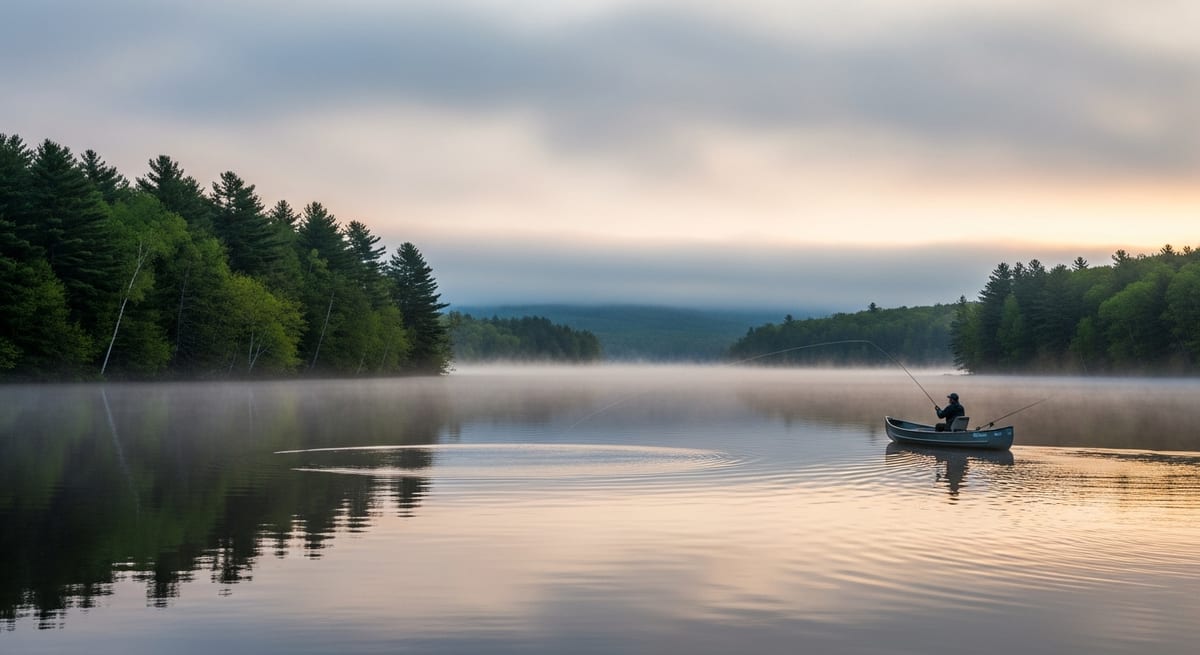
CT DEEP electrofish surveys consistently document common carp as one of the highest-biomass freshwater species in the state, yet the overwhelming majority of anglers who fish those same lakes and rivers have never deliberately targeted one. Bantam Lake, Lake Zoar, Lillinonah, the Connecticut River flats near Middletown, nearly every significant freshwater body in the state holds them, including populations of fish that push well past 20 pounds. Common carp fight harder than most other freshwater species you'll encounter in CT fresh water. They grow large, they're present in waters most anglers already visit, and deliberate fishing pressure on them is minimal in all but a handful of spots. That combination has drawn a small but dedicated community of CT carp anglers back to the same flats and river bends every spring, largely undisturbed.
CT Lakes, Rivers, and Urban Waters Where Carp Are Confirmed
Carp tolerate a wider range of water quality and habitat than most gamefish, which is part of why they show up in waters that might surprise you.
Lake Zoar and Lake Lillinonah (Southbury/Newtown/Monroe): These two impoundments have built a reputation among the CT carp fishing community for producing large fish. Anglers who regularly work the shallow bays and muddy flats on both lakes report consistent encounters with fish in the 15-25 lb range, particularly in the coves off Route 34 on Lake Zoar. The weed edges on Lillinonah hold fish through most of the warm season.
Bantam Lake (Litchfield): Connecticut's largest natural lake. The shallower western shore and the weedy areas near the outlet see the most consistent activity. Local anglers report strong spring sight-fishing opportunities when water temps push into the 55-60°F range.
Connecticut River: The slower, muddier stretches near Hartford, Middletown, and Essex are where most CT river carp reports originate. On warm afternoons, fish feed visibly in the shallows along accessible public banks.
Housatonic River (lower section): Below Derby Dam into Shelton and Stratford, the slower pools hold fish that are visible in clear conditions. Several public park access points serve this stretch.
MDC and state reservoirs: Most of CT's larger reservoirs hold carp, but access rules vary significantly. Several MDC-controlled waters, including Lake Saltonstall, have restricted public fishing access that has shifted in recent years. Check current rules at the CT DEEP Inland Fishing Guide (portal.ct.gov/deep) or the MDC water supply lands page before making the drive.
Urban parks: Beardsley Park in Bridgeport and East Rock Park in New Haven hold large, documented carp populations. Anglers who fish these spots report near-zero competition. The fish see almost no deliberate pressure.
Reading Feeding Carp: Spotting, Stalking, and Timing Your Approach
The most productive carp sessions start before the first cast. Learning to read the water for carp sign is a skill the European carp fishing community has refined over decades, and it applies just as well on CT lakes and rivers.
What to look for: Tailing fish disturb the bottom in shallow flats and weed edges, mud clouds billow up, and sometimes the fish's tail breaks the surface. Rolling fish (carp surfacing slowly) indicate a school nearby. Surface slurping near overhanging trees usually means carp are feeding on fallen mulberries or floating debris. The ideal setup for bread-crust fishing.
Spring (April-May): Water temps in the 55-65°F range are the trigger. Pre-spawn carp feed aggressively and are often visible in clear water. Anglers fishing CT lakes in this window report the best sight-fishing of the year, individual fish can be stalked and presented to directly. Large schools move onto the flats, and the fish are less wary than they'll be at any other point in the season.
Summer (June-August): Activity shifts toward low-light hours. The most reliable summer sessions happen in the last two hours before dark on calm evenings, when fish move shallow to feed. Hot afternoons push them deeper. Surface feeding near shaded banks and overhanging trees picks up on still summer evenings.
Fall (September-October): Feeding intensity mirrors spring as water cools. Fish are building reserves and often less selective than they are in midsummer. A productive window for bottom presentations on the same flats that held fish in spring.
Stalking visible fish: Slow, deliberate movement. Carp are sensitive to vibration and shadow. CT anglers who consistently catch big fish in clear water tend to spend more time watching than casting, polarized glasses are non-negotiable for this approach.
Pre-Baiting Strategy and Presentation: What Works in CT Waters
Pre-baiting is the single biggest edge most CT anglers skip. Tossing a handful of corn, hemp seed, or boilies over a likely flat a day or two before fishing, ideally at the same time each day, trains carp to return to that spot on a feeding schedule. The European carp fishing community considers pre-baiting standard practice. CT anglers who fish this way consistently report it outperforms cold-start sessions on the same water.
Sweet corn: The most accessible starting point. Canned kernel corn threaded 3-4 kernels on a size 4-6 bait hook, or presented on a hair rig, has accounted for big CT carp for decades. Simple and inexpensive.
Boilies and hair rigs: Round hardened dough balls called boilies, in flavors ranging from sweet corn to fishmeal and spice blends, are presented on a hair rig: a short piece of line attached behind the hook bend so the bait hangs just off the hook point. When a carp moves against the lead weight after picking up the bait, the hook sets itself. Components are available from online European tackle suppliers. Anglers who've switched from direct-baited corn to hair rigs often note improved hook-up rates, though on CT waters where carp see minimal pressure, the difference is less dramatic than on heavily fished European venues.
Bread crust (surface fishing): When carp are visibly slurping surface food near overhanging mulberry trees or willows, a piece of dried bread crust on a size 4 hook with no weight is one of the most visual techniques in freshwater fishing. Watch for the take. It's unmistakable.
Dough balls: Homemade dough (flour, cornmeal, vanilla, sweetener) molded around the hook. Works well at a fraction of the cost of specialty baits, and a good starting point before committing to a boilie setup.
Rods, Rigs, and Landing Gear for Fish That Fight Like They Mean It
Rod: European carp rods (10-12 feet, medium-heavy, rated by test curve) are purpose-built. They handle distance casting, line management, and absorbing fast first runs. For an American-style setup, a 7-8 foot heavy power spinning or casting rod handles CT conditions well.
Reel: A large baitrunner-style (freespool) spinning reel lets line run freely when a carp moves off with the bait before the hookset, exactly what you want when fishing static rigs where the fish needs to commit before it feels resistance. For active fishing or surface presentations, a standard heavy spinning reel works fine.
Line: 15-20 lb monofilament or 20-30 lb braid. Carp make fast, powerful first runs. You need line that can absorb the bolt without snapping. A braid mainline with a 15-20 lb fluorocarbon or mono shock leader is a common CT setup.
Hooks: Size 4 to 1/0 wide-gap or bait-holder hooks for corn and dough presentations. For hair rigs, dedicated carp hooks, wide gap, chemically sharpened, with a slight in-turned point, improve hook-up rates because the hook geometry matters more with a self-setting rig.
Landing net: A 36-inch or larger rubber-coated mesh net. Carp are too large and powerful to lip safely, and a proper net makes landing and releasing fish without injury significantly easier.
CT Regulations, Conservation, and Handling Big Fish
CT DEEP classifies common carp as a rough fish species. As of the 2024-2025 regulation cycle, most CT waters carry no minimum size and no bag limit for carp, but tributary-specific rules exist on some waters and regulations can change year to year. Verify current rules at the CT DEEP Inland Fishing Guide (portal.ct.gov/deep) before any trip. A standard CT fishing license is required.
Catch and release: The CT carp fishing community has largely moved toward catch-and-release for large specimens. Studies on carp growth rates suggest a 20-pound fish may represent 15 or more years of growth, though rates vary significantly by water body and food availability. Handle carefully: rubber-coated net, wet hands before contact, support the full body weight during any photos, and let the fish recover in the net before release.
Invasive species note: Common carp are non-native to North American waters, introduced through a federal fish culture program beginning in the late 1870s. Taking carp for food is legal on virtually all CT waters and actively encouraged by CT DEEP on waters where you intend to keep fish.
Eating carp: Freshness determines everything. The muddy flavor most people associate with carp comes from poor post-catch handling. It's not inherent to the fish. Anglers who bleed and ice fish immediately after landing consistently report clean, mild-flavored meat. European preparations (whole baked, or fillets in a mustard crust) are well-regarded among anglers who've made the effort.
EVERY SATURDAY MORNING
Weekly fishing intelligence
Nationwide conditions, what's biting, and honest gear deals. One email, no noise.
No spam. Unsubscribe anytime.