
The Mud Flats Most CT Bass Anglers Ignore Hold Carp to 30 Pounds. A Small Community Has Been Fishing Them for Years.
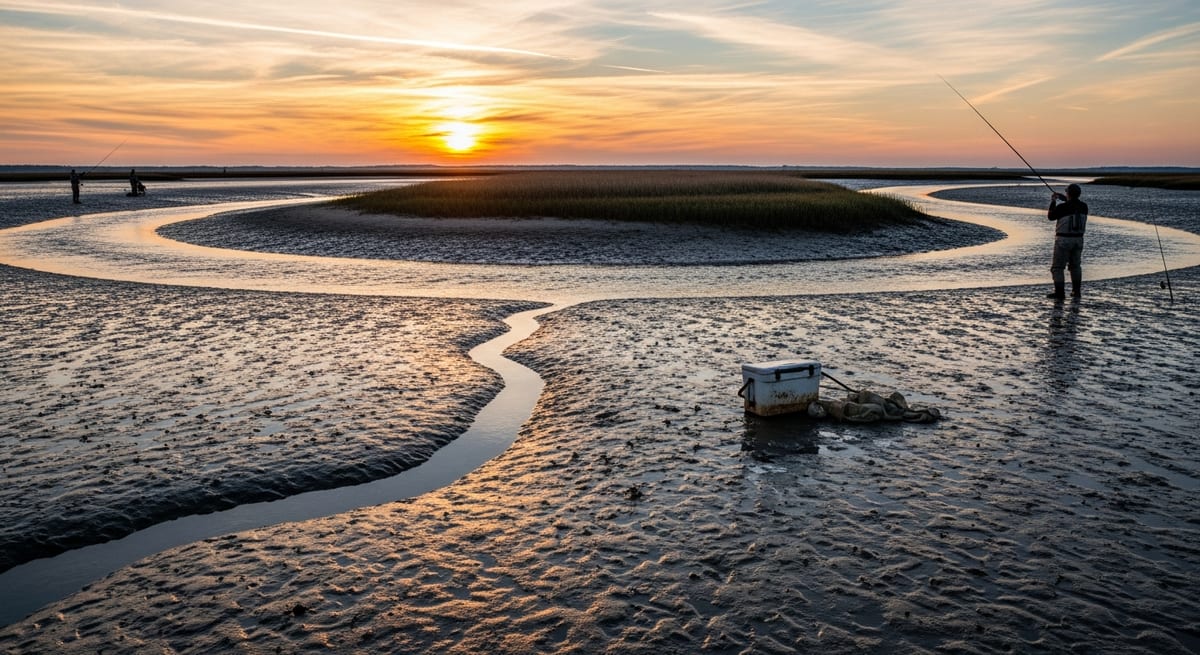
The Connecticut River's mud flats between Portland and East Haddam hold common carp that regularly exceed 25 pounds. Fish feeding in slow, turbid water that most local bass anglers motor straight past. Anglers who specifically target carp on this stretch, a small but vocal group on CT fishing forums and regional Facebook fishing groups, describe it as one of the most consistent big-fish opportunities in the state. Common carp are abundant in virtually every major CT river and many lakes. They're largely ignored, which means the fisheries that hold them see almost no pressure. A dynamic the CT carp community does not appear eager to change. European anglers pursue carp with the same intensity that Americans give to bass and trout. In Connecticut, that intensity is mostly absent, and the fishing is better for it.
The Water Carp Use, and Why Most CT Anglers Walk Past It
Common carp concentrate in warm, slow-moving water with muddy substrate and aquatic vegetation. The locations CT carp anglers return to consistently are almost all water types that bass and trout anglers tend to overlook:
Connecticut River: The most significant carp fishery in the state. Carp use deeper pools, backwaters, and mud flats along the river's length. Sections near East Haddam, Portland, and the lower estuary hold the largest fish. Shore access points along Route 9 and river roads are the most practical entry for most anglers.
Farmington River (lower section): The slower, warmer water below the Collinsville area holds carp through summer. The transition from the river's cold-water trout reach into the warmer lower section marks where carp consistently begin showing up from June onward.
Lake Zoar and Candlewood Lake: Per threads on CTFishing.org and regional carp fishing groups, Lake Zoar near the Stevenson Dam area draws the handful of western CT anglers who target carp specifically. Candlewood's shallow coves and flats hold fish through warm months.
Housatonic River (lower/tidal section): Slow water behind the Derby Dam holds carp in warm months. The tidal influence creates the still, murky conditions carp feed in most aggressively.
Shallow coves statewide during spawning (May-June): In any warm lake with muddy substrate, carp become visible in shallow coves during the spawn, rolling and splashing in water sometimes as shallow as two feet. This is the most reliable visual signal that fish are present and actively moving.
How CT Carp Regulars Actually Rig Up, and the One Change Most Beginners Skip
The consensus among dedicated CT carp anglers is that the hair rig is the single biggest upgrade most newcomers put off too long. Three methods cover most of what CT carp anglers use:
Bottom bait method: A #4-#8 hook on a 3-foot leader with an egg-sinker rig, baited with corn kernel (fresh or canned sweet corn), a dough ball (bread dough mixed with sweet corn), or a Powerbait/dough mix. Cast toward visible bottom disturbance, murkiness from carp rooting, or bubbles rising steadily from the bottom, and wait. No specialized gear required, and plenty of fish get caught this way.
Hair rig with boilies (the European approach): Boilies are dense round bait balls made from fishmeal, crushed nuts, fruit flavoring, or sweeteners. The hair rig presents the boilie hanging from a small loop below the hook rather than directly on the hook point, allowing the fish to inhale the bait while the hook catches inside the mouth on the hookset. CT carp regulars who've switched to this method report meaningfully fewer dropped takes compared to standard corn presentations. Boilies require ordering online or sourcing from a specialty tackle retailer, availability at Connecticut shops is inconsistent, and most regulars order ahead from dedicated carp suppliers.
Sight fishing: In clear water during spring or early morning, carp can often be spotted feeding on shallow flats. Presenting a bait or small nymph fly slowly and directly ahead of a visible, feeding fish, with minimal surface disturbance, is some of the more engaging freshwater fishing Connecticut has to offer that most anglers haven't found yet.
What a Hard-Running 20-Pound Fish Exposes in a Bass Setup
A medium-heavy bass rod with 15-20 lb monofilament handles most CT carp situations adequately, plenty of anglers fish carp this way. The limitations show up on the first hard run from a larger fish.
Anglers who fish big carp regularly describe runs of 50-100 yards from fish in the 20+ pound range on hard hooksets. A spinning reel with limited line capacity can be stripped to the backing; a drag not tuned for a sustained, powerful run will either lock up or fatigue. A reel loaded with 200+ yards of 15-17 lb mono and a smooth, reliable drag isn't overcautious. It's practical.
Rod: A 10-12-foot carp rod or long surf/beach rod casts heavy baits farther than a typical bass rod and has a softer, progressive action that cushions sustained runs without breaking light tippet. Not necessary for casual carp fishing, but a clear improvement for anyone specifically targeting bigger fish.
Reel: A 4000-5000 class spinning reel with a smooth drag and at least 200 yards of line capacity. The run capacity matters more than most CT anglers expect the first time a big fish makes a long initial sprint.
Bite alarm: European carp anglers use electronic bite alarms and a rod pod to rest multiple rods while waiting for a take. Dedicated CT carp anglers who've adopted this setup describe it as the difference between purposeful carp fishing and simply leaving a bait out and hoping.
A medium-heavy spinning outfit, 17 lb mono, a hair rig with corn or boilies. That's the starting setup most CT carp regulars describe when asked what they'd hand a newcomer.
Landing, Photographing, and Releasing a Fish Most CT Anglers Have Never Handled
Carp are most often released in CT. Per CT DEEP's 2025 freshwater fishing regulations, carp are classified as an unregulated rough fish, no closed season and no minimum size, though regulations can change and checking the current DEEP freshwater guide before your trip is good practice.
A carp's mouth is softer than a bass's. Don't lip a carp, use a large landing net and support the fish horizontally. Wet your hands before handling, unhook with wet hands, and support the fish in the water until it swims off under its own power. Large fish that have been fought hard may need a minute of supported recovery in calm water before releasing cleanly.
Photographing a large carp requires more care than most CT anglers expect. A 30-pound fish on dry, rocky ground can injure itself quickly. Standard practice among European carp anglers, and increasingly among dedicated CT regulars, is a soft, wet unhooking mat for any out-of-water photography. If you're going to photograph a big fish, a padded landing mat under it matters.
Carp in warm-water conditions above 75°F are more physiologically stressed after a fight than cold-water species, but handle recovery well when treated carefully. Minimize air exposure, keep the fish horizontal, and aim to release in slower water rather than in current.
EVERY SATURDAY MORNING
Weekly fishing intelligence
Nationwide conditions, what's biting, and honest gear deals. One email, no noise.
No spam. Unsubscribe anytime.