
Catch and Release Best Practices: How to Release Fish So They Actually Survive
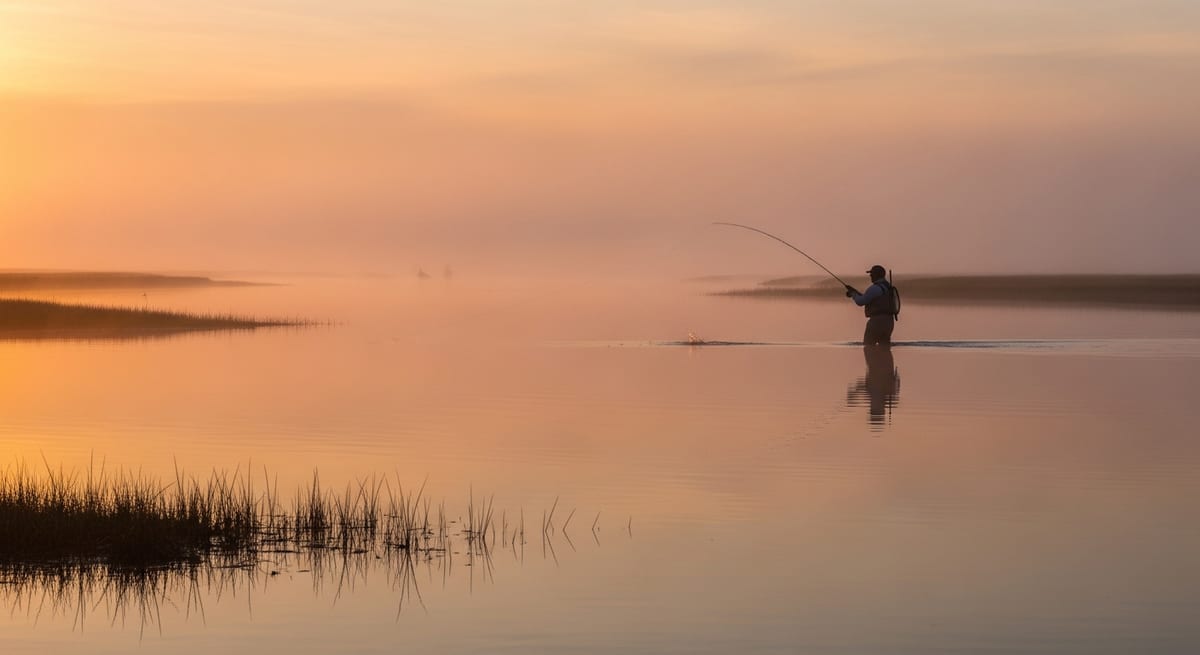
Catch and release is the foundation of sustainable recreational fishing. When it's done right, released fish survive, populations stay healthy, and fishing quality improves over time. When it's done poorly. Fish held out of water too long, mishandled, or released exhausted in warm water. The survival rate drops significantly. Here's what the science says and what it means for your fishing.
The Numbers: What Actually Happens to Released Fish
Studies on catch-and-release mortality across species consistently show the same thing: immediate mortality (fish that die within minutes of release) is relatively low with good handling. Delayed mortality. Fish that swim away but die within 24-72 hours, is where the real losses occur.
Striped bass: Studies in Chesapeake Bay and Northeast waters show C&R mortality rates between 5-15% under typical conditions, rising significantly in warm water (above 70°F) and with deep hooking. A large female striper that survived the fight but was held out of water for 3 minutes and released into 75°F July water faces much higher mortality risk than the same fish released quickly in 65°F October water.
Bass (largemouth and smallmouth): Research shows 5-10% delayed mortality under typical summer conditions, rising considerably with warm water temperatures (above 75°F) and extended fight times. Tournament studies reveal that bass handled and weighed professionally by tournament officials, and then transported to a release boat, still show 3-8% mortality, which illustrates that even "good" handling causes some mortality.
Trout: Trout are the most temperature-sensitive and stress-sensitive gamefish in Connecticut. In water above 65°F, catch-and-release mortality for brown and rainbow trout increases dramatically. Studies on highly pressured Catch & Release streams like the Farmington River suggest aggregate mortality that's meaningful at the population scale even with generally good handling.
The takeaway: released fish are not automatically fine. Your handling decisions matter.
The Fundamentals: What Kills Released Fish
Air exposure: Fish suffocate in air as surely as you'd drown in water. Gill tissue collapses when dry. Even a few minutes out of water in warm weather causes physiological damage that may not kill the fish immediately but contributes to delayed mortality. The research is clear: minimize air exposure to under 30 seconds when possible, under 60 seconds as the outer limit for most species.
Water temperature: Warm water holds less dissolved oxygen and accelerates the physiological stress response. A fish released in 80°F water on a hot August afternoon is being released into a near-hostile environment, even a perfectly handled fish faces difficulty. In summer, fish at dawn when water is coolest, and if you're practicing C&R, do it in the cooler water periods.
Fight time: A prolonged fight exhausts the fish's energy reserves and causes lactic acid buildup that can be fatal. The same mechanism as human acidosis after extreme exertion. Appropriate tackle for the species and conditions (not light tackle that produces 20-minute fights) reduces fight time and mortality. Match your gear to the fish.
Deep hooking: A circle hook in the corner of the mouth is easily removed; a J-hook swallowed to the throat is not. Deep-hooked fish have dramatically higher mortality than lip-hooked fish. Use circle hooks with live bait. They virtually eliminate gut hooking. If a fish is deeply hooked with a J-hook, cut the leader rather than digging for the hook. The hook will typically dissolve or be expelled.
Vertical jaw hold (bass): Holding a bass vertically by the lower jaw is fine for small fish, but a large bass (over 3 pounds) held vertically can suffer serious injury to the jaw joint and internal organs from the weight of its body. Support large bass horizontally, one hand on the jaw, one under the belly.
The Proper Release Sequence
Before the fish reaches you:
- Use a rubber-coated or knotless mesh landing net. Nylon nets strip slime coat and damage fins. Rubberized nets protect the fish.
- Keep the fish in the water as long as possible while you prepare for release.
During handling:
- Wet your hands before touching the fish. Dry hands strip slime coat.
- Minimize contact with gills, eyes, and underbelly. Hold at the jaw and support the body.
- Don't squeeze. Fish aren't squeezed in their natural environment, even gentle pressure on internal organs causes damage.
- Work quickly. Have your hook removal tool ready before the fish is in hand.
Hook removal:
- Use needle-nose pliers or forceps to back the hook out the same direction it entered.
- For deeply swallowed hooks: cut the leader as close to the hook as possible. The hook will rust or be expelled.
- For treble hooks: use forceps to collapse the barbed end while backing it out. Consider mashing barbs on treble hooks. It doesn't affect hook-up rates but dramatically speeds removal.
Photos:
- Take photos with the fish supported horizontally, over water, quickly.
- The "hand briefly out of water" photo is fine; the "stand up and hold the fish while someone fumbles with the camera" shot is too long.
- If the fish is showing signs of stress, not moving, rolling, gills flaring, skip the photo.
Reviving:
- Hold the fish in the water gently, facing into current if available.
- The fish should show increasing muscle tone and attempt to swim. This indicates recovery.
- Release when the fish swims firmly under its own power, not when it floats.
- Do NOT move the fish back and forth in the water (the "reviving" motion people do). Research shows it's not more effective than stationary holding and may be counterproductive.
In warm water:
- Find the coolest water available, below a surface temperature thermocline, in shade, near a spring inlet.
- If conditions are seriously warm (above 75°F for trout, above 80°F for bass), consider whether catch-and-release is ethical. Some fish simply won't survive.
Species-Specific Notes
Striped bass: The single most important C&R consideration for striped bass is water temperature. In July and August in Long Island Sound, releasing large stripers, particularly the breeding-age females over 28 inches, is genuinely questionable if water temperatures exceed 72°F and fight time exceeded 3 minutes. If you're consistently catching large stripers in summer, fish at night or dawn when temperatures are lowest, use appropriate tackle, minimize fight time, and release extremely carefully.
Trout (Farmington River and catch-and-release sections): Trout are fragile. The Farmington's catch-and-release sections exist specifically to protect the wild brown trout population. Take this seriously. Barbless hooks (or mashed barbs) on flies and lures speed release dramatically. Never photograph a trout out of the water in warm weather. If a trout cannot revive after reasonable effort, keep it (if regulations allow) rather than releasing a fish that will die.
Largemouth and smallmouth bass: Support large fish horizontally. Circle hooks with live bait. Avoid tournament-style lip grasping of bass over 3 pounds without horizontal support. In summer, fish early and late when temperatures are lower.
Walleye and pike: Both species tolerate C&R reasonably well in appropriate temperatures. Walleye have sharp teeth that make lip-holding challenging, use a soft jaw grip or landing net. Northern pike are robustly built and recover well in cool water.
Ice fishing considerations: Fish released through the ice into cold, well-oxygenated winter water typically have excellent survival rates. Cold water, short fight times, and no air exposure issues make ice-season C&R relatively low-impact.
EVERY SATURDAY MORNING
Weekly fishing intelligence
Nationwide conditions, what's biting, and honest gear deals. One email, no noise.
No spam. Unsubscribe anytime.