
CT Bass Anglers on Candlewood, Bantam Lake, and the Lower Housatonic Report Nest-Season Targeting Splits the Community Harder Than Any Regulation Does. What DEEP 2025-2026 Freshwater and Marine Rules, ASMFC Striper Stock Assessments, and the Spawn Biology of Four CT Species Reveal About Fishing Connecticut Waters During the Annual Spring Spawn
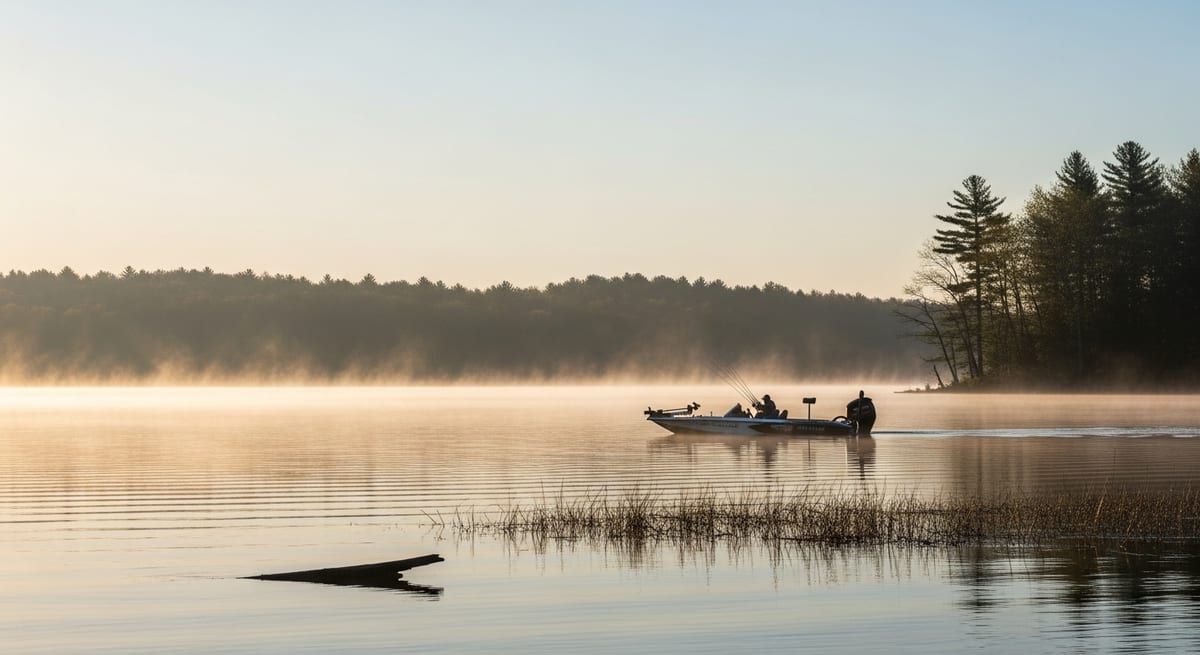
When Candlewood Lake water temperatures cross 62°F in mid-May, nest-guarding largemouth males stack on the gravel and sand flats in the northwest coves, and the ethics debate starts almost immediately on local forums. CT anglers who fish these same water bodies year-round hold strong and divergent views on spawn-season targeting, and the split runs deeper than anything the DEEP 2025-2026 regulations settle. Spawn timing differs meaningfully by species and water body, regulations set hard floors, and the community-aggregated practices from anglers who fish Candlewood, the Connecticut River, and the LIS shoreline add a layer of voluntary restraint that goes well beyond what the law requires.
When CT Species Actually Spawn: Temperature Triggers by Water Body
Spawn timing in Connecticut shifts by one to three weeks year-to-year depending on spring temperature patterns, snowmelt, and whether a given water body is shallow and fast-warming or deep and stratified.
Largemouth bass move to spawn when water temperatures reach 60-65°F. On Candlewood Lake, anglers fishing the northwest arm near the Rocky Point area and the protected bays above the Route 37 bridge typically report visible nests from late April through late May, with peak guarding in the first two weeks of May in warm springs. On the shallower basins of Bantam Lake and Wangumbaug Lake, anglers report nest activity as early as the last week of April when spring runs ahead of average. Males build and guard nests on hard substrate, gravel, compacted sand, flat rock, in 1-6 feet of water. The female visits briefly to deposit eggs, then leaves. The male guards through fry dispersal.
Smallmouth bass run slightly later, triggered at similar temperatures but requiring cleaner gravel and rocky substrate. Smallmouth anglers on the Housatonic River below Bulls Bridge and on the lower Farmington report peak spawn activity from mid-May through early June. A medium-action 7-foot spinning rod with 10lb fluorocarbon and a small finesse swimbait worked slowly near rock transitions is the pre-spawn smallmouth setup the Housatonic community returns to every spring before fish fully shallow up.
Striped bass are broadcast spawners, not nest-guarders. They scatter eggs and milt in open water, primarily in the Hudson River drainage and historically in the Connecticut River above the Holyoke Dam fish ladder. Fish staging in Long Island Sound in April and May are pre-spawn fish building reserves or post-spawn fish returning to feed. They are not guarding anything in the shallows. The community ethics debate for stripers centers on harvest pressure on large females, not nest disruption, which means the bass and striper ethics conversations are almost entirely separate.
Trout operate on a different calendar. Brown trout and brook trout spawn in October and November on stream gravel redds; rainbow trout spawn in spring. DEEP's freshwater regulations reflect these windows. The Farmington TMA and Housatonic TMA reaches carry catch-and-release-only designations and gear restrictions during sensitive periods. Download the DEEP 2025-2026 Inland Fishing Guide for current TMA boundary maps and seasonal restrictions before fishing spring trout water.
Why Nest-Season Bass Targeting Divides CT Angling Communities
The debate is worth understanding before drawing a conclusion. Both positions have more backing than the polarized forum threads suggest.
What the biology shows: A nest-guarding male largemouth strikes aggressively at anything entering his sight cone near the nest. That is a predator-defense response, not feeding behavior. When the male is removed, even for a two-minute fight and quick release. The nest is left unguarded. Bluegill, yellow perch, and other sunfish move in within minutes and consume eggs and fry. Research on largemouth nest predation during guard-male absences shows meaningful reductions in nest survival rates even with catch-and-release practices.
The counterargument that holds weight: Population-level impact from recreational catch-and-release nest fishing in large, healthy water bodies is legitimately debated in the fisheries literature. On a 5,420-acre reservoir like Candlewood, with thousands of active nests in a typical May, the calculus is statistically different from the same practice on a 40-acre mill pond with 15 visible nests. Anglers who draw that distinction are applying the right scale of analysis.
What CT bass communities have broadly settled on: On smaller water bodies, mill ponds, sub-100-acre impoundments, the protected coves where the same nest sites reappear every year. The consensus among regulars is to leave visible active nests alone. On larger reservoirs, the community splits more evenly. The position that has gained the most traction in CT bass circles is to fish hard in the pre-spawn window. Bass staged on main-lake points and secondary humps in 10-20 feet respond well to a 3/8oz Texas-rigged creature bait or a drop shot, and return to those same areas hard in the post-spawn recovery period, when fish feed aggressively and catch quality often outpaces the spawn window anyway.
If you do fish near active nests: land fast, handle minimally or keep the fish in the water, don't target the same fish twice, and skip any photograph that requires lifting the fish.
What ASMFC Assessments and DEEP 2025-2026 Marine Regulations Actually Require for Stripers
Striped bass regulations in Connecticut follow the Atlantic States Marine Fisheries Commission (ASMFC) interstate management framework, with CT DEEP implementing the mandated measures. The 2023 ASMFC benchmark stock assessment confirmed the striper stock remains overfished relative to target reference points, which has driven continued restrictive management through the 2025-2026 period.
Current CT marine striper regulations (verify against DEEP 2025-2026 Marine Fisheries Regulations before each trip. Striper rules have changed annually for several consecutive seasons): The recreational harvest limit in recent seasons has run at one fish per person with a 28-inch minimum size limit, with the ASMFC implementing slot-limit provisions aimed at protecting the largest, most reproductively significant females. A 40-inch female striper produces roughly three times the viable eggs of a 28-inch fish. The size-fecundity relationship is steep, which is the biological rationale for protecting fish above the upper slot bound rather than simply rewarding the biggest catch.
LIS surf anglers at Hammonasset Beach State Park, Harkness Memorial State Park, and the Watch Hill area near the Rhode Island line regularly encounter large staging females in May. The community-aggregated position in long-running CT striper forums is that releasing fish above the slot takes on additional weight during this window, when those larger females are most concentrated inshore and most accessible to surf and boat anglers.
Always download the current DEEP Marine Fisheries regulation booklet before the season opens. Mid-season ASMFC emergency actions have occurred in past years and can change possession limits without the typical public comment window.
Handling Spring-Condition Fish: What CT Anglers Who Fish the Same Water All Season Report
Spring fish. Bass moving to spawn, stripers staging inshore, trout on redds, are physiologically stressed in ways that narrow the margin for mishandled releases. Energy reserves are drawn down from winter. Immune function is reduced during gonad development. A fish absorbing a prolonged fight in May has less physiological reserve than the same fish in September.
Keep fight time short. Anglers who regularly fish Candlewood and Bantam during the spawn window report that keeping fight time under 60 seconds for bass under 3 pounds and under 90 seconds for larger fish produces noticeably better revival outcomes. Medium-action spinning gear with 12lb braid main line to a 10lb fluorocarbon leader, light enough to transmit takes clearly, stiff enough to shorten the fight, is the setup the local catch-and-release community gravitates toward when targeting bass in spawn-adjacent water.
Keep fish horizontal and in the water. Holding a large bass vertically by the lip, with body weight hanging, stresses the jaw joint and can damage internal organs. Rubberized lip-grip tools. A Berkley-style gripper for bass under 5 pounds, a Boga Grip for larger fish, allow secure control without contact with the gills or belly slime coat. Keep the fish horizontal and partially submerged whenever possible.
Revive before considering the fish released. A bass that rolls sideways or sinks slowly after release is not recovering. Hold it gently with its mouth facing into gentle current, or move it slowly forward and back in still water, until it kicks away under its own power. Anglers fishing heavily pressured impoundments in late May report that revival time increases as the spawn progresses and fish arrive at the net in progressively more stressed condition. Don't log the release until the fish swims off on its own.
Habitat Is Where CT Fisheries Are Actually Won or Lost
Spawn-season ethics debates concentrate attention in May, but the structural trajectory of CT fish populations is driven by factors that operate year-round and at a scale that dwarfs recreational angling pressure.
The Connecticut River supports the largest anadromous fish run in New England north of the Hudson, american shad, blueback herring, and historically Atlantic salmon and striped bass. Dam removal decisions, fish passage improvements at the Holyoke and Turners Falls facilities, and watershed development pressure in the Connecticut River basin have measurably larger impact on striper and shad reproduction than the cumulative effect of spawn-season angling. DEEP's Office of Inland Fisheries and ASMFC publish annual Connecticut River run reports and stock status updates. The shad escapement counts from the Holyoke counting station are a useful long-view indicator of how the river system is trending season to season.
On the freshwater side, Trout Unlimited's Connecticut chapters, covering the Farmington, Housatonic, and Willimantic drainages, and the Connecticut Fly Fisherman's Association do active habitat restoration and TMA expansion work. Their advocacy on Farmington TMA reach expansions and Housatonic access has produced the strongest wild and holdover trout fisheries in the state and represents the kind of durable investment that outlasts any individual season's ethical decisions.
Follow the DEEP 2025-2026 regulations precisely. Size limits, bag limits, and gear restrictions reflect stock assessment outputs and population modeling, not arbitrary conservation preference. If you encounter practices outside the regulatory framework, keeping fish over the limit, targeting closed-season water, netting spawning fish. The DEEP TIP Line (1-800-842-HELP) and the online reporting system are the appropriate channels.
EVERY SATURDAY MORNING
Weekly fishing intelligence
Nationwide conditions, what's biting, and honest gear deals. One email, no noise.
No spam. Unsubscribe anytime.