
The Largemouth That Kicked Hard and Swam Away May Still Be Dead by Morning. What CT DEEP Regulations, Farmington Regulars, and Catch-and-Release Research Report About Handling Damage, Access Site Behavior, and the Ethics That Keep CT Waters Open
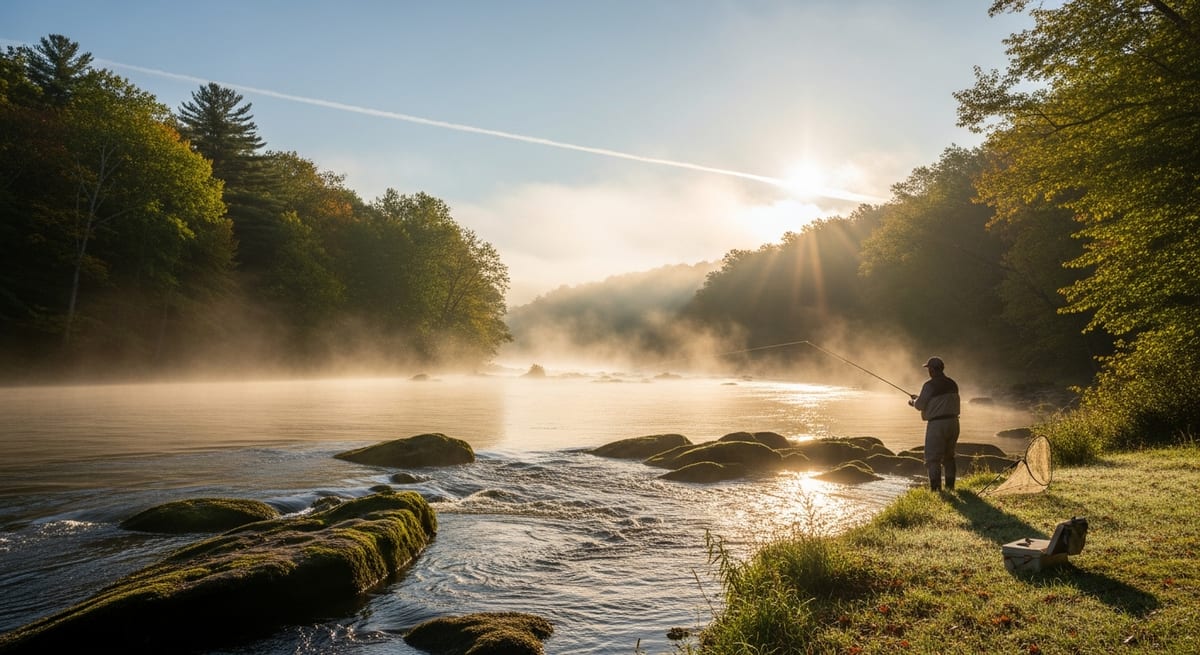
A largemouth bass held vertically by the jaw for a trophy photo may still kick hard when it hits the water, but internal organ displacement and stress-related mortality documented in post-release research can kill fish 24 to 72 hours after release, long after the fish has swum out of sight. The gap between 'it swam away' and 'it survived' is the detail most ethics discussions skip. CT DEEP has adjusted striper slot limits, trout stocking designations, and public access classifications through successive regulation cycles based on fisheries survey data. The current condition of those resources reflects cumulative angler behavior, regulation compliance, and habitat choices made over decades. What follows is a breakdown of the specific practices, CT regulations, and access behaviors that shape whether those resources hold or erode.
Post-Release Mortality: Why 'It Swam Away Strong' Isn't the Whole Story
Release quality matters more than release speed. A fish that leaves the water swimming hard can still die within 24 to 72 hours if it was handled incorrectly. The effects of jaw torque, slime coat removal, and thermal stress aren't visible at the moment of release. Keep fish in the water as much as possible. Wet your hands before handling, dry hands strip the protective slime coat that guards fish against bacterial infection. Minimize air exposure. Thirty seconds is a reasonable benchmark; anything beyond a minute in warm water extends physiological stress significantly. Support fish horizontally, not vertically by the jaw for extended periods. Vertical holds shift organ weight onto structures not built to bear it, particularly acute for pike, walleye, and bass over 3 lbs. Lower fish gently into the water rather than dropping them. A drop from 18 inches can cause impact-related injury. Revive if needed. Hold the fish upright in moving water, facing into current, until it kicks out of your hand under its own power. A fish that rolls or lists after release is in serious distress. Anglers fishing Candlewood, Bantam, and the Farmington consistently note that revival time increases meaningfully for fish caught in warm late-summer water above 70°F. The thermal stress compounds everything else.
What the 2025 CT DEEP Regulations Changed, and Where Anglers Still Get Caught Out
Regulations exist because fisheries survey data shows specific populations require specific protections. Size limits allow fish to reach reproductive age before harvest. A 15" largemouth at minimum legal size has typically spawned only once or twice; fish several inches above the limit have contributed to local population stability across multiple seasons. Bag limits prevent localized depletion on high-pressure water. CT DEEP updates its freshwater and marine fishing guides annually. The 2025 editions, available as free PDFs at ct.gov/deep, reflect changes from prior seasons that anglers running on last year's memory will miss. Catch-and-release-only sections on designated CT trout streams, including portions of the Farmington River and the Salmon River, protect wild fish populations that take years to recover from heavy pressure. Ignorance of regulation changes is not a valid defense at a warden stop, and fines for violations can exceed $100. CT DEEP EnCon officers report the most frequent compliance gaps involve bass size limits on impoundments and striper slot errors during the coastal run, specific to anglers who checked regulations once early in the season and assumed nothing changed.
Species-Specific Handling on CT Waters: Bass, Trout, Stripers, and Pike
Bass at Candlewood, Bantam, and Moodus: Lipping (holding by the lower jaw) is fine for brief photos. For fish over 3 lbs, support the body with your free hand to prevent jaw torque. Lateral holds distribute weight correctly across the fish's structure; vertical holds don't. Trout on the Farmington, Salmon River, and Willimantic: Trout are among the most fragile freshwater gamefish in catch-and-release situations. Use barbless hooks on wild trout waters. Keep them submerged as much as possible. Use rubber or knotless mesh nets, standard nylon mesh strips slime coat. Release trout facing upstream; a fish pointed downstream into current must fight its own recovery while already stressed. Striped bass along the CT coast: Large stripers handle firm horizontal holds well for photos. They are structurally more durable than most freshwater species. Revive large fish before releasing, especially fish caught deep or in water above 70°F. CT DEEP's current striper slot limit regulations require releasing fish within the protected size range, check the current marine guide for exact dimensions, revised each year through the ASMFC management process. Pike at Mashapaug and northeast CT impoundments: Hold horizontally, never vertically. Keep hands clear of gill plates and teeth. Use long-nosed pliers for dehooking; pressure on the gill plate of a pike causes injury to the fish and risk of laceration to the angler.
Why CT Access at Haddam Meadows, Salmon Cove, and Bluff Point Gets Restricted
Public fishing access in CT isn't guaranteed. It's maintained. CT DEEP administers public boat launches and shore access through a combination of state-owned land and ongoing agreements with private landowners. When access gets abused, trash left at launch ramps, cut fences, damaged vegetation, monofilament dumped in shoreline brush, landowner agreements dissolve and state resources shift to other priorities. Haddam Meadows State Park and Salmon Cove on the Connecticut River are among the highest-volume freshwater access points in the state; at that level of use, visible trash and monofilament accumulation become recurring maintenance issues. Bluff Point in Groton is the primary surf-access site for south-coast anglers targeting stripers and blues; access there has been the subject of ongoing use-behavior discussions tied to parking and site conditions. Specific behaviors that accelerate access loss: monofilament left in shoreline brush or on ramp pilings entangles waterfowl and wildlife. It is nearly impossible for an animal to free itself once tangled, and doesn't degrade for decades. Dumping live bait buckets directly into CT waters can introduce invasive species and pathogens, including organisms associated with improperly transported out-of-state shiners and minnows. Crossing private property to reach water, even a short cut to a known hole, creates legal liability for landowners and ends in posted signs and locked gates. Pack out what you pack in. That is the minimum the access requires.
License Revenue, DEEP's 1-800-842-HELP Line, and How CT's Fisheries Actually Stay Funded
Connecticut fishing license fees fund CT DEEP stocking programs, habitat improvement projects, and public access land acquisition. Federal Dingell-Johnson Act funds, collected via excise taxes on fishing tackle and boat fuel, are distributed back to state agencies proportionally, meaning CT anglers buying gear generate federal match funding that flows into in-state habitat work. Organizations active in CT waters, including Trout Unlimited's Connecticut chapters and the Coastal Conservation Association's Long Island Sound program, fund restoration projects in CT rivers and coastal areas through member support and grant programs. Reporting violations through CT DEEP's EnCon Police tip line at 1-800-842-HELP is the fastest path to enforcement response on poaching, out-of-season harvest, and size-limit violations. Reports are anonymous. Public comment on CT DEEP's regulation-setting process is one of the few direct mechanisms anglers have to influence slot limits, stocking priorities, and access decisions, dEEP posts open comment windows on its website when significant regulation changes are proposed. CT DEEP's fisheries management data from annual surveys is publicly available; anglers who engage the process rather than only react to outcomes have consistently shaped the regulations the current generation fishes under.
EVERY SATURDAY MORNING
Weekly fishing intelligence
Nationwide conditions, what's biting, and honest gear deals. One email, no noise.
No spam. Unsubscribe anytime.